
Groundsel rust
Puccinia evadens
Description
Symptoms
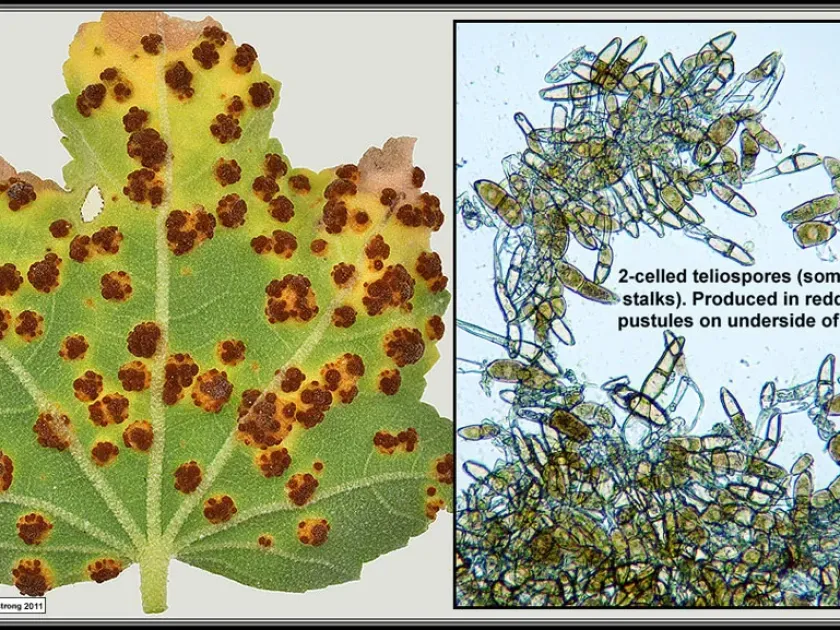
The most distinctive sign of Groundsel rust is the appearance of bright orange or rusty-brown pustules on the leaves and stems. These are masses of spores that break through the plant epidermis.
As the infection progresses, affected leaves may become chlorotic (yellow) and eventually necrotic as the tissue dies. The plant often exhibits stunted growth and loss of vigor compared to healthy individuals.
Stems can become distorted or galled due to the fungal infection. This physical deformation is a clear indicator that the fungus has reached a systemic stage within the host organism.
In cases of severe infestation, the coverage of pustules is extensive, severely reducing the photosynthetic surface area and leading to premature leaf senescence and abscission.
- Bright orange sporulating pustules.
- Distorted and thickened stems.
- Yellowing and necrosis of leaf tissue.
- Premature dropping of foliage.
- General stunting of the plant.
Pathogen
The causative agent of this disease is the rust fungus Puccinia evadens. It is an obligate parasite that specifically affects various species of the Senecio genus, commonly known as groundsel.
The fungus follows a complex life cycle, producing different types of spores including aeciospores, urediniospores, and teliospores. These stages are critical for the survival and dispersal of the pathogen across host populations.
As a highly specialized pathogen, Puccinia evadens is often studied for its potential in biological weed control. It drains nutrients from the host plant, effectively hijacking the host's metabolic pathways to support its own growth.
The fungus overwinters primarily as teliospores in plant debris or the soil. When conditions become favorable in the spring, these spores germinate and initiate the infection cycle on the emerging groundsel leaves.
Once established, the mycelium grows systemically within the plant tissues, leading to a disruption of normal development and inducing visible physiological stress in the host.
Conditions for development
High humidity and consistent moisture are essential for the germination of fungal spores. Frequent rain, heavy fog, and dew provide the necessary surface moisture for the pathogen to thrive.
Optimal temperatures for the development of Puccinia evadens range between +18°C and +24°C. Within this range, the incubation period is minimized, allowing for rapid disease development.
Dense vegetation and poor air circulation create a conducive microclimate that maintains moisture on the plant surfaces for longer periods, which greatly facilitates new infections.
Wind is the primary vector for the dispersal of rust spores, carrying them over long distances to infect healthy plants. This allows the disease to spread quickly through dense patches of weeds.
During wet springs, the buildup of inoculum can lead to significant localized outbreaks, as the spores find favorable conditions to penetrate the host tissue almost immediately upon contact.
Why it matters
The primary harm caused by Groundsel rust is the severe weakening of the host plant. By compromising the plant's health, the fungus reduces its competitive ability against crops.
Infestation leads to reduced flower and seed production. This decrease in fecundity can significantly limit the spread of the weed in the following seasons, making the fungus an effective biocontrol agent.
The disease impairs the plant's water regulation, making infected specimens much more susceptible to drought and environmental stress compared to unaffected counterparts.
While often viewed as beneficial in reducing weed populations, the disease can be harmful if it impacts ornamental groundsel species, where aesthetics are important and the visual damage is unacceptable.
Ultimately, a heavy infection leads to a progressive decline in plant quality, often resulting in the premature death of the affected groundsel specimens before the end of their life cycle.
Protection
Management of Groundsel rust in gardens or controlled environments involves the manual removal and destruction of infected plant material to reduce the reservoir of inoculum.
Improving air circulation through proper spacing and pruning helps modify the microclimate, making it less hospitable for the moisture-loving rust fungus.
When necessary, chemical fungicides, particularly those belonging to the triazole group, can provide effective control if applied at the first signs of the disease.
Proactive monitoring of susceptible plant populations during the growing season is crucial for early detection and rapid implementation of control measures.
Avoiding overhead irrigation in areas prone to infection can significantly decrease the duration of leaf wetness, thereby reducing the chances of successful spore germination and infection.
Discussion
No discussions yet — be the first.