
Millet rust
Puccinia emaculata
Description
Symptoms
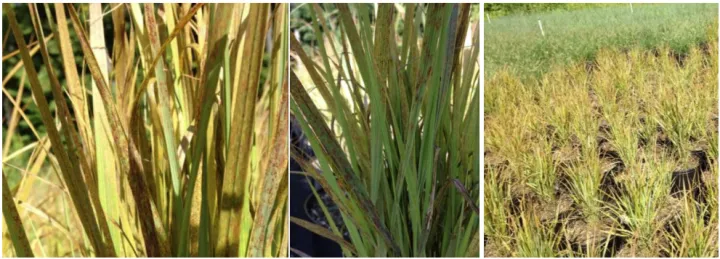
The primary symptom of millet rust is the appearance of small, round or oval pustules on the leaves, leaf sheaths, and stems of the plant, which are filled with fungal spores.
Initially, these pustules exhibit a bright yellow to orange or rusty-brown color, which indicates the active development and multiplication of urediniospores.
As the pathogen matures, the pustules rupture the plant's epidermis, releasing a cloud of powdery spores that can be easily spread by wind to adjacent healthy plants.
Affected leaves often turn yellow, curl up, and dry out prematurely, significantly impacting the plant's ability to undergo photosynthesis and store energy.
In the late stages of the season, the fungus produces darker, nearly black teliospores on the dying tissues, marking the transition into the overwintering phase.
Pathogen
Millet rust is caused by the fungus Puccinia emaculata, which is an obligate parasite, meaning it requires living host tissue to complete its life cycle.
This fungus belongs to the order Pucciniales and is known for its highly specialized biological cycles involving different types of spores developed throughout the season.
The pathogen utilizes haustoria—specialized hyphae that penetrate the host cells—to extract nutrients directly from the plant's vascular system, causing stress to the plant.
The fungus is capable of long-distance dispersal via windborne urediniospores, allowing it to colonize new fields and spread across large agricultural regions rapidly.
Survival during harsh winters is ensured by the formation of teliospores, which remain viable on crop residues until the environment becomes suitable for infection again.
Conditions for development
The development of millet rust is heavily favored by warm, humid weather conditions, with temperatures ranging from 15 to 25 degrees Celsius being optimal for spore germination.
High moisture levels, such as those provided by morning dew, frequent rain showers, or fog, are essential for the spores to germinate on the leaf surface and initiate infection.
Dense planting patterns can exacerbate the disease by restricting airflow and maintaining a higher humidity level within the crop canopy, facilitating pathogen spread.
Poor soil management and nutritional imbalances, particularly excessive nitrogen fertilization without proper potassium levels, can render plants more susceptible to infection.
Prolonged periods of overcast weather contribute to a damp microclimate, which significantly speeds up the progression of the disease within the millet field.
Why it matters
The economic impact of millet rust is significant, as the infection causes a substantial reduction in the photosynthetic area, which directly limits grain filling and yield.
Heavy infections result in shriveled, lightweight grains and a decrease in the thousand-kernel weight, making the final harvest less profitable and lower in quality.
Severe rust outbreaks can lead to premature plant death, which weakens the stalks and increases the risk of lodging, complicating the harvesting process.
In addition to quantitative losses, the disease lowers the overall nutritional value of the grain, potentially making it unsuitable for high-quality feed or food markets.
Secondary infections, including various rots, often follow a rust outbreak, further compromising the integrity of the crop and increasing losses during storage.
Protection
Effective management begins with proper crop rotation, which breaks the life cycle of the pathogen and prevents the buildup of fungal spores in the soil over time.
Maintaining clean fields by removing wild grasses and weeds that can act as alternative hosts is a crucial step in reducing the initial inoculum for the crop season.
Selecting resistant cultivars or hybrids that have demonstrated tolerance or immunity to Puccinia emaculata is the most sustainable and efficient way to protect yields.
Deep plowing after the harvest helps to bury crop residues deep in the soil, which accelerates the decomposition of plant matter and reduces the survival rate of the fungus.
For high-pressure situations, the strategic application of systemic fungicides upon the appearance of the first pustules can significantly curb the spread of the disease.
Discussion
No discussions yet — be the first.