
Currant rust
Puccinia caricina
Description
Symptoms
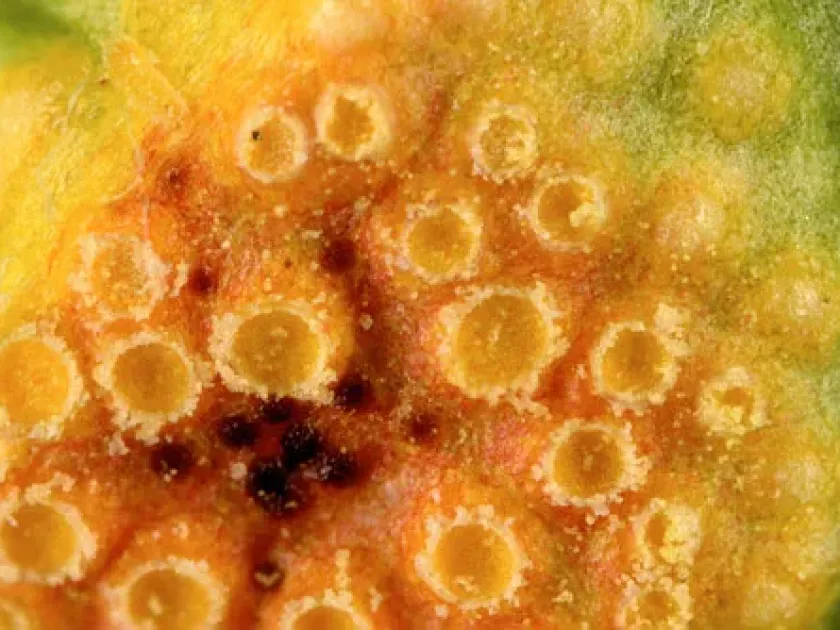
Currant rust symptoms initially appear in early summer as small yellow spots on the upper side of the currant leaves.
On the underside of these spots, orange-yellow pustules form, which gradually evolve into brownish columns by the end of the season.
The infected leaves often wither and drop prematurely, significantly impacting the health and productivity of the shrub.
The disease also affects sedge plants, which act as alternate hosts, showing brown, rusty stripes where the fungus spends the winter.
Visible clusters of fungal spores give the underside of the leaves a distinct, fuzzy appearance that is easy to identify.
Pathogen
The pathogen responsible for this disease is the fungus Puccinia caricina, a specialized rust fungus.
It is a heteroecious fungus, meaning it requires two different plant hosts to complete its complex biological life cycle.
Currant bushes serve as the host for the aecial stage, where the most visible symptoms occur on the foliage.
Sedge (Carex species) acts as the telial host, allowing the fungus to survive through the winter and produce spores in the spring.
The dispersal of spores from sedge to currant is wind-driven and moisture-dependent, marking the start of the infection season.
Conditions for development
Development of Puccinia caricina is heavily dependent on high humidity and the presence of liquid water on leaf surfaces.
Cool, wet spring weather and frequent summer rains provide ideal conditions for spore germination and rapid spread.
Poor ventilation in crowded or poorly pruned currant patches creates a microclimate that favors the growth of the fungus.
Proximity to wetlands or low-lying areas where wild sedge grows increases the likelihood of yearly outbreaks in the garden.
Extended periods of leaf wetness are critical for the fungus to successfully penetrate the leaf tissues and establish an infection.
Why it matters
The disease causes significant damage by reducing the plant's leaf area, leading to poor sugar production and reduced berry quality.
Premature leaf drop weakens the plant's overall vigor, making it difficult for the bush to store energy for the next growing season.
Affected shrubs demonstrate decreased winter hardiness, often leading to frost damage on branches and reduced survival rates.
If the infection is severe, the yield for both the current and subsequent years can be significantly diminished.
In young or stressed plants, repeated annual infections can lead to the slow decline and eventual death of the entire bush.
Protection
Eradication of sedge plants in the immediate vicinity (at least 500 meters) is the most effective cultural control method.
Sanitation is key, so all fallen leaves and debris should be collected and disposed of away from the planting site.
Proper pruning practices that ensure good air circulation within the canopy help keep the foliage dry and reduce infection risk.
Fungicide applications, particularly those containing copper or systemic active ingredients, can be used to protect plants during peak risk periods.
Timely application before flowering and after harvest helps reduce the fungal inoculum load, preventing severe outbreaks in the future.
Discussion
No discussions yet — be the first.