
Carnation rust
Puccinia arenariae
Description
Symptoms
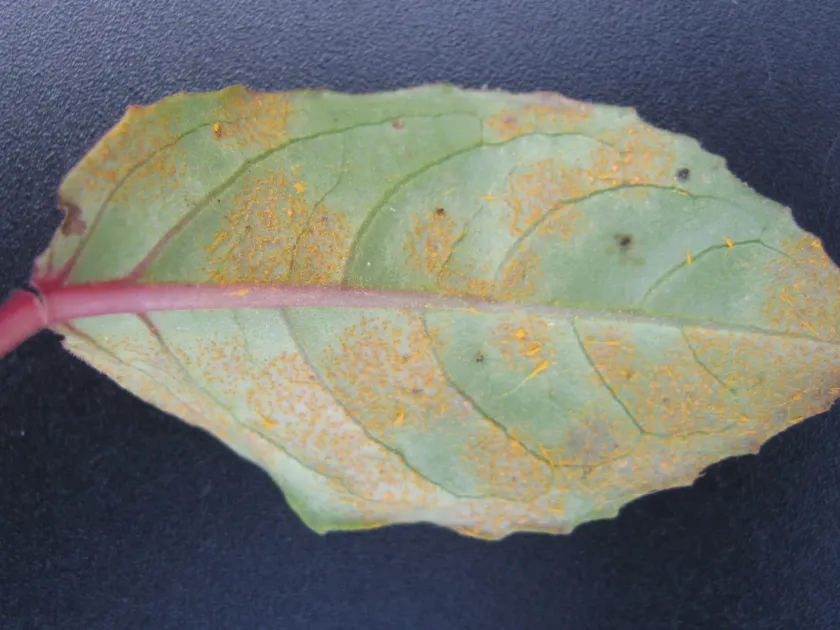
Early symptoms appear as small, light-colored spots on leaves and stems. These soon evolve into characteristic pustules, which are mass collections of fungal spores.
The pustules typically exhibit a rust-colored or brown appearance. When mature, they rupture the plant's epidermis, releasing a powdery mass of spores upon touch.
Severe infestations cause leaves to yellow, curl, and wither prematurely. The decorative value of the carnation is rapidly compromised as foliage becomes necrotic.
Stem infections can cause deformation, where stems become curved or spindly. In extreme cases, the structural integrity of the plant is compromised, leading to collapse.
Symptoms are often first detected on the undersides of leaves, but they quickly spread to all aerial parts, including buds and floral stems, destroying the plant's aesthetic appeal.
Pathogen
The disease is caused by the obligate fungal parasite Puccinia arenariae, which belongs to the class Basidiomycota. This pathogen specifically targets members of the Caryophyllaceae family.
The life cycle of the fungus is characterized by the formation of spores, which are easily disseminated by wind currents, facilitating long-distance spread across gardens and fields.
The pathogen survives the winter in infected plant debris or within the tissues of perennial plants, acting as a constant source of infection for the upcoming growing season.
The fungus invades host tissue through stomata or mechanical damage. Once established, it develops a mycelial network that systematically exploits the plant's nutritional resources.
As a rust disease, it disrupts the host's physiological functions, specifically photosynthesis, leading to significant stress on the infected plant host.
Conditions for development
High relative humidity and the presence of surface moisture are the primary drivers for disease development. Water droplets on leaves facilitate spore germination.
The fungus thrives in moderate temperature conditions, with the optimal range for urediniospore germination being between 15 and 22 degrees Celsius.
Poor ventilation within dense carnation plantings prevents foliage from drying quickly, creating a microclimate that strongly favors the spread of the rust fungus.
Excessive nitrogen fertilization encourages lush but tender growth, making plant tissues more susceptible to fungal penetration and colonization.
Shaded areas or locations with stagnant airflow significantly increase the risk of an outbreak, as moisture persists on the plant surfaces for longer durations.
Why it matters
Carnation rust significantly reduces the yield and quality of cut flowers, leading to substantial economic losses for commercial growers and home gardeners alike.
The disease weakens perennial plants, making them more susceptible to cold damage and reducing their overall lifespan in the landscape.
Rapid spread of the fungus can lead to the total loss of a collection if not managed quickly, as one infected plant can release thousands of spores into the air.
By interfering with the plant's metabolic processes, the rust prevents proper flower production, leaving plants stunted and unproductive throughout the season.
Infected plants are often unable to produce viable seeds, which complicates propagation and conservation efforts for certain carnation varieties.
Protection
The most important control measure is the immediate removal and destruction of infected plant parts to reduce the localized spore load.
Preventative applications of fungicides, particularly those containing copper or systemic triazoles, are effective when applied at the first signs of the disease.
Implementing proper spacing between plants is essential to ensure adequate airflow and reduce the humidity levels that the fungus requires for infection.
Avoiding overhead watering is critical; drip irrigation or watering at the base of the plant helps keep the foliage dry, effectively preventing spore germination.
- Use resistant or less susceptible cultivars of Dianthus.
- Disinfect tools regularly to avoid cross-contamination.
- Ensure thorough cleanup of plant debris at the end of the season.
- Apply balanced fertilizers to promote general plant health and immunity.
Discussion
No discussions yet — be the first.