
Cardiospermum rust
Puccinia arechavaletae
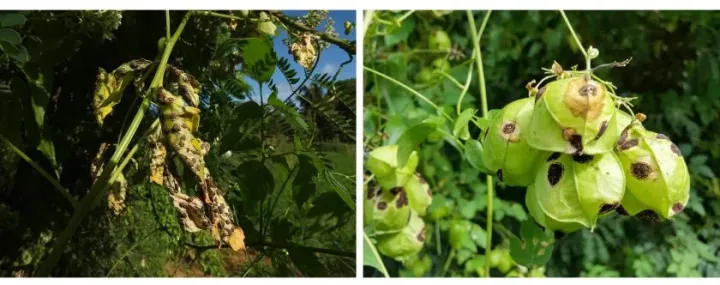
Description
Symptoms
The most distinctive symptom is the appearance of small, rust-colored or orange pustules, known as uredinia, on the undersides of leaves and stems.
These pustules eventually rupture the host's epidermis, releasing a powdery mass of spores that can easily be dispersed by wind or water splashing.
Infected areas often exhibit chlorotic spots or yellowing around the pustules, reflecting the physiological stress inflicted by the parasitic fungal growth.
Stems may become distorted or stunted as the infection progresses, potentially leading to localized tissue necrosis and overall weakening of the affected plant.
Heavy infections result in premature leaf drop, severely reducing the plant's capacity for photosynthesis and undermining its structural integrity.
Pathogen
The causative agent of this disease is the fungus Puccinia arechavaletae, a specialized member of the rust fungi family within the Basidiomycota phylum.
As an obligate parasite, it relies exclusively on living host tissues of the Sapindaceae family, specifically the genus Cardiospermum, to complete its life cycle.
The pathogen utilizes a complex life cycle, producing various types of spores that allow it to adapt to different environmental stages throughout the growing season.
It establishes a deep connection with the plant host, drawing nutrients through specialized hyphal structures known as haustoria which penetrate the plant cell walls.
The fungus is highly specialized, and its survival depends on its ability to transition between host plants and survive dormant periods within plant tissues.
Conditions for development
The development of Puccinia arechavaletae is heavily dependent on high humidity and the presence of liquid water, such as dew or rain, on leaf surfaces.
Moderate temperatures are optimal for the germination of fungal spores, allowing for rapid colonization of healthy host tissues during the active growing season.
Poor ventilation and overcrowding in gardens or fields create a humid microclimate that significantly accelerates the spread of the pathogen.
Wind-driven spores can travel long distances, leading to new infections in previously healthy patches if environmental conditions remain favorable.
Warm, wet nights are particularly conducive to the rapid establishment of the fungus, leading to potential outbreaks in late spring and summer months.
Why it matters
The disease causes a significant decline in the photosynthetic activity of the plant, which leads to reduced energy production and stunted vegetative growth.
By siphoning off nutrients, the fungus prevents the plant from flowering properly and can inhibit the development of healthy seed capsules.
The physical damage caused by pustules disrupts the plant's vascular systems, making it difficult for the plant to transport water and minerals effectively.
Weakened plants are highly susceptible to secondary pathogens, including bacteria and other fungi that capitalize on the compromised host immunity.
If left unmanaged, persistent rust infections can lead to the death of the plant or the total loss of ornamental value in the affected species.
Protection
Effective management begins with proper sanitation, including the removal and destruction of all infected plant debris at the end of the growing season.
Implementing cultural practices such as wider spacing and pruning helps improve air circulation, reducing the moisture required for spore germination.
Avoiding overhead irrigation is a critical preventive measure, as it prevents prolonged moisture retention on the foliage of vulnerable species.
Fungicidal treatments, particularly those containing triazoles or strobilurins, can be used to manage the infection when outbreaks are detected early.
Regular monitoring of plants allows for the early detection of initial signs, enabling swift action to prevent the disease from becoming a major issue.
Discussion
No discussions yet — be the first.