
Ground elder rust
Puccinia aegopodii
Description
Symptoms
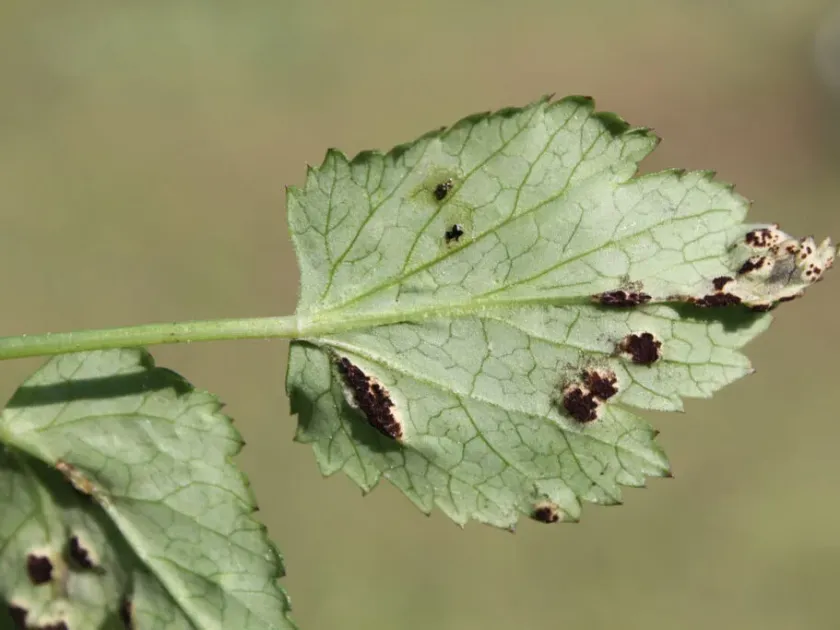
The initial symptoms are typically observed in early spring on young leaves and petioles. Small, yellowish spots appear, which soon develop into raised, orange-colored structures known as aecia, which serve as the first visual evidence of infection.
As the disease progresses, uredinia and telia develop, appearing as dark, reddish-brown or black pustules. These pustules can densely cover the leaf surface, giving the plant a scorched, rusty appearance that gives the disease its common name.
Severe infestations often cause noticeable deformity of the leaves. Infected foliage may curl, shrivel, or become brittle, while the petioles may twist or bend, disrupting the plant's ability to maintain an upright, healthy growth habit.
During peak infection, a fine, powdery mass of spores may be released when the leaves are touched or disturbed. This dusting effect confirms the presence of active fungal sporulation on the leaf undersides or petioles.
In the final stages of the disease, the affected tissues undergo necrosis. The leaves turn brown, wither, and eventually die back, leading to premature senescence of the ground elder foliage long before the natural end of the season.
Pathogen
The causative agent of this disease is the highly specialized fungus Puccinia aegopodii, which belongs to the order Pucciniales. It is an autoecious rust fungus, meaning its entire biological cycle, including the development of aeciospores, urediniospores, and teliospores, occurs on a single host plant — Aegopodium podagraria.
The pathogen primarily overwinters as teliospores on debris or as dormant mycelium within the host's rhizomes. As soon as the young shoots of ground elder emerge in the spring, the fungus activates and begins to colonize the fresh tissue.
The fungal mycelium permeates the intercellular spaces of the plant tissues, utilizing haustoria to extract nutrients from the host. This parasitic lifestyle allows the fungus to survive throughout the growing season, draining the energy reserves of the host plant.
Spore production is prolific, with the urediniospores being easily dispersed by wind and rain droplets. This allows the fungus to spread rapidly across an entire colony, leading to widespread infection within a short period during favorable weather.
Because it is an obligate parasite, Puccinia aegopodii is biologically tied to the health and density of the ground elder population. Its life cycle is perfectly synchronized with the phenology of its host, ensuring maximum transmission efficiency.
Conditions for development
High humidity and the presence of free moisture on the leaf surface are essential requirements for the germination of fungal spores. Persistent rain, morning dew, and fog provide the ideal environment for the spread of Puccinia aegopodii.
The optimal temperature range for the development of ground elder rust is between +15°C and +22°C. These mild temperatures, combined with moisture, trigger the most aggressive phases of the infection cycle.
Dense, overgrown patches of ground elder are particularly susceptible because they lack adequate air circulation. The microclimate within these thickets remains humid for longer periods, allowing spores to successfully infect new tissues more easily.
Low-lying areas or shaded sites where the soil and foliage dry slowly are hotspots for the fungus. In these areas, the disease is likely to return year after year, forming consistent, long-term reservoirs of infection.
Plants under physiological stress, whether from drought, nutrient deficiency, or early spring temperature fluctuations, are more vulnerable to colonization by the fungus. A healthy, vigorously growing colony is better equipped to limit the impact of the pathogen.
Why it matters
The primary damage caused by the rust is the drastic reduction in the plant's photosynthetic surface area. By killing leaf tissues, the fungus prevents the plant from accumulating necessary energy reserves in its rhizomes.
Ground elder rust leads to a decline in the overall vigor of the population. Depleted rhizomes may result in stunted growth in the following year, or in extreme cases, the death of individual plants that can no longer support themselves.
The aesthetic value of ground elder, often used as a groundcover in gardens, is severely compromised. Rust-covered, deformed foliage creates an unsightly mess, reducing the plant's utility as a decorative element.
If left unmanaged, the pathogen acts as an ongoing source of spores that can threaten other susceptible species or prevent the healthy establishment of the ground elder colony. It effectively turns a useful plant into a source of fungal inoculum.
For those harvesting ground elder for culinary or medicinal use, the presence of rust renders the foliage entirely unsuitable. The spores are persistent and can survive in the environment, necessitating careful disposal of infected material.
Protection
The most effective management strategy is the consistent removal and destruction of infected foliage. Promptly pulling out and disposing of rusted leaves helps to reduce the primary inoculum load for the following season.
Improving air circulation is crucial for disease suppression. Thinning out overgrown patches and maintaining good garden hygiene help keep the foliage dry and less hospitable to fungal spore germination.
In cases of severe outbreaks, systemic fungicides approved for ornamental or edible use may be applied. These products help penetrate the leaf tissue to neutralize the mycelium and protect new growth.
Preventative measures, such as applying copper-based sprays in early spring, can create a protective barrier on emerging leaves, inhibiting the germination of overwintering spores.
- Monitor growth regularly for signs of orange pustules.
- Dispose of diseased material by burning or deep burial; do not compost.
- Avoid overhead irrigation to keep the foliage as dry as possible.
- Maintain proper spacing and air flow within the planting area.
Discussion
No discussions yet — be the first.