
Pterula
Pterula
Description
Symptoms
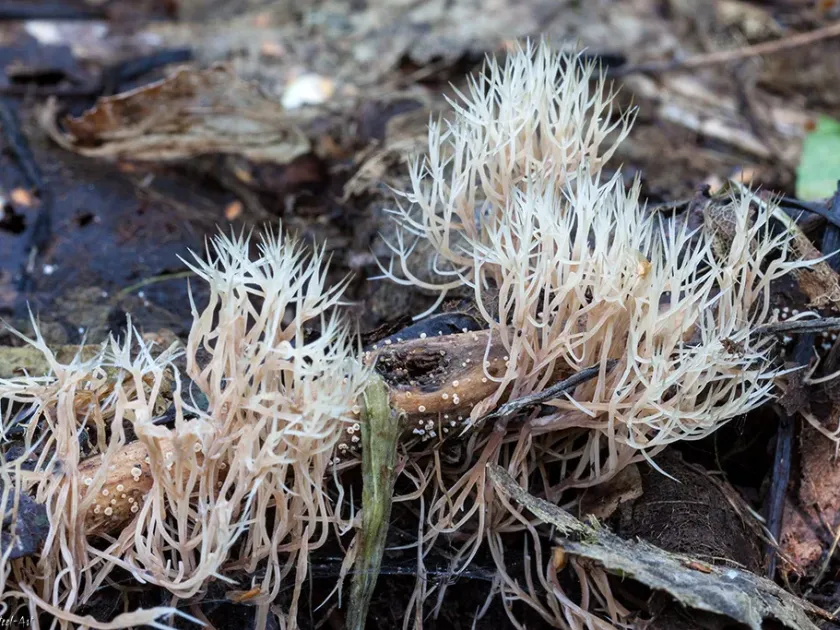
The most distinctive symptom of Pterula infection is the formation of thread-like or coral-shaped fungal bodies on the grass blades.
These structures are often cream-colored or whitish and can appear in dense clusters across the affected turfgrass areas.
Affected grass plants exhibit chlorosis and general wilting, leading to the development of necrotic patches that enlarge over time.
In humid conditions, the fungal growth becomes more prominent, coating the lower stems and leaf sheaths with a visible mycelial mat.
The disease often results in thinning of the turf canopy, making the infected area appear patchy and unhealthy compared to surrounding grass.
Pathogen
Pterula is a genus of fungi belonging to the order Agaricales, which includes several species responsible for damaging turfgrass and various plants.
These fungi typically form small, branching, coral-like basidiocarps, which serve as the primary visual indicator of their presence.
The pathogen primarily colonizes decaying organic matter within the thatch layer, eventually spreading to the living tissues of grass blades.
It thrives in environments where organic accumulation is high, as this provides a stable food source and moisture-retentive substrate for the fungus.
Mycelial growth of Pterula is persistent and can remain active during periods of high humidity, even when air temperatures are moderate.
Conditions for development
Development is heavily dependent on prolonged periods of high humidity and adequate moisture levels in the grass canopy.
Pterula prefers cool to moderate temperatures, typically becoming most active during the spring and autumn months.
Lack of proper airflow due to dense planting or poor site design creates a microclimate that strongly favors fungal sporulation.
Excessive thatch accumulation acts as an incubator for the pathogen, retaining water and providing the nutrients required for fungal growth.
Poor drainage and low light exposure further exacerbate the risk of Pterula outbreaks, as these conditions prevent the grass from drying out.
Why it matters
The primary harm caused by Pterula is the significant reduction in turfgrass density and loss of aesthetic appeal.
Infected plants suffer from impaired photosynthetic efficiency, leading to a decline in overall vigor and root development.
Severe infestations can result in permanent damage to the lawn, requiring extensive renovation or complete reseeding of the affected areas.
Plants weakened by the disease are more susceptible to secondary infections by other opportunistic pathogens.
The presence of Pterula complicates lawn maintenance, necessitating costly chemical interventions and labor-intensive cultural practices.
Protection
Cultural management is the first line of defense, focusing on reducing thatch through regular verticutting and core aeration.
Improving air circulation by pruning surrounding trees and managing plant density helps minimize the humidity trapped within the turf.
Proper irrigation management, specifically watering in the morning, ensures that leaf blades dry out before nightfall.
Avoid over-fertilization with nitrogen, which can lead to rapid, succulent growth that is more vulnerable to fungal invasion.
- Apply fungicides as a curative measure when cultural controls are insufficient
- Maintain adequate soil drainage to prevent surface water accumulation
- Monitor the lawn for early symptoms of coral-like fungal growth
Discussion
No discussions yet — be the first.