
Psilachnum chrysostigma
Psilachnum chrysostigma
Description
Symptoms
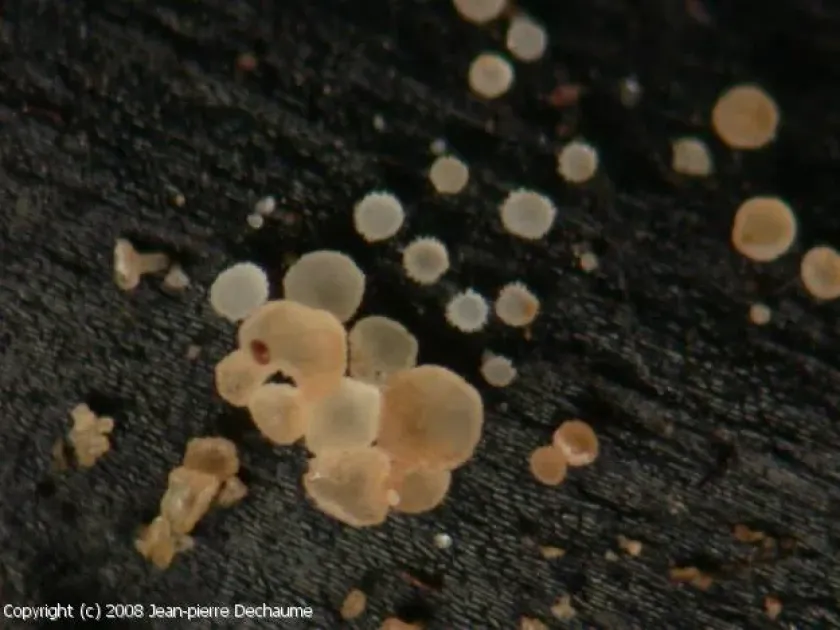
The primary symptom is the appearance of minute, bright yellow or golden apothecia distributed along the stems of the host plant.
These fruiting bodies often appear in clusters or rows, following the vascular bundles or structural grooves of the cereal straw.
Tissues colonized by the fungus often show signs of premature discoloration, turning light brown or yellow as the structure loses mechanical integrity.
Affected stems may exhibit localized softness or increased fragility, which is a result of the fungus breaking down structural cell wall components.
Visual identification is most successful during periods of high humidity, when the apothecia are hydrated and exhibit their characteristic vivid color.
Pathogen
The causal agent of this disease is the ascomycetous fungus Psilachnum chrysostigma. This organism is primarily recognized as a saprotroph that thrives on dead plant tissues.
The fungus is characterized by the production of small, golden-yellow apothecia (fruiting bodies) that emerge on the stems and leaf sheaths of cereal crops.
It maintains its survival in the environment through mycelium embedded within decaying plant debris or via its durable fruiting structures.
Dispersal is primarily facilitated by wind currents, which transport spores to vulnerable or senescing plant tissues during periods of sufficient moisture.
As a cellulose-degrading fungus, Psilachnum chrysostigma plays a significant role in the breakdown of organic matter in agro-ecosystems.
Conditions for development
The development of Psilachnum chrysostigma is strictly dependent on high humidity and rainfall, as these conditions are essential for fruit body formation.
Cooler temperatures, typically experienced during late stages of the growing season or in early spring, are optimal for the fungus's active expansion.
A buildup of crop residues on the soil surface provides an ideal substrate and a reservoir for spores, facilitating yearly reinfection.
Dense planting patterns that restrict airflow contribute to a microclimate conducive to fungal growth at the base of the crop canopy.
Continuous monocropping without appropriate residue management allows the pathogen population to stabilize and expand over several seasons.
Why it matters
While often considered a secondary pathogen, Psilachnum chrysostigma negatively affects the quality and structural integrity of cereal straw.
The breakdown of stem tissue increases the risk of lodging, which complicates harvesting operations and may lead to significant yield losses.
High levels of the fungus in the field create a poor phytosanitary environment, potentially impacting the health of subsequent crops.
The presence of this fungus can lower the utility of post-harvest waste for bedding, fodder, or organic soil enrichment purposes.
In combination with other pathogens, it can accelerate the senescence of cereal crops, leading to uneven maturation across the field.
Protection
Effective management begins with the proper incorporation of crop residues into the soil, which accelerates decomposition and eliminates the primary inoculum source.
Adopting proper crop rotation practices is essential to break the survival cycle of the pathogen and reduce its population density in the soil.
Ensuring optimal plant density and adequate canopy ventilation helps to maintain lower humidity levels, creating an unfavorable environment for fungal development.
The application of microbial stubble decomposers can significantly reduce the fungal load on post-harvest residues.
Deep tillage or autumn plowing is a recommended cultural practice to bury infected plant parts and prevent the spread of spores during the following spring.
Discussion
No discussions yet — be the first.