
Pseudoseptoria
Pseudoseptoria
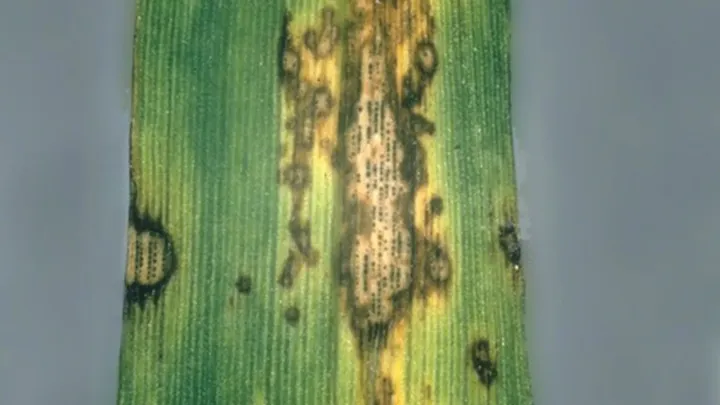
Description
Symptoms
Early symptoms appear as small, chlorotic spots on the leaf blades that gradually expand in size. These spots can exhibit various shapes, often becoming angular as they are constrained by leaf veins.
A hallmark symptom of Pseudoseptoria is the discoloration of the affected tissue, which typically turns tan, brown, or grayish. Often, the center of the spot becomes necrotic, surrounded by a darker, more defined margin.
As the infection progresses, individual spots may coalesce to cover larger areas of the leaf. This causes premature yellowing, senescence, and eventual death of the foliage, significantly reducing the plant's photosynthetic efficiency.
Within the necrotic areas, minute black specks may become visible to the naked eye. These are the pycnidia, indicating that the fungus has successfully produced a new generation of spores.
While primarily a foliar disease, infection can also occur on stems and petioles, manifesting as elongated lesions. These lesions may disrupt the vascular transport of water and nutrients, leading to systemic weakness of the plant.
Pathogen
The disease is caused by fungi belonging to the genus Pseudoseptoria. These are classified as imperfect fungi, which act as obligate or facultative parasitic micromycetes associated with specific host tissues.
The life cycle of the fungus involves the formation of pycnidia—specialized fruiting bodies that produce conidia. These asexual spores serve as the primary and secondary inoculum responsible for spreading the infection to healthy tissues.
The fungus overwinters in crop debris, fallen leaves, and plant stems. These dormant structures allow the pathogen to survive in the soil or on surface residues until the next growing season when conditions become suitable for infection.
Microscopic examination of infected tissues reveals dark, spherical pycnidia embedded within the host epidermis. The presence and specific structure of these pycnidia are the primary diagnostic features used by mycologists to identify the Pseudoseptoria genus.
Conidia are dispersed primarily through water splash during rainfall and wind currents. This efficient mechanism of dispersal allows the pathogen to rapidly spread across a field, especially in high-density crop environments.
Conditions for development
The development of Pseudoseptoria is heavily favored by prolonged periods of high humidity, mist, or frequent rainfall. Moisture is a critical prerequisite for the germination of fungal spores on plant surfaces.
Moderate temperatures are optimal for the rapid growth of the pathogen. While extreme heat and dry conditions can inhibit the spread, the fungus remains resilient and can resume activity once moisture levels increase.
Poor canopy ventilation due to dense planting creates a microclimate characterized by high humidity and air stagnation. Such conditions accelerate the infection process and increase the rate of secondary spread within the crop.
Plants under nutrient stress or weakened by environmental factors are significantly more susceptible to infection. Maintaining overall crop vigor is essential for natural resistance against this fungal pathogen.
Agricultural practices such as shortened crop rotations allow for the accumulation of inoculum in the soil and crop residues, increasing the risk of early-season infection in subsequent plantings.
Why it matters
The economic impact of the disease is driven by the loss of functional leaf area. This impairs plant metabolism and photosynthesis, resulting in significant reductions in both yield quantity and quality.
If the infection reaches reproductive organs or stems, it can cause physical damage, such as shriveled grains or deformed fruits. This further degrades the marketability and economic value of the harvest.
Severe early-season infections can lead to stunting and physiological stress, making the plants more susceptible to secondary pathogens and other environmental stressors.
Direct financial losses are exacerbated by the operational costs of applying fungicides. Managing an outbreak requires precise timing and may involve multiple chemical interventions.
In cases of severe infestation, producers face risks of total crop failure if intervention measures fail to arrest the spread of the fungal infection within the field.
Protection
The primary control strategy involves sound cultural practices, such as the thorough incorporation of crop residues into the soil. Deep plowing facilitates decomposition, which effectively destroys the fungal overwintering structures.
Implementing a proper crop rotation system with a 3-4 year break between susceptible hosts is the most effective way to lower the soil-borne inoculum level in a field.
Utilizing clean, certified seed treated with appropriate fungicides is essential to prevent the introduction of the pathogen into new areas. Planting disease-resistant or tolerant cultivars provides the most stable defense.
When environmental conditions favor the disease, the timely application of systemic fungicides is recommended. Rotating different chemical classes is necessary to prevent the development of fungicide resistance in the pathogen population.
Maintaining a balanced nutrient program, avoiding excessive nitrogen fertilization, helps keep plant tissues firm and less susceptible to the penetration of fungal hyphae.
Discussion
No discussions yet — be the first.