
Pseudopyrenochaetosis
Pseudopyrenochaetaceae
Description
Symptoms
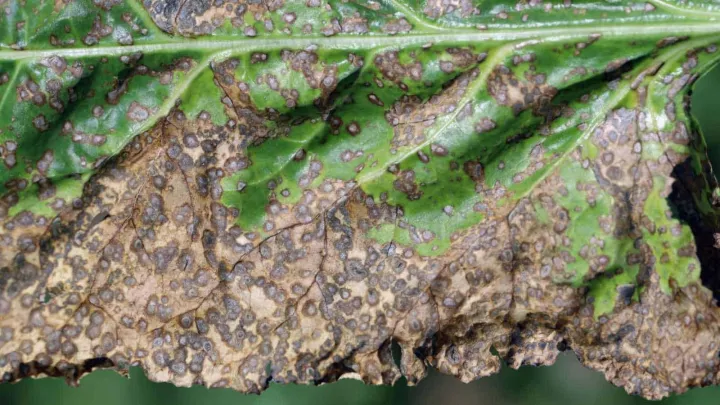
The primary sign of pseudopyrenochaetosis is the appearance of necrotic spots on the leaves and stems of infected plants. These spots typically display a defined, dark margin, often appearing circular or irregular.
Within the centers of these lesions, small black dots known as pycnidia often develop. These are the fruiting bodies of the fungus and can be identified upon close inspection of the leaf surface.
As the infection progresses, individual spots tend to coalesce, leading to premature yellowing and necrosis of the leaf blade. This significantly reduces the effective photosynthetic area of the plant.
Infected plants exhibit stunted growth and developmental delays. Severe stem infection can lead to lodging, causing the stems to weaken and break under moderate wind or physical pressure.
Under humid conditions, a fine fungal spore mass may become visible on the infected tissue. Differential diagnosis is often required to distinguish this from other common bacterial or fungal leaf spots.
Pathogen
The pathogen responsible for this disease belongs to the family Pseudopyrenochaetaceae, classified within the Coelomycetes group. It is a specialized parasite that targets the vegetative organs of its host plants.
The fungus reproduces asexually through pycnidiospores, which are contained within pycnidia. These spores are essential for the survival of the pathogen and its dissemination across the field.
The pathogen persists in crop residues and soil, often overwintering as dormant mycelium or pycnidia. It can also be seed-borne, allowing for long-distance spread when contaminated seeds are planted.
Invasion of host tissue occurs when spores germinate and penetrate the epidermal layer. The fungus then utilizes specialized enzymes to break down plant cell walls, allowing for rapid colonization of internal structures.
Biological development is highly synchronized with the growth cycle of the host plant. The fungus prefers actively growing tissues but can quickly transition to dormant survival modes when the host enters senescence.
Conditions for development
High humidity and consistent moisture are the most critical factors driving the development of pseudopyrenochaetosis. Frequent rain, dew, and foggy conditions facilitate spore germination and infection.
The optimal temperature range for the pathogen's growth and proliferation is between +18°C and +25°C. These temperatures accelerate the incubation period, often leading to rapid disease outbreaks.
Poor field hygiene and dense planting patterns impede air circulation, creating a microclimate conducive to infection. Stagnant air allows moisture to persist on the foliage for extended periods.
Continuous cropping of susceptible species on the same land significantly increases soil-borne inoculum. This buildup makes subsequent crops increasingly vulnerable to early-season infection.
Imbalanced nutrient availability, particularly excessive nitrogen fertilization, results in softer, more succulent tissues. These tissues are significantly more susceptible to fungal penetration and colonization.
Why it matters
The damage caused by pseudopyrenochaetosis results in direct yield losses. By reducing the photosynthetic capacity of the plant, the disease prevents the proper filling of seeds, fruits, and grain.
The quality of the harvested produce is severely compromised. For vegetable and ornamental crops, the presence of necrotic spots renders the product unmarketable due to poor aesthetic value.
Premature leaf drop leads to general plant weakness, making crops more susceptible to secondary infections and environmental stress. This often results in substantial plant mortality during critical growth stages.
Long-term contamination of fields with this pathogen creates an ongoing management challenge. Farmers are forced to increase expenditure on fungicides and labor-intensive agronomic practices to maintain productivity.
Indirect losses include the degradation of soil health and the potential spread of the disease to adjacent healthy fields via wind or machinery, which complicates regional management strategies.
Protection
The most effective strategy for managing pseudopyrenochaetosis is the implementation of a rigorous crop rotation schedule. Avoiding susceptible crops for at least 3-4 years significantly lowers inoculum pressure.
Sanitation practices, such as the removal and destruction of crop residues, are crucial to breaking the pathogen's life cycle. Deep plowing helps bury remnants, accelerating their decomposition.
Utilizing certified, disease-free seed is a critical preventative measure. If necessary, seed treatments can further protect the germinating seedlings from early infections originating in the soil or on the seed surface.
Fungicidal applications should be initiated at the first signs of disease, especially during periods of high humidity. Rotating fungicides with different modes of action is necessary to prevent the development of resistance.
- Maintaining optimal plant density to ensure adequate air circulation.
- Applying balanced potassium and phosphorus fertilizers to enhance plant resistance.
- Disinfecting greenhouse facilities and equipment at the end of the production cycle.
Discussion
No discussions yet — be the first.