
Pseudopithomyces sacchari
Pseudopithomyces sacchari
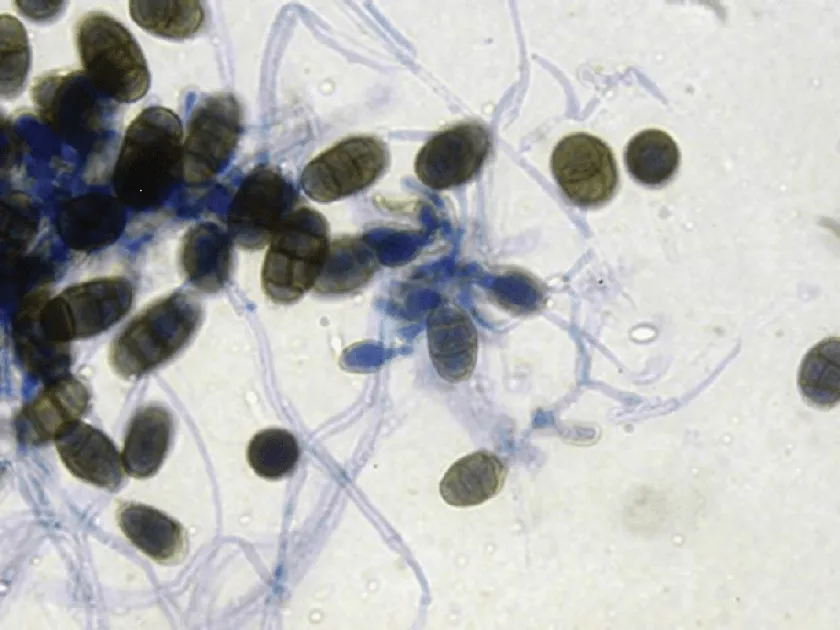
Description
Symptoms
The primary symptom of infection is the appearance of small chlorotic spots, which eventually darken and develop into necrotic lesions. These symptoms are most frequently observed on leaf blades, which serve as the primary site of pathogen activity.
As the disease progresses, these individual spots coalesce into larger irregular lesions, often surrounded by a narrow yellowish halo. In the center of these necrotic areas, a faint layer of fungal spores may be visible upon close inspection.
Under conditions of high humidity, the spots may display more intense dark pigmentation. The affected leaves gradually lose turgor, turn yellow, and fall prematurely, which significantly reduces the vegetative mass of the plant.
Infection of stems and peduncles is less common but can result in deformation or stunted growth of these plant organs. Mass outbreaks of the disease typically lead to overall plant suppression and delayed development.
- development of small leaf spots
- necrosis appearing as brown or black lesions
- premature wilting and leaf abscission
- presence of a spore layer in necrotic areas
Pathogen
The causative agent of the disease is the fungus Pseudopithomyces sacchari, which belongs to the class Dothideomycetes. While primarily acting as a saprotroph, this microorganism can display significant pathogenic traits under favorable environmental conditions.
The fungus produces dark-colored spores that are easily dispersed by wind over long distances. The mycelium penetrates plant tissues through stomata or mechanical wounds, systematically colonizing the intercellular spaces of the host plant.
This pathogen is closely related to other species within the Pithomyces genus, which are commonly associated with various types of foliar necrosis. Research indicates that Pseudopithomyces sacchari exhibits high adaptability to various organic substrates.
Throughout its life cycle, the fungus secretes specific metabolites that interfere with the physiological functions of the plant. This disruption leads to a gradual decline in cellular metabolism and a reduction in photosynthetic efficiency.
The biology of the pathogen is largely centered on its ability to persist on crop residues, allowing it to maintain its infectious potential in the field for extended periods even under adverse environmental conditions.
Conditions for development
High relative humidity and moderately warm temperatures are the primary drivers of fungal development. The optimal range for spore germination and active growth typically falls between 20 and 28 degrees Celsius.
Extended periods of rainfall or heavy dew provide ideal conditions for the colonization of young and stressed leaves. Under these conditions, the incubation period of the disease can be significantly shortened.
Poor air circulation within dense crop stands allows moisture to accumulate, creating a highly favorable microclimate for the pathogen. Such environments facilitate the rapid spread of the fungus from initial foci.
The presence of free moisture on the leaf surface is critical for the successful germination of conidia. While dry periods may temporarily inhibit the spread of the disease, they do not eradicate the pathogen's spores.
Crop debris left on the field serves as the primary reservoir for the infection. The dormant fungus reactivates when favorable conditions return, posing a recurring threat to subsequent crops.
Why it matters
The harm caused by Pseudopithomyces sacchari is primarily due to the destruction of plant tissue, which leads to a drastic reduction in the leaf surface area available for photosynthesis. This reduction directly limits biomass accumulation and yield potential.
Defoliation caused by severe infection weakens the plant, making it more susceptible to secondary stressors and opportunistic infections. This physiological weakening complicates the overall phytosanitary health of the field.
Crop quality and marketability are also adversely affected by fungal colonization. In severe cases, the damage to the plant can result in significant yield losses, especially in crops grown for their foliage or fruits.
Economic damage includes both direct harvest losses and the increased costs associated with implementing emergency control measures. Protecting crops requires continuous monitoring and investment in preventative treatments.
During years characterized by high humidity and optimal temperatures, the disease can reach epiphytotic levels, causing substantial losses. Proactive management is essential to mitigate these risks in intensive farming systems.
Protection
A rigorous crop rotation schedule is the primary defense strategy, as it helps reduce the buildup of fungal spores in the soil. Utilizing resistant crop varieties or hybrids can significantly decrease the susceptibility to the pathogen.
Effective soil management, such as the deep burial of crop residues, accelerates decomposition and lowers the pathogen's inoculum load. Controlling weeds, which may act as alternate hosts, is also a vital component of integrated management.
Chemical control involves the application of systemic fungicides effective against a broad spectrum of fungi. Applications should ideally be timed with the first appearance of symptoms to prevent widespread spore dispersion.
Optimizing plant density improves canopy aeration, which helps lower the humidity within the crop stand. Balanced nutrient management, particularly with phosphorus and potassium, helps boost the plant's natural resistance.
Regular field scouting is critical for early detection of infection hotspots. Preventive fungicide applications are justified during seasons with high humidity to protect the crop against potential outbreaks.
Discussion
No discussions yet — be the first.