
Tea leaf spot
Pseudopestalotiopsis theae
Description
Symptoms
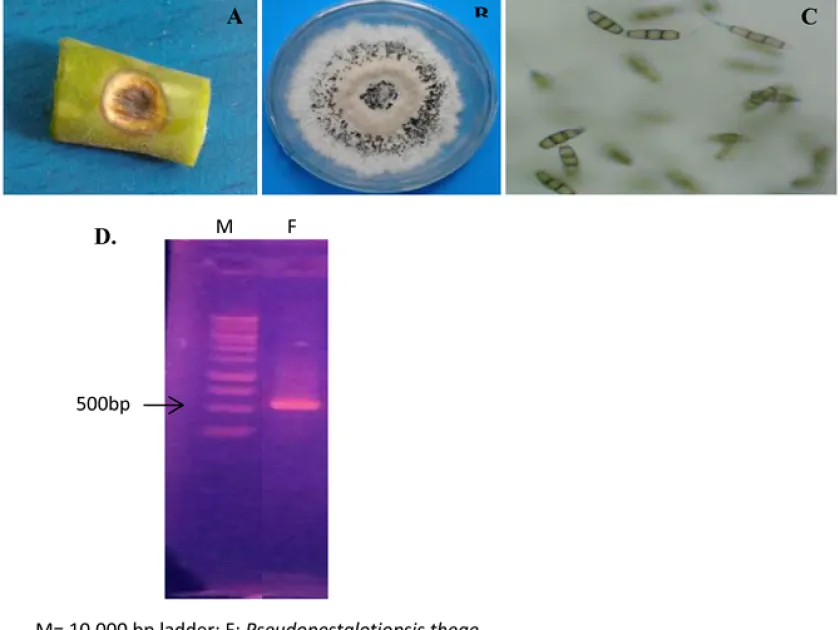
The primary symptom is the development of necrotic spots on tea leaves. These lesions typically start as small, yellowish or brown discolorations that gradually expand in size, often displaying a defined margin.
As the spots mature, the center becomes greyish-brown or pale, while the edges remain darker. The dead tissue may become brittle, causing the centers of large lesions to tear or drop out.
Tiny black fruiting bodies (acervuli) appear on the surface of the lesions, especially on the underside of the leaf or in the center of the spot. These structures are often visible to the naked eye under moist conditions.
Infections can also affect the stems and shoots, leading to dieback. If a shoot is girdled by the fungal growth, all leaves above the site of infection will wilt, turn brown, and eventually wither.
Severe infestations lead to premature leaf drop, resulting in significant defoliation. This weakening of the canopy is the most visible sign of an advanced infection, indicating a major disruption of the plant's health.
Pathogen
The causal agent of this disease is the fungus Pseudopestalotiopsis theae, a member of the Ascomycota. This pathogen has recently been clearly identified through taxonomic revisions, replacing older, generic classifications of Pestalotiopsis species on tea plants.
The fungus survives as a latent pathogen within healthy tissues or as a saprophyte in decaying plant debris and soil. Its ability to remain dormant makes it a persistent threat in tea-growing regions.
Infection occurs when conidia are dispersed by rain splash or wind currents. Upon landing on a suitable host surface, the conidia germinate, and the hyphae penetrate the plant tissue through natural openings or wounds.
Molecular analysis confirms that Pseudopestalotiopsis theae is highly specialized to the genus Camellia. Its genetic diversity allows it to successfully overcome some of the plant’s innate defensive barriers under stressful conditions.
The life cycle is completed by the formation of acervuli, which rupture the host epidermis to release new spores. This asexual reproduction allows the fungus to rapidly produce multiple infection cycles during a single growing season.
Conditions for development
High humidity and prolonged periods of rainfall are the most critical factors for the development and spread of tea leaf spot. A relative humidity exceeding 80% creates the moist environment necessary for spore germination.
Optimal temperatures for the growth of Pseudopestalotiopsis theae range between 20°C and 28°C. In these conditions, the fungus exhibits its highest level of pathogenic activity.
Poor plantation management, such as failing to prune, creates dense canopies that prevent airflow. This leads to a stagnant microclimate within the bush, which acts as a greenhouse for fungal pathogen growth.
Physical injuries to the foliage and stems are significant predisposing factors. Damage caused by insects, hail, or improper harvesting practices allows the fungus to bypass the leaf's protective cuticle and enter the internal tissues.
Nitrogen-rich fertilizer regimes can sometimes make the succulent young growth more vulnerable to invasion. When plant nutrition is not balanced, the cell walls may not be sufficiently reinforced to resist early infection.
Why it matters
The most direct harm caused by the disease is a reduction in leaf yield, which directly impacts the profitability of a tea garden. The quality of the final product is also degraded due to the necrosis of the leaf cells.
Stunted growth of new shoots limits the total biomass available for plucking, leading to smaller harvests in subsequent cycles. The plant's overall energy stores are depleted as it attempts to recover from the damage.
In nursery settings, this disease is particularly devastating. Infected cuttings often fail to root or die shortly after transplanting, resulting in substantial losses of young plant inventory.
Management costs increase significantly due to the necessity of fungicide applications and additional labor for cleaning infected plants. This adds financial pressure on plantation operators.
If not managed correctly, the disease can become chronic, causing long-term damage to the plant's structural integrity and making the entire plantation more susceptible to secondary stressors like drought or frost.
Protection
Preventative cultural practices are the foundation of effective control. Regular pruning and maintenance of the tea bushes improve airflow, which keeps the foliage dry and inhibits the growth of the fungus.
Strict sanitation is essential. All pruned material and fallen leaves, which harbor the fungus, must be removed and destroyed far from the active plantation area to break the infection cycle.
The use of chemical fungicides is required during severe outbreaks. It is vital to use systemic and contact fungicides with different modes of action to manage resistance in the fungal population.
Monitoring the plantation for the earliest signs of the disease allows for localized treatment, preventing a minor incident from escalating into a major plantation-wide outbreak.
- Select resistant or tolerant tea cultivars for new planting.
- Maintain optimal plant nutrition to enhance natural defenses.
- Disinfect pruning tools between bushes to stop pathogen spread.
- Manage irrigation to avoid water stagnation on the foliage.
- Integrate biological control methods where applicable to reduce chemical usage.
Discussion
No discussions yet — be the first.