
Pseudohydnum
Pseudohydnum
Description
Symptoms
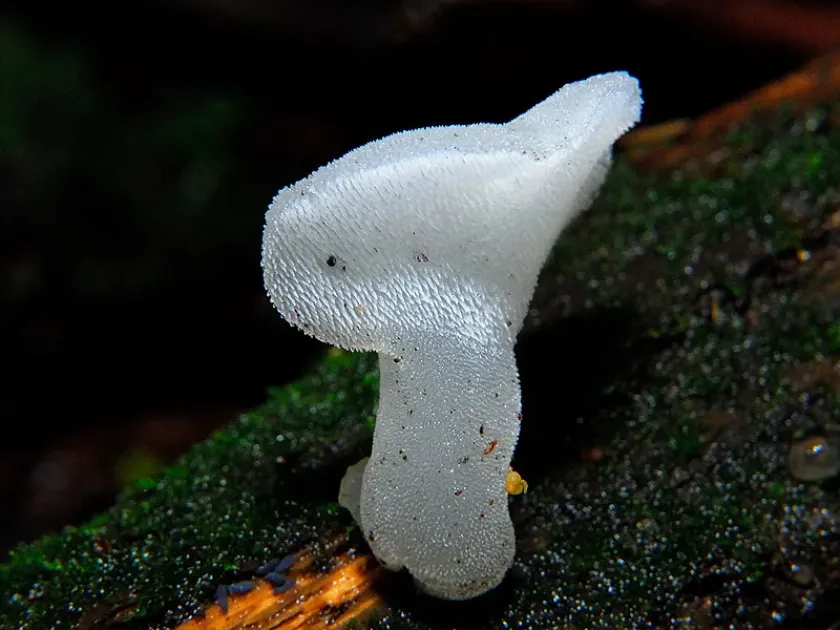
The most visible symptom is the appearance of translucent, jelly-like fruiting bodies with spiny surfaces on the bark or stumps of infected trees.
The wood affected by the fungus loses its structural integrity, becoming light in color and fibrous, which significantly reduces its mechanical strength.
Early-stage symptoms may be subtle, but careful observation often reveals localized necrotic patches or areas where the bark has begun to loosen and discolor.
High humidity and moisture levels trigger the growth of these fruiting bodies, making the infection more apparent during wet periods throughout the growing season.
Chronic infection results in the gradual weakening of the host tree, often leading to canopy thinning or the death of individual branches due to impaired sap flow.
Pathogen
Pseudohydnum is a genus of basidiomycete fungi, with Pseudohydnum gelatinosum being the most recognized species. It typically acts as a wood-decay fungus that primarily affects coniferous tree species.
Biologically, the pathogen is classified within the Tremellomycetes class. It is characterized by its gelatinous, translucent fruiting bodies, often featuring a spiny underside that distinguishes it from other fungi.
The fungus enters the tree through wounds in the bark, broken branches, or stump cuts. Once established, the mycelium penetrates the wood tissue, initiating a decay process known as white rot.
It can survive both as a parasite on living trees and as a saprotroph on deadwood, allowing it to persist in various environmental conditions and spread continuously.
The life cycle involves the production of basidiospores that are dispersed by wind and rain, infecting new hosts whenever environmental conditions are suitable for germination.
Conditions for development
The development of Pseudohydnum is highly dependent on humidity. The fungus thrives in shaded, damp environments with poor air circulation.
Moderate temperatures ranging from 15 to 22 degrees Celsius provide the ideal metabolic environment for mycelial growth and spore production.
Trees that have been weakened by mechanical damage, soil compaction, or drought stress are significantly more susceptible to infection by these spores.
Dense planting schemes that prevent the crown from drying out after rain create favorable microclimates for the fungus to establish and spread.
The presence of decomposing organic matter and old stumps in the vicinity serves as a constant reservoir for the pathogen to thrive and infect adjacent healthy trees.
Why it matters
The primary impact of Pseudohydnum is the degradation of wood quality, which diminishes the timber value and structural safety of the affected trees.
In landscaping and public parks, the infection can make trees unstable, posing a significant risk of branch breakage or total tree failure during high winds.
Physiological damage to the tree's vascular system hinders the transport of essential nutrients, leading to progressive decline, stunted growth, and eventual mortality.
In commercial forestry, the spread of this fungus results in financial losses, as affected trees may require premature harvesting and disposal.
The persistence of the fungus in the environment disrupts local forest health, creating an ongoing risk for new saplings and mature trees within the area.
Protection
Effective control relies on integrated forest and garden management practices aimed at minimizing infection risks and removing potential sources of spores.
Sanitary pruning and the removal of deadwood or infected tree sections are essential for maintaining a healthy environment and limiting the spread of the fungus.
Protecting trees from mechanical injuries and immediately sealing any necessary cuts with protective paint or fungicides can prevent the entry of spores.
Improving air circulation through proper thinning and maintenance helps keep the bark dry, creating a hostile environment for fungal colonization.
- Prompt removal of diseased wood.
- Application of wound dressings to cuts.
- Regular monitoring of tree bark health.
- Promotion of good ventilation in tree clusters.
Discussion
No discussions yet — be the first.