
Eyespot
Pseudocercosporella
Description
Symptoms
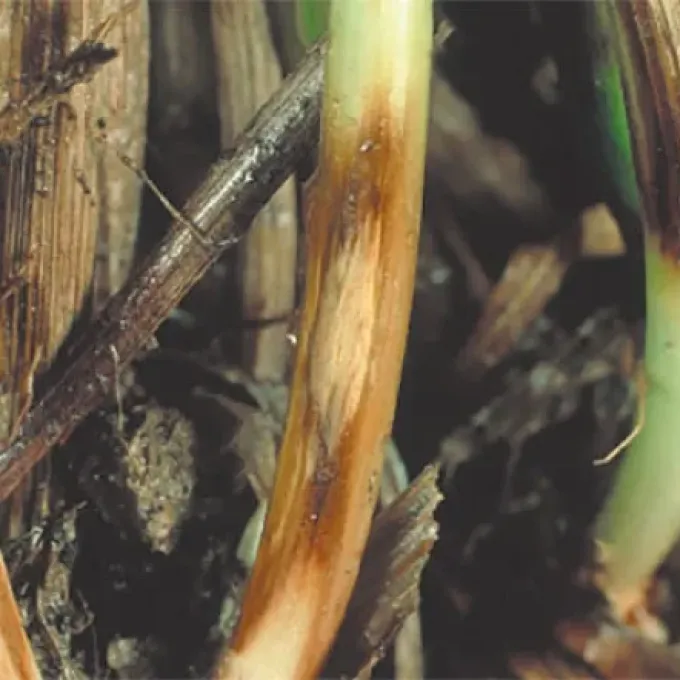
The classic symptom is the appearance of eye-shaped lesions on the lower stem. These spots are light-colored with a dark margin, which gives the disease its common name.
As the infection progresses, the tissues become softened and weakened. This structural damage leads to characteristic lodging, where plants break at the base rather than bending from the nodes.
Inside the stems, a gray or white fungal mycelium may be visible. This internal colonization disrupts the plant's vascular system, hindering the transport of water and nutrients.
Early symptoms are often hidden under leaf sheaths, requiring careful inspection. Severe infection leads to premature ripening and the formation of shriveled, thin grain.
Infected fields often show patchy areas of lodged plants, which are easily identified when the crop reaches the stem elongation stage.
Pathogen
Eyespot is a fungal disease caused by Pseudocercosporella herpotrichoides. This pathogen primarily attacks the base of the stem in cereal crops, particularly wheat and barley.
The fungus survives as mycelium on crop debris within the soil. It can remain viable for several years, making the management of infected stubble crucial for disease prevention.
The life cycle is characterized by the production of conidia during cool, wet weather. These spores are splash-dispersed by raindrops, infecting the lower leaves and stems of young plants.
There are two primary strains of the pathogen, known as W-type and R-type, which show varying levels of aggressiveness towards wheat and rye, respectively.
The fungus colonizes the stem tissues, penetrating the leaf sheaths and eventually causing structural damage to the main stem of the plant.
Conditions for development
The development of eyespot is favored by cool, damp weather conditions. Temperatures between 5°C and 15°C, combined with high humidity, are ideal for spore germination.
Frequent rainfall events during the spring are critical for the splash-dispersal of the fungus. Fields with poor airflow, such as dense or over-fertilized crops, are at higher risk.
Continuous cropping of cereals is the primary factor in disease build-up. The fungus thrives where susceptible host plants are grown in close rotation.
Early autumn sowing of winter cereals can provide a longer window for the fungus to infect young plants before the onset of winter dormancy.
Conservation tillage systems that leave large amounts of crop residue on the soil surface can increase the amount of available inoculum for the next crop.
Why it matters
Eyespot causes significant yield losses by restricting nutrient flow to the ear. This results in smaller, lower-quality grains and reduced overall biomass.
Lodging caused by the disease is a major issue during harvest. It makes it difficult for combine harvesters to pick up the crop, leading to substantial mechanical losses.
The quality of harvested grain is severely impacted, with lower hectoliter weight and poor processing quality, which limits market options and profit.
Weakened plants are more susceptible to secondary infections by other root rot pathogens, further reducing the vigor and resilience of the entire crop.
Under favorable conditions for the disease, yield losses can reach 30% or more, significantly impacting the economic return on the cereal production.
Protection
The primary control strategy involves cultural practices, with crop rotation being the most effective tool to reduce the soil inoculum pressure.
Fungicide applications during the tillering to early stem elongation phases are essential in high-risk scenarios to prevent stem base colonization.
Selecting varieties with resistance or good straw strength is a fundamental part of integrated pest management for eyespot.
- Deep plowing to bury crop residues.
- Adjusting seeding rates to ensure proper air circulation.
- Balanced nitrogen fertilization to avoid excessive canopy density.
- Monitoring fields during the spring for early signs.
Proper management of the field environment, combined with timely chemical protection, is essential for maintaining crop health and maximizing yields.
Discussion
No discussions yet — be the first.