
Cercospora leaf spot of viburnum
Pseudocercospora viburnigena
Description
Symptoms
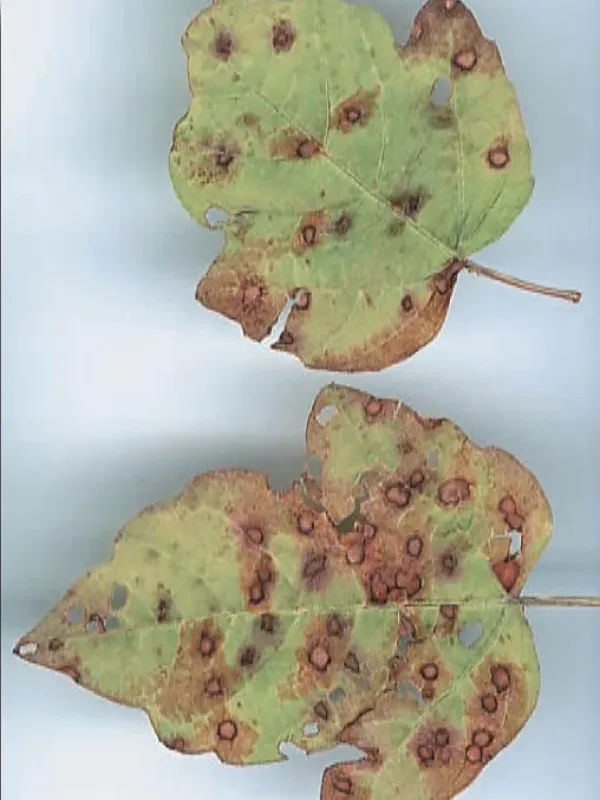
The first symptoms typically appear in early summer as small, isolated spots on the leaves. As the disease advances, these spots enlarge and often assume an angular shape, as the fungal growth is limited by the leaf veins.
The coloration of these spots ranges from reddish-brown to dark brown, often surrounded by a darker, more defined margin. This halo effect is a common diagnostic feature for this type of Cercospora infection.
A fine, olive-gray or brownish velvety mold can often be observed on the underside of the leaf, corresponding to the area of the spots. This represents the mass of conidia and conidiophores of the fungus.
As the tissue dies, the center of the spots may become brittle and drop out, resulting in a "shot-hole" appearance on the foliage. Heavily infected leaves eventually turn yellow and abscise prematurely.
- Brownish spots with dark borders on leaves.
- Visible fungal sporulation on the underside of spots.
- Premature yellowing and leaf drop.
- Tissue necrosis leading to shotholes.
- Overall loss of plant vigor.
Pathogen
The causative agent of this disease is the phytopathogenic fungus Pseudocercospora viburnigena. It belongs to the group of mitosporic fungi that primarily target the leaf tissues of viburnum species, causing characteristic necrosis.
The pathogen overwinters as mycelium in fallen leaf litter and on infected plant debris remaining in the garden. When spring temperatures rise and moisture levels are adequate, the fungus produces conidia which initiate the primary infection.
Dissemination occurs via wind currents, splashing rain, or overhead irrigation. These spores land on healthy leaves and penetrate the plant surface, establishing a parasitic relationship with the host cells.
The infection disrupts the vegetative cycle of the plant by damaging the leaf blade surface. Under favorable conditions, the pathogen can produce multiple generations of spores throughout the growing season, spreading across the foliage.
This fungus is well-adapted to temperate climates, making it a persistent issue for viburnum owners. Because the pathogen can survive for long periods in soil debris, managing its life cycle is essential for control.
Conditions for development
The development of Cercospora leaf spot is highly dependent on high relative humidity and moderate temperatures. Extended periods of wet weather are the most significant drivers of disease outbreaks.
Poor airflow, caused by dense planting or failure to prune the shrub, allows moisture to remain on the foliage for longer periods. This creates the optimal window of opportunity for fungal spores to germinate and colonize.
Shady areas of the garden, where sunlight is restricted, tend to stay damp longer and often suffer from higher disease pressure. These environments facilitate the rapid expansion of the fungus across the shrub.
Nighttime dew combined with high humidity provides a perfect habitat for the pathogen. Overhead watering late in the day can exacerbate the problem by keeping the foliage wet throughout the night.
Stressed or nutrient-deficient plants are significantly more susceptible to infection. Maintaining plant health is critical, as weak specimens lack the natural defenses required to limit the growth of the fungus.
Why it matters
The primary damage caused by this disease is the reduction of the photosynthetic capacity of the viburnum. By destroying large portions of the leaf tissue, the plant is unable to produce sufficient energy for growth.
Premature leaf drop prevents the shrub from accumulating the necessary reserves for winter dormancy. This leaves the plant vulnerable to cold damage, which can lead to significant dieback in the following spring.
The decorative value of the viburnum is heavily compromised, as the foliage becomes unsightly and the plant loses its lush appearance. This impacts the aesthetic contribution of the shrub to the landscape.
Chronic infections weaken the plant's immune system, making it more prone to secondary infestations by pests or other opportunistic pathogens. Over time, the cumulative stress can result in stunted growth.
Flowering and fruit production potential are significantly reduced because the plant directs its resources toward fighting the infection rather than reproductive development. Severe cases may result in the loss of branches.
Protection
Sanitation is the most effective approach for managing Cercospora leaf spot. Raking and removing all fallen leaves in autumn is crucial to eliminate the primary inoculum source for the next season.
Annual pruning is necessary to improve air circulation and sunlight penetration within the canopy. Removing diseased branches helps to minimize the fungal load present on the shrub during the early spring.
Preventive fungicide treatments, particularly those based on copper, can be effective if applied early in the spring before the buds break. Further applications may be required if the weather remains wet and humid.
Systemic fungicides may be used at the first sign of symptoms to halt the spread of the mycelium. Rotating different types of chemical products is recommended to prevent the fungus from developing resistance.
Proper plant care, including balanced fertilization and correct watering practices, strengthens the cell walls of the viburnum. A healthy, well-nourished shrub is naturally more resilient against fungal pathogens.
Discussion
No discussions yet — be the first.