
Pseudocercospora leaf spot
Pseudocercospora cladosporioides
Description
Symptoms
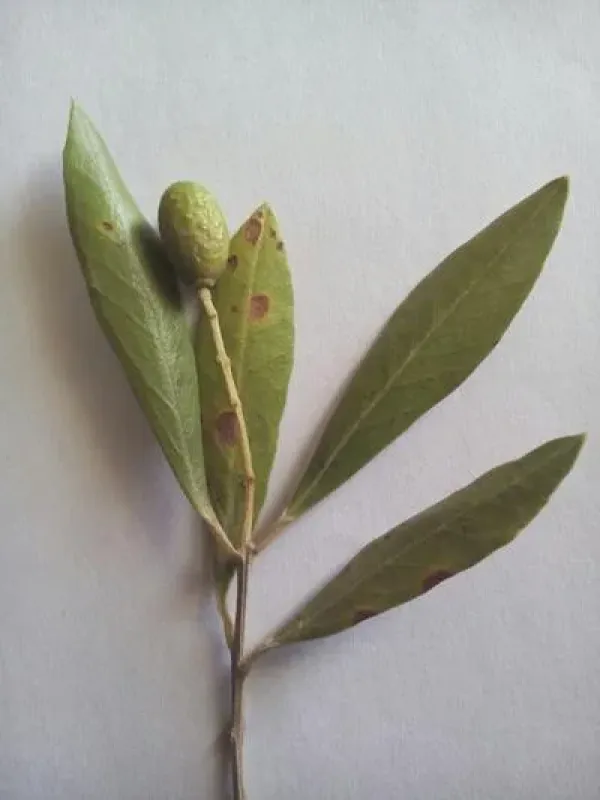
The primary symptom of this disease is the appearance of localized necrotic spots on the leaf blades. These spots are often irregular or angular in shape and may start as small chlorotic areas before turning brown or dark gray.
Under conditions of high humidity, a characteristic velvety or soot-like layer appears on the underside of the leaves in the center of the spots. This layer consists of the fungus's conidiophores and conidia, which are the main mechanism for spread.
As the infection progresses, the tissues within the spots may dry out and become brittle, often resulting in a "shot-hole" appearance as the dead tissue falls out of the leaf. Widespread infection leads to severe yellowing and premature wilting of the foliage.
In advanced cases, the infection can spread to young shoots and petioles, where small, dark ulcers may develop. This indicates that the pathogen has successfully colonized more than just the leaf surface.
The visual impact on the plant is profound, characterized by a general loss of vigor, drooping leaves, and significantly reduced aesthetic value. Defoliation typically begins from the lower parts of the canopy and progresses upwards.
Pathogen
The causal agent is the fungus Pseudocercospora cladosporioides, an ascomycete pathogen known for its ability to infect a variety of host plants. It survives mainly as mycelium or conidia within host debris.
The pathogen is highly effective at dispersing its conidia via wind, rain splashes, and insects. These spores are capable of initiating new infection cycles whenever environmental conditions are favorable.
This fungus exhibits strong survival capabilities, over-wintering in fallen leaves and on the bark of infected branches. With the return of warmer weather, it resumes sporulation, completing its lifecycle across seasons.
The biological success of Pseudocercospora cladosporioides lies in its ability to adapt to varying degrees of humidity within the plant's canopy, allowing it to thrive even in less than ideal conditions.
Mycelial invasion happens through natural plant openings such as stomata or directly via the epidermis, systematically breaking down cell structures to extract essential nutrients for growth.
Conditions for development
Environmental moisture is the most critical factor for the disease. Periods of sustained high humidity or frequent rainfall are necessary for the spores to germinate and penetrate the plant tissues effectively.
Orchards and gardens with high plant density suffer from poor air circulation, which prevents leaves from drying quickly after rainfall. This persistent film of water on foliage is an invitation for fungal infection.
Temperature plays a vital role, with optimal growth occurring in the range of 20°C to 25°C. In such climates, the incubation period of the fungus is shortened, leading to rapid disease development.
Plants under nutrient stress or those that are poorly pruned are significantly more susceptible to the pathogen. Proper spacing and airflow are essential management tools to keep the microclimate unfavorable for the fungus.
The presence of overwintering inoculum in the form of leaf litter is the primary driver of early-season outbreaks, making sanitation the most important initial control step.
Why it matters
The primary damage caused by this disease is the significant reduction in leaf area, which drastically lowers the plant's photosynthetic capacity. This limits the energy reserves available for fruit development and vegetative growth.
Premature leaf drop forces the plant to enter winter dormancy in a weakened state, increasing the risk of frost damage or total winter dieback. Long-term productivity and overall lifespan of the plant are severely compromised.
In ornamental and nursery sectors, the visual damage caused by leaf spots renders plants unfit for sale or landscaping. The aesthetic decline often translates into immediate financial losses for growers.
Chronic infections lead to the degradation of the tree structure over time, causing stunted growth and a thinning canopy. The plant becomes increasingly vulnerable to secondary infections and opportunistic pests.
Effective management requires significant expenditure on fungicides and labor to mitigate these losses, impacting the overall profitability of the cultivation cycle.
Protection
The most important control measure is strict sanitation. Raking and destroying all fallen leaves is essential, as this material is the primary source of inoculum for the next growing season.
Proper pruning is necessary to maintain an open canopy structure, which ensures that foliage dries rapidly after rain, thereby breaking the disease cycle. Soil fertility management also helps maintain strong natural resistance.
Fungicide applications, particularly those based on copper or modern systemic chemistry like triazoles, should be applied as a preventive measure during the early stages of bud break.
Regular surveillance allows for the early detection of localized spots. Removing individual infected leaves or branches can help prevent a widespread outbreak within a single season.
- Sanitary removal of all fallen foliage.
- Pruning for improved light and airflow.
- Preventive spray programs with fungicides.
- Use of disease-resistant varieties if available.
- Monitoring of local weather patterns for timing.
Discussion
No discussions yet — be the first.