
Cercospora leaf spot of solanaceous crops
Pseudocercospora atromarginalis
Description
Symptoms
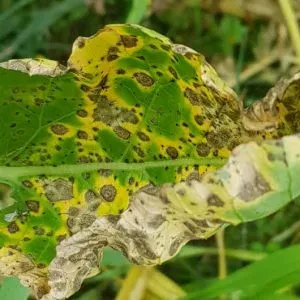
The most distinctive sign of this disease is the appearance of small, circular to irregular spots on the leaves. Initially, these spots are pale, but they darken significantly as the disease progresses.
Mature spots are typically brown or dark-brown, often surrounded by a darker, necrotic margin. A grayish, olivaceous mold may appear in the center of these spots, particularly under high humidity, indicating sporulation.
Infection usually starts on the lower, older leaves and moves upwards. Heavily infected leaves turn yellow, curl, and eventually drop prematurely, significantly reducing the plant's overall photosynthetic capacity.
The presence of the grayish-olive fuzz on the underside of the leaves is a definitive diagnostic feature that distinguishes this pathogen from other leaf-spotting fungi.
- Dark-brown necrotic spots with distinct margins.
- Yellowing and wilting of the lower canopy.
- Premature leaf abscission.
- Stunted growth of the entire plant.
Pathogen
The causal agent of the disease is the fungus Pseudocercospora atromarginalis (formerly known as Cercospora atromarginalis), which belongs to the class Deuteromycetes. This pathogen specifically targets solanaceous crops, causing significant damage to their foliage.
The fungus reproduces via conidia, which serve as the primary source of infection. These spores can persist for extended periods in soil and on crop debris, ensuring the pathogen survives until the next planting season.
Spore dissemination occurs mainly through wind currents, splashing rain, or overhead irrigation. These factors facilitate the rapid spread of the fungus across commercial fields and greenhouses.
Once the conidia land on the host tissue, they penetrate and colonize the intercellular space. As the fungal mycelium grows, it destroys plant cell walls, leading to the formation of necrotic spots on the leaves.
The pathogen thrives in specific ecological niches, requiring a precise combination of warmth and moisture to initiate and sustain a severe infection cycle on the host plant.
Conditions for development
The development of Cercospora leaf spot is favored by warm temperatures ranging from +20°C to +28°C. These temperatures are optimal for spore germination and the rapid expansion of fungal colonies.
High relative humidity, typically exceeding 80%, is essential for the disease to reach epidemic proportions. Periods of persistent rainfall, heavy morning dew, or fog are major triggers for infection.
In greenhouses, inadequate ventilation and poor air circulation lead to a build-up of stagnant moist air, which significantly accelerates the spread of the fungus among plants.
Dense planting configurations that prevent leaves from drying quickly after irrigation create an ideal environment for the pathogen to penetrate and establish itself within the leaf tissue.
Failure to sanitize greenhouses and remove plant debris after harvest ensures a high inoculum load in the following season, often leading to earlier and more severe disease outbreaks.
Why it matters
The primary economic impact of the disease is premature defoliation. A reduction in leaf area directly impairs the plant's ability to produce energy through photosynthesis, resulting in significantly lower yields.
Plants affected by the disease are unable to properly develop fruit. The resulting harvest is often characterized by smaller, lower-quality, and misshapen fruit that may not meet market standards.
The weakened physiological state of the plants makes them more susceptible to secondary attacks by other pathogens, complicating management efforts and potentially increasing the need for additional chemical treatments.
In severe infestation cases, yield losses can range from 20% to over 50%. This loss is particularly devastating in high-value vegetable production systems where uniformity and quality are critical.
Persistent infection weakens the host plant over time, making it nearly impossible to sustain vigorous growth throughout the entire growing season without consistent intervention.
Protection
Crop rotation is the first line of defense. By avoiding the cultivation of solanaceous crops in the same area for at least 3-4 years, the life cycle of the fungus is disrupted, effectively reducing initial inoculum.
Sanitation practices are mandatory; removing and destroying infected plant debris immediately after harvest helps prevent the pathogen from overwintering and reinfecting the site.
Chemical control involving copper-based fungicides or systemic options such as triazoles and strobilurins is effective when applied preventatively or at the first signs of infection.
Managing the microclimate is crucial. In greenhouses, ensuring proper spacing, air circulation, and avoiding excessive overhead irrigation help keep the foliage dry and unfavorable for spore development.
Choosing resistant cultivars and ensuring the use of certified, disease-free seed are long-term strategies that minimize reliance on chemical inputs and improve overall crop health.
Discussion
No discussions yet — be the first.