
Cercospora leaf spot of okra
Pseudocercospora abelmoschi
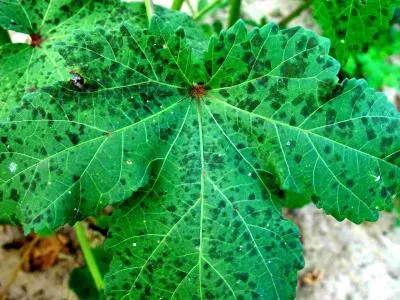
Description
Symptoms
Symptoms typically begin as small, irregular, or angular yellow to light brown spots on the lower, older leaves of the okra plant.
As the infection progresses, these spots expand, often merging into larger patches, and develop a grayish-olive velvety coating on the undersides of the leaves.
The affected areas eventually turn necrotic, resulting in dry, brittle leaf tissue that may drop prematurely from the plant.
Severe infestations lead to extensive chlorosis and defoliation, which severely reduces the photosynthetic surface area of the okra plant.
While the leaves are primarily affected, spots can also appear on petioles and stems, showing a characteristic dark appearance during the advanced stages of the disease.
Pathogen
The disease is caused by the fungus Pseudocercospora abelmoschi, formerly classified as Cercospora abelmoschi, which specifically targets okra and related Malvaceae species.
The pathogen overwinters in infected crop debris left on the field, which serves as the primary reservoir for infection in the following growing season.
Conidia of the fungus are dispersed through wind currents, splashing water from rainfall or overhead irrigation, and contaminated tools used during field maintenance.
The fungus colonizes the leaf tissue by penetrating through stomata or directly through the cuticle, eventually establishing a mycelial network within the plant cells.
Development is highly dependent on environmental factors, allowing the fungus to maintain its life cycle even under fluctuating seasonal conditions.
Conditions for development
Warm temperatures ranging from 20 to 28 degrees Celsius combined with high relative humidity are ideal for the rapid development of the pathogen.
Conditions such as persistent morning dew, frequent rain, and cloudy weather create a conducive environment for spore germination and infection.
Poor aeration in dense plant populations contributes to a microclimate that traps moisture on the leaf surface, accelerating disease spread.
In greenhouses, insufficient ventilation and excessive irrigation practices are primary drivers of outbreaks during the growing cycle.
Weed management is critical, as wild relatives of okra can serve as alternative hosts for the fungus throughout the year.
Why it matters
The disease causes a significant reduction in plant vigor, which directly leads to lower fruit yields and inferior produce quality.
Early defoliation limits the nutrient supply to developing pods, resulting in smaller, underdeveloped okra pods that may be unsuitable for market.
Infected plants become stressed, making them more susceptible to attack by other opportunistic pests and secondary infections.
Economic losses can be substantial in commercial plantings where the disease is not managed, potentially leading to total crop failure under severe weather conditions.
The loss of foliage leaves the plant vulnerable to sunscald and further environmental stress, exacerbating the overall damage to the crop.
Protection
Integrated disease management is essential to minimize the impact of Cercospora leaf spot on okra plantations.
Crop rotation practices should include a 3 to 4-year break before returning Malvaceae family crops to the same plot of land.
Sanitation is paramount; all crop residues must be thoroughly removed or deeply plowed under immediately after the final harvest.
When symptoms appear, timely application of copper-based fungicides or systemic fungicides can help prevent further spread of the infection.
- Maintain proper spacing between rows to enhance air circulation.
- Avoid overhead irrigation to keep foliage dry.
- Use certified, disease-free seed for planting.
- Regular monitoring and removal of infected leaves during the early stages.
Discussion
No discussions yet — be the first.