
Porodaedalea
Porodaedalea
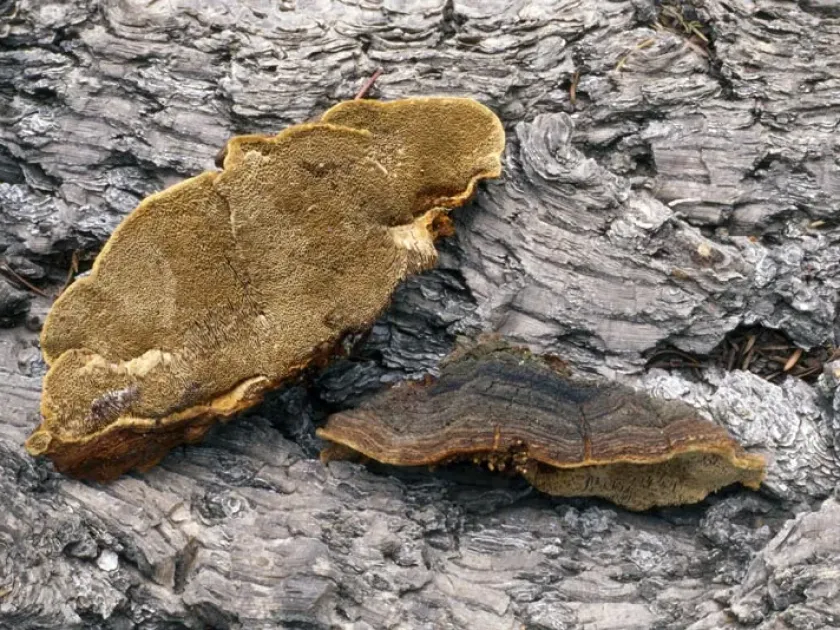
Description
Symptoms
The most prominent sign of an infection is the presence of shelf-like or hoof-shaped fruiting bodies protruding from the tree trunk.
Infected trees often exhibit crown dieback, sparse foliage, and a general decline in growth rate compared to healthy counterparts.
Internally, the wood undergoes advanced stages of decay, characterized by a soft, brittle texture and the formation of large cavities.
Needle discoloration or premature leaf shedding can often signal that the tree is struggling to maintain vascular functions.
- Hoof-shaped fungal conks on trunks.
- Reduced growth and vigor of the tree.
- Softened, rotted heartwood structure.
- Crown thinning and branch mortality.
Pathogen
Porodaedalea is a genus of wood-decay fungi within the Hymenochaetaceae family, known for causing significant heart rot in various forest tree species.
The disease is initiated when fungal spores enter the host tree through wounds, broken branches, or natural fissures in the bark.
As a basidiomycete, the fungus produces hard, perennial fruiting bodies that serve as the primary source of spore dispersal for years.
Once established, the mycelium colonizes the heartwood, gradually breaking down the tree's structural integrity from the inside out.
The most well-documented species is Porodaedalea pini, commonly referred to as the pine heart rot fungus, which targets conifers.
Conditions for development
The development of Porodaedalea is highly dependent on humidity levels and the availability of infection courts such as pruning wounds.
Spore dissemination is predominantly air-borne, allowing the pathogen to travel over vast distances to locate susceptible hosts.
Older stands are significantly more vulnerable as they naturally accumulate more injuries and have a larger proportion of heartwood susceptible to decay.
Periods of wet weather facilitate the release and germination of spores, making specific seasons more dangerous for initial infection.
Poorly managed forest plots with dense canopy cover provide a stable microclimate that benefits the fungal growth cycle.
Why it matters
Porodaedalea causes severe economic losses by rendering timber commercially unusable due to extensive internal decay.
The structural weakening of the trunk increases the probability of windthrow, making affected trees hazardous in forest environments.
The disease compromises the host's health by disrupting the efficient transport of water and nutrients throughout the tree's system.
Individual infected trees act as chronic sources of infection, putting the entire forest stand at risk of long-term contamination.
Persistent infestations lead to the degradation of high-value forests and necessitate costly intervention programs.
Protection
Sanitation cutting is the primary method of management, which involves the physical removal and destruction of infected trees.
Good forest hygiene practices, including the minimization of mechanical damage to stems during maintenance, help prevent new infections.
Regular inspections and surveys allow for the early detection and culling of diseased trees before they produce significant amounts of spores.
Promoting a healthy, diverse forest ecosystem increases the resilience of the stand against fungal encroachment and natural stressors.
Biological and chemical control methods are currently limited in practical forest applications, emphasizing the importance of preventative silviculture.
Discussion
No discussions yet — be the first.