
Porina lectissima
Porina lectissima
Description
Symptoms
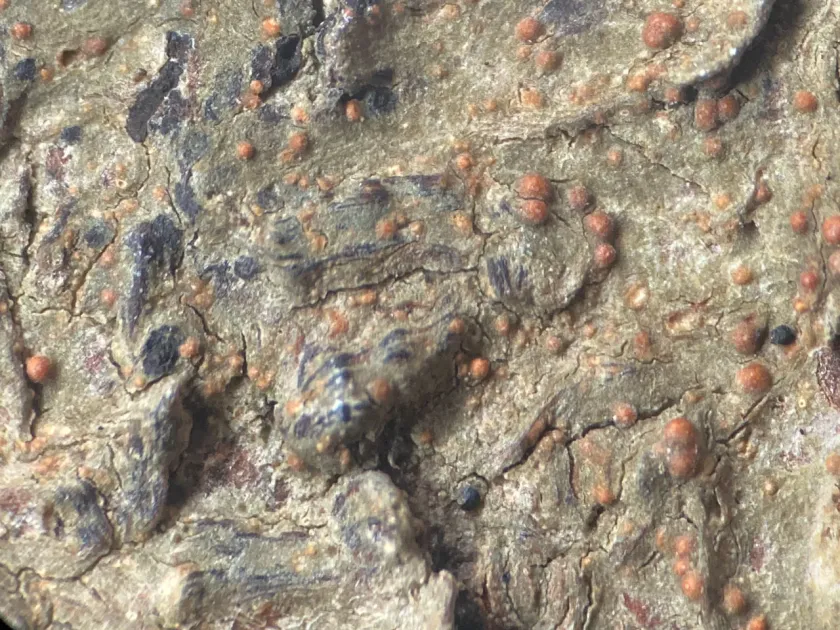
The primary symptom of Porina lectissima is the appearance of a specific crust-like coating on the trunk and branches, ranging in color from greenish-grey to pale ochre.
On the affected bark, numerous small, dark dots are visible, representing the perithecia of the fungus, which are submerged within the lichen thallus.
The thallus adheres tightly to the substrate, appearing as a thin, crustose layer. During periods of high humidity, the color of the colony becomes more distinct and vivid.
Infection signs are typically found on mature trees, particularly on the shaded sides of the trunks where moisture levels remain consistently higher.
Unlike primary pathogens, this fungus does not cause immediate necrosis or rot, but its presence signifies a shift in the bark microhabitat, potentially favoring other conditions.
Pathogen
Porina lectissima is a species of lichenized fungus belonging to the family Porinaceae. In agricultural and arboricultural contexts, it is classified as an epiphytic organism colonizing the bark of woody plants.
The biology of the pathogen is centered on the symbiotic relationship within the lichen thallus, where the fungal structure provides protection while the algal component ensures nutritional support.
This organism primarily develops on smooth bark surfaces of deciduous trees in humid conditions. While not an obligate parasite, its colonization can alter the micro-conditions of the bark surface.
The fungus produces small, dark fruiting bodies known as perithecia, which are deeply embedded in the thallus, appearing as tiny dots on the surface of the bark.
Due to its high sensitivity to air pollution, the presence of Porina lectissima is often used as a biological indicator of good air quality in the surrounding environment.
Conditions for development
The main factor promoting the development of Porina lectissima is high relative humidity combined with low light intensity (shade). The fungus thrives in locations where moisture lingers.
Stable temperatures within temperate ranges support the metabolic activity of the lichen complex, allowing for slow but consistent colonization of the bark surface.
Spore dissemination occurs primarily through wind and water splashing, which transport reproductive structures to suitable fissures on the bark of host trees.
Old trees with rough or stable bark surfaces are most prone to colonization, as they offer a long-term, undisturbed substrate for the fungal colonies to establish.
Lack of canopy management, leading to dense foliage and restricted airflow, provides the ideal micro-environment for the spread of this epiphytic organism.
Why it matters
The direct harm caused by Porina lectissima to the host tree is minimal, as it does not feed on the plant's vascular tissues or sap.
The main issue is that the dense thallus may physically block gas exchange in the bark, potentially impacting the respiration of the surface tissues over time.
The moisture-retaining nature of the lichen colony creates a protective micro-niche for pests such as scale insects, which may exploit the cover to avoid natural enemies.
Continuous dampness beneath the colony can facilitate the secondary colonization of the bark by opportunistic bacteria or fungi that could lead to tissue damage.
Widespread presence on young trees often reflects poor vigor, indicating that the tree requires better agronomic conditions to maintain its overall health.
Protection
Preventive measures include regular sanitary pruning to improve canopy aeration and light penetration, effectively creating an unfavorable micro-environment for the fungus.
When colonization becomes extensive, mechanical removal using soft-bristle brushes during the plant's dormant season can effectively clear the bark without damaging the cambium.
Applications of iron or copper sulfate solutions act as effective disinfectants, damaging the structure of the lichen thallus and preventing further regrowth.
Whitewashing tree trunks with a lime-based mixture supplemented with fungicides is an excellent method to prevent spore attachment and new lichen colonization.
Maintaining optimal irrigation practices and avoiding overcrowded planting patterns are essential to keeping trees healthy and reducing the incidence of epiphytic growth.
Discussion
No discussions yet — be the first.