
Poria rot
Poria
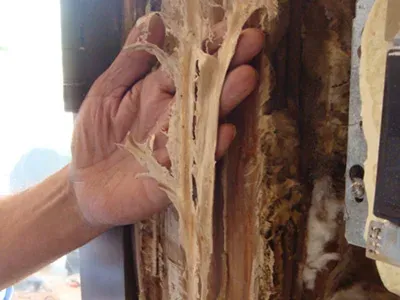
Description
Symptoms
The primary symptom is the internal degradation of wood tissue, which becomes soft, brittle, and often displays a distinct brown or bleached color depending on the species.
White, felt-like fungal mats or cord-like mycelial strands are often visible under the bark or on the surface of infected roots and root collars.
Fruiting bodies (sporocarps) of the fungus may appear on the base of the trunk or on rotting stumps. These are typically flat, porous, and crust-like structures.
Affected trees show a gradual decline in health, characterized by thin foliage, yellowing of needles or leaves, and the premature dieback of the crown.
Trees with significant root involvement often lack stability, leading to an increased risk of windthrow even during moderate weather conditions.
Pathogen
Poria rot is caused by various species of fungi belonging to the genus Poria, which are categorized as wood-decay basidiomycetes. These fungi are primary agents of white or brown rot in timber.
Common species involved in this type of disease include Poria subacida and Poria vaillantii, which are known for their ability to break down lignin and cellulose components of wood.
The fungus develops an extensive mycelial network that spreads throughout the root system and up into the lower stem, effectively compromising the structural integrity of the tree.
Reproduction primarily occurs through spores dispersed by wind or insects, as well as through direct vegetative transmission between adjacent tree roots in dense stands.
Once established, the pathogen can persist for many years in stumps, fallen debris, and buried root fragments, making it a persistent threat in both forestry and landscape management.
Conditions for development
High humidity and poor soil drainage are the most critical factors favoring the development and spread of Poria species in forest environments.
The disease thrives in shaded, cool, and stagnant air environments where moisture accumulates on the surface of woody debris and decaying logs.
Mechanical damage caused by logging equipment, storms, or animals creates entry points through which fungal spores or mycelium can infect healthy tissues.
Trees already stressed by drought, poor soil nutrition, or pollution are significantly more susceptible to infection compared to healthy, vigorous individuals.
The presence of old stumps or residual woody biomass serves as a primary reservoir that allows the fungus to survive and spread to nearby healthy trees.
Why it matters
Poria rot causes significant economic losses in the forestry sector by reducing timber quality and leading to the eventual death of affected stands.
The structural damage caused to the root system significantly increases the hazard of falling trees, which is a major concern in urban forestry and parks.
Because the infection spreads through root contact, it often forms expanding mortality centers, killing trees in clusters and creating gaps in the forest canopy.
Infected wood loses all its commercial value, becoming unusable for construction due to its fragile and decomposed nature, commonly referred to as "punky" wood.
The ecological balance of the forest is disrupted as mature, resistant trees are lost, potentially allowing less desirable or invasive species to colonize the area.
Protection
The most effective management strategy involves rigorous sanitation, including the prompt removal of infected trees and the stump extraction in disease hotspots.
Preventing mechanical damage to tree stems and roots during forest operations is essential to limit potential entry points for the pathogen.
In high-value areas, creating trench barriers can effectively stop the spread of the mycelium through the soil by severing interconnected root networks.
Maintaining appropriate tree density and conducting thinning helps improve air circulation and sunlight penetration, creating a less favorable environment for fungi.
Applying protective fungicides to wounds and cut surfaces can help prevent secondary infections in managed landscapes or high-value ornamental trees.
Discussion
No discussions yet — be the first.