
Polyporales
Polyporales
Description
Symptoms
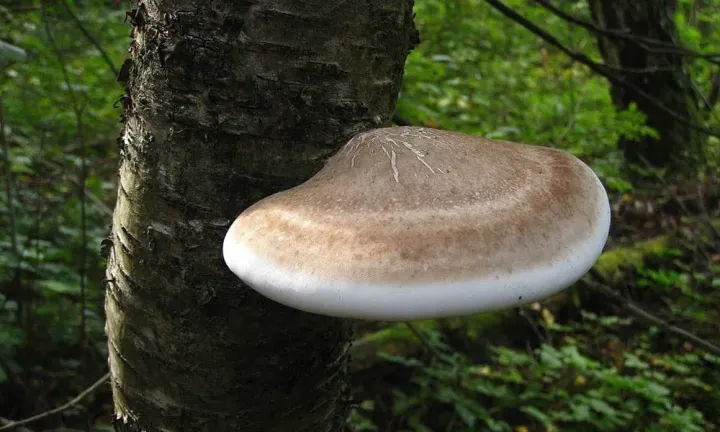
The most visible sign of an infection is the presence of hard, shelf-like or hoof-shaped fruiting bodies protruding from the trunk or main branches. These structures can persist for years and grow larger over time.
Internal decay manifests as changes in the wood's consistency and color. Depending on the species of the pathogen, the rot can appear as soft, spongy tissue or brittle, crumbling wood, often marked by distinct dark lines or bleaching.
Crown dieback is a common observation in advanced stages of the disease. The tree may show sparse foliage, premature wilting, and brittle, dead branches that are prone to breaking under light stress.
Cracks and open wounds on the trunk serve as entry points and are often surrounded by discolored or sunken bark. Over time, these areas may develop into large hollows as the structural integrity of the wood fails.
- Bracket-like fruiting bodies on the trunk.
- Hollow sound when the trunk is tapped.
- Peeling bark and localized necrotic lesions.
- Premature yellowing or shedding of leaves.
- Development of hollows or cavities.
Pathogen
Polyporales, commonly known as bracket fungi or shelf fungi, are a diverse group of basidiomycete fungi that specialize in wood decay. These pathogens are essential decomposers in nature but act as severe parasites in gardens and orchards.
The fungus colonizes the internal heartwood of trees, using its mycelium to break down complex organic compounds like lignin and cellulose. This process occurs slowly, gradually transforming firm timber into soft, decaying matter.
Reproduction is facilitated through the production of fruiting bodies that emerge from the bark. These structures contain millions of microscopic spores that are released into the environment, spreading the infection to other susceptible hosts.
Many species within this order have specific host preferences, targeting either deciduous or coniferous trees. However, some opportunists can affect a wide range of woody plants depending on the environmental conditions.
The presence of these fungi is a symptom of significant internal damage. By the time fruiting bodies appear on the surface, the tree is often already suffering from extensive internal decay that cannot be reversed.
Conditions for development
The susceptibility of a tree to Polyporales is directly linked to mechanical damage. Frost cracks, sunscald, and improper pruning cuts provide the entry points required for spores to colonize the interior.
High moisture levels and optimal temperatures are critical for spore germination. Rainy seasons, dense fog, and prolonged high humidity promote the development of mycelium on vulnerable wood surfaces.
Trees undergoing physiological stress, such as those suffering from soil compaction, drought, or nutrient deficiencies, are significantly more vulnerable. A healthy, vigorous tree is better at compartmentalizing and isolating localized infections.
Poor airflow within a dense orchard or forest stand contributes to the retention of moisture on bark, creating a perfect environment for fungal growth. Ventilation is key to minimizing the risk of spore colonization.
Old age is a significant factor in susceptibility. As trees grow older, they accumulate more mechanical injuries and have a slower wound-healing response, making them preferred targets for wood-decaying fungi.
Why it matters
The most severe harm caused by Polyporales is the destruction of the tree's mechanical structure. As the internal wood decays, the tree loses its stability and becomes prone to windthrow, which can pose a risk to life and property.
Economically, the infection results in significant losses for the timber industry. The wood is weakened and often rotted to the core, rendering it useless for structural or high-value carpentry purposes.
Physiologically, the pathogen interferes with the transport of water and nutrients, leading to the gradual decline of the tree. The tree may survive for many years, but its growth rate and yield will be significantly reduced.
These fungi are highly contagious within a managed area. A single neglected tree can act as a reservoir, producing enough spores to infect all nearby susceptible trees during favorable weather conditions.
The management of infected trees is costly and labor-intensive. It often requires tree removal and specialized disposal, as the mycelium can persist in the soil and infect roots of surrounding healthy specimens.
Protection
Proactive wound management is the primary defense. All pruning should be performed with sharp tools, and large wounds should be protected with appropriate wound sealants or fungicides to prevent colonization.
Sanitation is critical in preventing the spread of the disease. Regularly inspect all trees for fruiting bodies and remove them immediately. Collected fruiting bodies should be destroyed by fire to stop spore dispersal.
Enhancing tree vitality through proper irrigation, fertilization, and pest control helps maintain natural resistance. Trees that are well-tended are more likely to successfully contain infections within small areas.
If decay is extensive and poses a safety risk, the tree should be removed entirely, including the stump. Leaving infected roots in the ground can facilitate root-to-root transmission of the pathogen to neighboring trees.
In high-risk areas, regular monitoring and preventative fungicide treatments on exposed wood can mitigate risks. Early identification and prompt surgical removal of initial decay spots can significantly extend the life of an affected tree.
Discussion
No discussions yet — be the first.