
Powdery mildew of spurge
Podosphaera euphorbiae
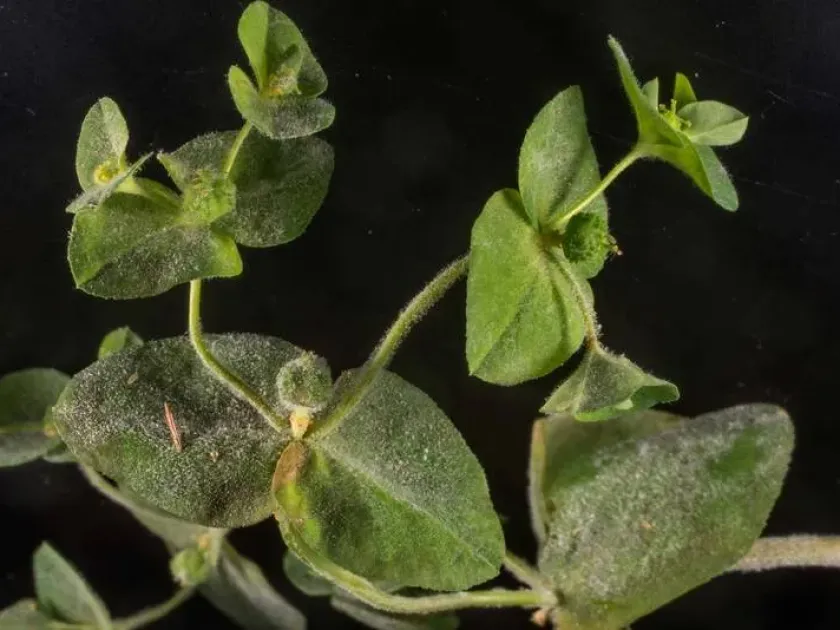
Description
Symptoms
The primary symptom is the appearance of white, powdery patches on the leaf surface. As the infection progresses, these patches expand and merge, eventually covering the entire leaf.
The white mycelium also colonizes stems and flower stalks. Severely infected leaves often turn yellow, curl, and drop prematurely, leaving the plant weakened and unattractive.
Growth stunting is a common consequence of infection, as the plant struggles to produce sufficient energy. Deformations in leaves and new shoots are frequently observed in susceptible varieties.
Towards the end of the growing season, small black specks appear within the white powdery growth. These are the cleistothecia, which serve as overwintering structures for the fungus.
The powdery coating can be wiped off with a finger, revealing damaged leaf tissue underneath that may appear discolored or chlorotic compared to healthy parts of the leaf.
Pathogen
The causal agent of this disease is the ascomycete fungus Podosphaera euphorbiae. It is an obligate biotroph that derives its nutrition directly from the living cells of the host plant.
This pathogen specifically targets members of the Euphorbia genus, affecting both indoor specimens and those grown in outdoor landscapes. The fungus grows superficially, producing a mycelial mat on leaves and stems.
The life cycle involves the production of asexual conidia, which are easily disseminated by wind to infect healthy tissue. Sexual structures, known as cleistothecia, are formed to survive harsh environmental conditions.
Because it is a specialized parasite, Podosphaera euphorbiae can be devastating in greenhouses where its host plants are densely populated. It thrives by hijacking the plant's metabolic pathways.
Infection compromises the integrity of the epidermal cells. The fungus uses specialized structures called haustoria to penetrate the plant's surface and extract essential nutrients.
Conditions for development
Podosphaera euphorbiae thrives in environments with high humidity and moderate temperatures, typically ranging from 18°C to 25°C. However, it does not require free water on the leaves to infect.
Poor ventilation and overcrowded conditions are major contributors to disease outbreaks. Stagnant air allows conidia to settle and colonize new surfaces with minimal resistance.
Plants under environmental stress, such as low light or inadequate nutrition, show higher susceptibility to the fungus. Rapid fluctuations in temperature can also trigger sporulation.
In indoor environments, the lack of airflow is the most critical factor allowing the fungus to spread rapidly across a collection of spurge plants.
Infection is often introduced by new, asymptomatic plants or carried on the hands and tools of workers who have handled infected material without proper sanitation.
Why it matters
The most significant impact of powdery mildew is the reduction of photosynthetic efficiency. The mycelial cover blocks sunlight, starving the plant of the energy it needs for survival.
Aesthetic degradation is immediate, making ornamental Euphorbia species unusable for displays. Loss of foliage can lead to the overall decline of the plant’s health.
Chronic infection results in poor vigor, limited flower production, and susceptibility to other secondary pests and pathogens that thrive on weakened plant tissue.
If left untreated, the fungus can cause significant dieback of branches, and in severe cases, the complete death of the plant due to metabolic exhaustion.
Economic damage in commercial nurseries can be substantial, as entire batches of plants may need to be discarded to prevent the spread of the infection.
Protection
Effective management begins with improving cultural practices. Increasing spacing between plants and ensuring good air circulation are essential steps to inhibit fungal growth.
Avoiding excessive nitrogen fertilization helps prevent the growth of lush, tender tissues that are highly attractive to the pathogen. Regular monitoring is key to early detection.
Chemical control involves the use of systemic fungicides. Sulfur-based products, triazoles, or strobilurins are often effective if applied thoroughly to both the top and underside of leaves.
- Provide adequate spacing for air movement;
- Remove and destroy severely infected plant parts;
- Use systemic fungicides at the first sign of mildew;
- Maintain optimal environmental conditions;
- Sanitize tools regularly to prevent cross-contamination.
Biological control options, such as specific strains of Bacillus subtilis or fungal antagonists, provide a safer alternative for home environments where chemical use is restricted.
Discussion
No discussions yet — be the first.