
Needle cast (Ploioderma)
Ploioderma lowei
Description
Symptoms
Early symptoms of needle cast involve the appearance of chlorotic spots on the needles, which eventually turn brown or tan as the fungus progresses through the tissue.
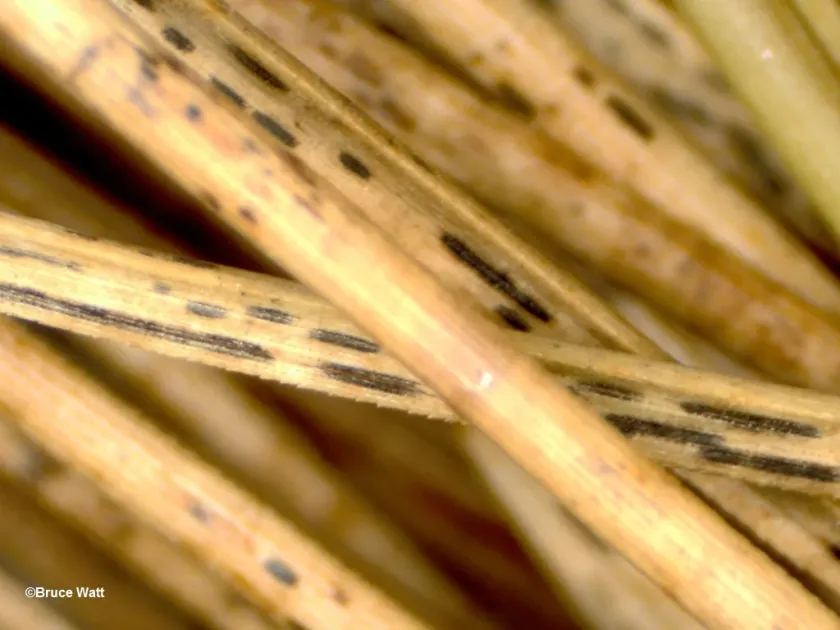
The most reliable sign of Ploioderma lowei infection is the presence of distinctive black, narrow, elongated fruiting bodies on the surface of affected needles, running parallel to the midrib.
As the infection advances, the needles lose their healthy appearance and fall prematurely. Damage is often most visible on the lower branches where the microclimate is typically more humid.
The loss of needles results in a sparse and thin crown, which drastically impacts the plant's aesthetic quality and photosynthetic capacity.
- Yellowing and browning of pine needles.
- Presence of visible black hysterothecia on the needle surface.
- Premature needle shedding during the growing season.
Pathogen
The causative agent of this disease is the fungus Ploioderma lowei, a member of the Ascomycota phylum. This pathogen specifically targets the needles of various pine species, leading to premature needle drop.
The fungal life cycle is closely linked to moisture levels and seasonal patterns. High humidity and prolonged wetness are essential for the spores to germinate and penetrate the needle epidermis.
Once inside the needle tissue, the fungus develops dark, linear fruiting bodies known as hysterothecia. These structures eventually rupture the needle surface to release new spores into the environment.
Dissemination occurs via wind and rain splashes. The pathogen persists in fallen needles, which serve as the primary reservoir for infection, allowing the disease to recur annually under favorable conditions.
The fungus is highly specialized, typically attacking specific hosts, which allows for targeted monitoring and management strategies in forest plantations and ornamental nurseries.
Conditions for development
Prolonged periods of high humidity and rainfall are the primary drivers of disease development. Dense plantations with poor air circulation create the perfect environment for the fungus.
Inadequate sunlight and poor ventilation prevent needles from drying quickly after rain, significantly increasing the probability of successful fungal spore colonization.
Plants that are already under stress due to poor soil conditions, drought, or nutrient deficiencies are significantly more susceptible to successful infection by Ploioderma lowei.
The timing of spore release coincides with warm, rainy weather, which facilitates the wide distribution of fungal propagules across a stand.
Poor site selection, such as low-lying areas where fog and humidity persist, increases the risk of chronic outbreaks and necessitates frequent management interventions.
Why it matters
The primary impact of the disease is the premature loss of foliage, which reduces the photosynthetic potential of the tree and leads to decreased growth rates.
In ornamental settings, the disease is particularly damaging as it ruins the plant's appearance, leading to substantial economic losses for nurseries and landscapers.
Repeated annual infection weakens the tree's health, making it significantly more prone to secondary attacks by wood-boring insects and other opportunistic pathogens.
In severe cases, especially among young seedlings, the cumulative effect of needle loss can lead to plant mortality, compromising the survival of young stands.
The disease cycle can lead to reduced timber productivity and degraded stand vitality, necessitating long-term management efforts in commercial forestry.
Protection
The most effective strategy is rigorous sanitation, which involves the removal and destruction of fallen, infected needles to reduce the amount of inoculum present in the area.
Fungicidal applications, particularly those containing copper, can be used to protect the trees during periods of high spore activity, usually in the spring and early summer.
Improving cultural practices such as thinning and pruning helps increase airflow within the canopy, ensuring needles dry faster and discouraging fungal establishment.
Selecting disease-resistant species and ensuring optimal spacing when planting new stands are essential measures to prevent the spread of Ploioderma lowei.
Regular monitoring and integrated pest management (IPM) practices allow for early detection, enabling faster control responses and minimizing the impact on plant health.
Discussion
No discussions yet — be the first.