
Ploioderma needle cast
Ploioderma
Description
Symptoms
The primary symptom is the discoloration of needles, which turn from pale yellow to brown or reddish-brown as the infection progresses throughout the season.
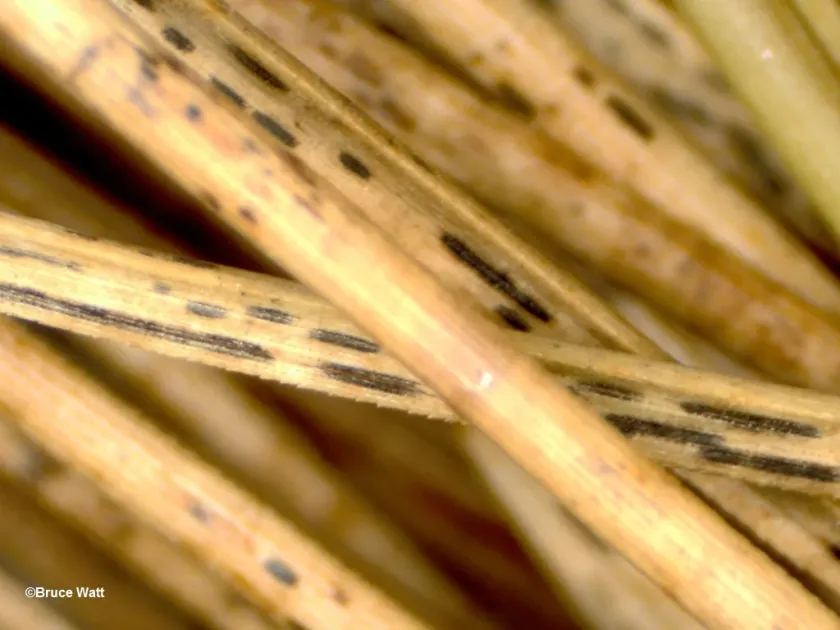
Black, elongated structures, which are the apothecia of the fungus, appear in rows along the central vein of the infected needles, serving as a key diagnostic feature.
Infection is typically observed on the lower parts of the crown, where conditions are more shaded and humid, providing an ideal environment for fungal development.
Severely infected needles drop prematurely, leading to a sparse, thin canopy that significantly affects the overall vitality and appearance of the tree.
Unlike some other fungal infections, the symptoms of Ploioderma needle cast often become most apparent in the late summer or autumn following the initial spring infection.
Pathogen
The disease is caused by fungi belonging to the genus Ploioderma, specifically Ploioderma lethale, which is a well-known pathogen of various pine species.
The fungus develops its mycelium within the needles of the host plant. The life cycle involves the formation of fruiting bodies known as apothecia, which mature after overwintering.
As an obligate parasite, the fungus depends entirely on the living tissues of the host pine tree to complete its biological cycle during the growth season.
Spore dissemination occurs primarily in spring and early summer when wind-borne ascospores are released from the mature apothecia onto susceptible young needles.
Upon infection, the mycelium spreads within the needle tissue, eventually leading to the degradation of chlorophyll and the death of the needle segments.
Conditions for development
Prolonged periods of high humidity, rainfall, and moderate temperatures are the most critical environmental factors that trigger the infection and spread of the disease.
Dense, overcrowded plantations with poor air circulation are highly susceptible, as the trapped moisture on the needle surface facilitates spore germination.
Trees that are physically stressed, nutrient-deficient, or growing in unfavorable soil conditions are more prone to infection compared to healthy, vigorous specimens.
The presence of fallen, infected needles on the forest floor acts as a significant reservoir of inoculum, allowing the fungus to persist and re-infect the trees annually.
Late spring frosts can weaken the needles' defense mechanisms, making them more vulnerable to the penetration of fungal hyphae during the early infection stage.
Why it matters
Ploioderma needle cast is particularly damaging to young pine stands and nursery seedlings, where it can cause widespread needle loss and stunt growth.
The loss of foliage leads to a reduction in photosynthesis, which limits the tree's ability to produce energy, potentially causing dieback of branches and twigs.
Continuous infection cycles over several years weaken the tree significantly, predisposing it to secondary infestations by bark beetles and other wood-boring insects.
In horticultural settings, the disease ruins the aesthetic quality of conifers, leading to significant economic losses for ornamental plant producers and landscape owners.
If left unmanaged, the cumulative impact of the disease can result in the loss of long-term productivity of timber stands and the death of sensitive tree specimens.
Protection
Effective management begins with proper silvicultural practices, such as maintaining appropriate planting density to ensure adequate air circulation and light exposure.
Sanitation is crucial: regularly rake and remove fallen needles to eliminate the primary source of the fungus, as these remnants harbor the pathogen through the winter.
Applying registered fungicides during the spring spore-release period can provide protection for vulnerable trees, especially in high-value nurseries or landscapes.
Pruning out heavily infected lower branches can help reduce the local humidity and the overall quantity of spores available to infect the upper parts of the crown.
Improving tree health through proper fertilization and watering helps build resilience against the pathogen and encourages faster recovery after infection events.
Discussion
No discussions yet — be the first.