
Phoma stem canker
Plenodomus hendersoniae
Description
Symptoms
Early symptoms appear as grey-green, round spots on cotyledons and leaves. These lesions eventually develop small black dots known as pycnidia, which are a characteristic sign of this specific pathogen.
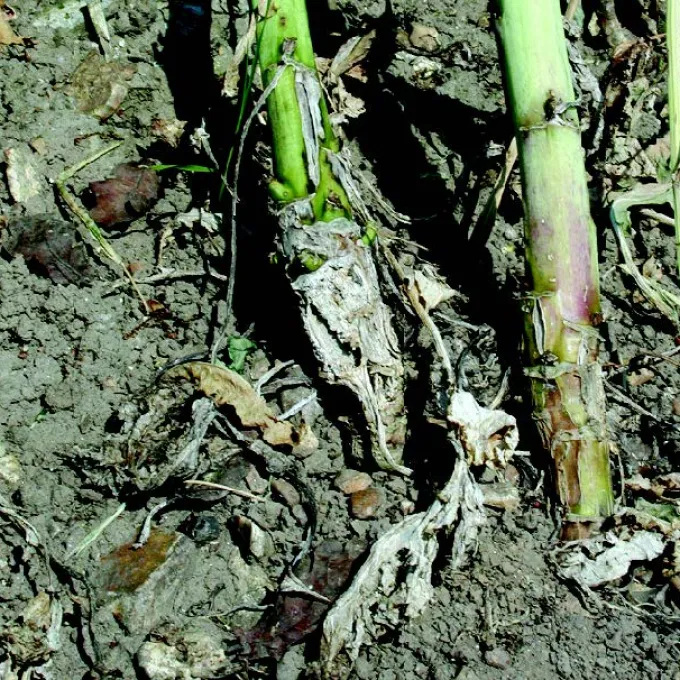
Damage to the root collar manifests as necrotic, sunken lesions often bordered by a dark or violet margin. As the lesion expands, the stem tissue may crack, severely compromising the structural integrity of the plant.
Stem cankers often result in the girdling of the main stem, which disrupts the vascular system and prevents water and nutrient transport. This leads to early ripening and a significant decline in overall plant health.
In high humidity, a fungal mycelial mat may cover the damaged areas. If the infection reaches the pods, seeds become shriveled and infected, potentially carrying the fungus into the next growing season.
Severe stem girdling typically results in premature lodging and plant death before maturity. This is the most destructive phase of the disease, often leading to substantial yield losses in commercial fields.
Pathogen
The disease is caused by the fungus Plenodomus hendersoniae (formerly classified as Phoma lingam), which is the primary pathogen of the Brassica genus. It severely impacts oilseed rape, canola, cabbage, and mustard crops globally.
The pathogen survives on infected crop residues in the soil for up to three years. This long-term persistence necessitates rigorous field management to reduce the primary inoculum pressure in successive planting seasons.
The fungus spreads via pycnidiospores produced in pycnidia, which are splashed onto healthy leaves by rain. Wind and insect activity also facilitate the dispersal of spores throughout the canopy during the growing season.
Inside the plant, the fungus exhibits a systemic infection pattern. It colonizes the leaf tissue and gradually moves down through the petiole to reach the stem and the root collar, where it causes the most severe damage.
The sexual stage of the fungus, Leptosphaeria maculans, produces ascospores on old debris. These spores are wind-borne and can travel long distances, leading to widespread primary infection in early-sown rapeseed crops.
Conditions for development
Frequent rainfall and high relative humidity (above 80%) are optimal for disease development. The fungus requires persistent leaf wetness to germinate and successfully penetrate the plant tissue.
Dense crop stands provide an ideal microclimate by trapping moisture and preventing effective ventilation. Such conditions promote the rapid spread of the disease from the lower canopy to the upper stems.
Pest damage, particularly from flea beetles, creates entry points for fungal spores. Therefore, effective pest control is essential to prevent secondary infections and reduce the overall disease impact.
Early planting in warm, moist autumn conditions often results in high levels of initial infection before winter. This reduces plant vigor and cold tolerance, making the crop more susceptible to spring epidemic development.
Nutrient stress, particularly boron and potassium deficiency, weakens the plant's natural defenses. Ensuring a balanced fertilization program is a critical component of integrated disease management.
Why it matters
The economic impact of Phoma stem canker is driven by significant reductions in grain yield and oil quality. Yield losses can reach 50% in severe cases due to pod shattering and poor grain filling.
Structural damage to the stem causes lodging, which makes mechanical harvesting difficult or impossible. This increases harvest-time losses and requires additional fuel and labor to salvage the crop.
Infected seeds are a primary vehicle for disease transmission, leading to low emergence and uneven crop establishment. Seed-borne infection makes the disease difficult to eradicate once it is established in a region.
The disease weakens the host, making it more prone to secondary colonization by opportunistic pathogens. This complex of diseases further degrades the yield potential and complicates the selection of suitable fungicides.
Farmers face increased production costs due to the necessity of repeated fungicide applications. Without a systemic strategy, Phoma can become a major limiting factor for Brassica profitability.
Protection
Crop rotation is the most effective cultural control measure. Planting non-host crops for at least three years between oilseed rape cycles significantly reduces the pathogen inoculum in the soil.
Selecting resistant or tolerant cultivars is the foundation of Phoma management. Modern hybrids with strong genetic resistance significantly reduce the reliance on chemical inputs throughout the season.
Seed treatments with systemic fungicides are essential for protecting seedlings during the critical early growth stages. This reduces the risk of early systemic colonization of the stem.
Foliar fungicide applications should be timed according to local disease monitoring and threshold values. Targeting the early growth stages is generally more effective than late-season curative measures.
- Deep plowing to bury infected stubble and accelerate decomposition.
- Control of volunteer oilseed rape and wild cruciferous weeds.
- Optimization of seeding rates to improve air circulation.
- Balanced nutrient management to promote plant vigor and resistance.
Discussion
No discussions yet — be the first.