
Phoma black stem
Plenodomus agnitus
Description
Symptoms
Symptoms typically start as irregular, dark brown or black spots on the leaves. As the disease progresses, these spots expand, often showing a yellowish halo around the edges of the necrotic tissue.
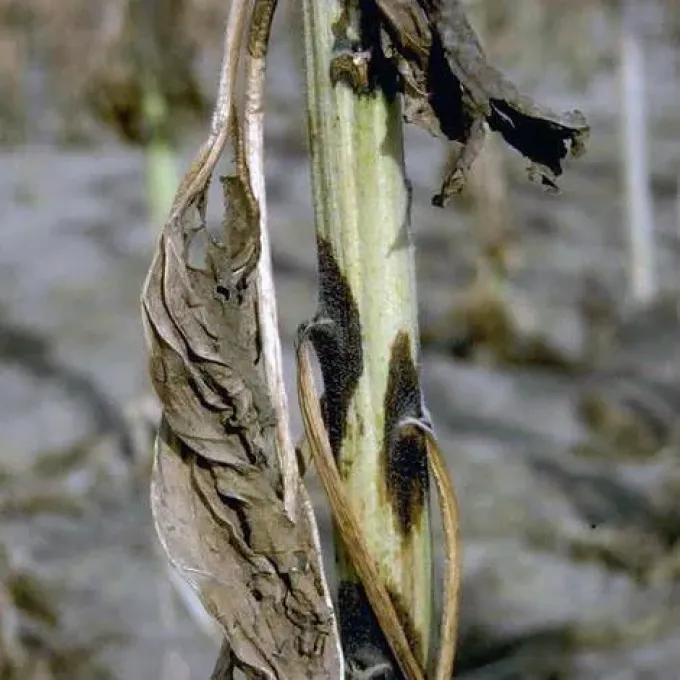
The most distinctive symptom occurs on the stem. Large, dark, discolored lesions appear at the base of leaf petioles. These lesions can eventually encircle the stem, leading to the collapse of the plant.
Upon closer inspection, the affected stem areas show a peppering of small black dots, which are the pycnidia of the fungus. This visual marker is critical for confirming the diagnosis of Phoma black stem.
As the stem tissue decays, the structural integrity of the plant is compromised, making it brittle. This often results in lodging, where the sunflower plants fall over, especially during strong winds or heavy rain.
Infected plants exhibit reduced head filling. The seeds in the affected heads are often lightweight, shriveled, and have lower oil content, reflecting the disruption in the plant's nutrient transport system.
Pathogen
The causal agent of Phoma black stem in sunflowers is the fungus Plenodomus agnitus, formerly known as Phoma macdonaldii. It belongs to the group of pycnidial fungi that persist in the soil and on crop residues for several years.
The fungus produces pycnidia, which are small black fruiting bodies that contain spores (conidia). These spores serve as the primary source of infection, being dispersed by wind and splashing rain onto healthy sunflower leaves.
Once the spores land on a host plant, they germinate and penetrate the leaf tissues or stems. The fungus grows through the plant's vascular system, causing structural damage and necrosis in the infected areas.
Plenodomus agnitus has a high capacity for survival under various environmental conditions. It remains dormant in the soil during winter, waiting for the warmer temperatures of the next growing season to reactivate.
Research indicates that the pathogen can also be seed-borne in some cases, although crop debris remains the most significant reservoir of inoculum for commercial production fields.
Conditions for development
Phoma black stem thrives under high humidity and frequent rainfall. Prolonged leaf wetness during the early vegetative stages significantly favors the germination and spread of fungal spores.
Optimal temperatures for the development of the pathogen range from 20°C to 25°C. In regions with warm, moist springs and summers, the disease can spread rapidly throughout the crop canopy.
Inadequate crop rotation is a major risk factor. Growing sunflowers too frequently in the same field allows the pathogen population to build up to destructive levels in the soil.
Dense plant populations and excessive weed growth create a humid microclimate within the crop canopy. This lack of ventilation keeps the leaves wet for longer periods, promoting fungal growth.
Excessive nitrogen fertilizer applications can lead to lush, succulent vegetative growth, which is more susceptible to fungal infection and provides a larger surface area for the pathogen to colonize.
Why it matters
The economic impact of Phoma black stem is substantial, as it leads to significant yield losses. Depending on the infection timing and severity, yield reductions can range from 20% to 50%.
Beyond quantity, the quality of the sunflower seeds is severely impacted. Lower oil content and poor seed filling lead to reduced market prices and processing efficiency at the crushing facilities.
Stem lodging caused by the disease is a major logistical challenge. It complicates mechanical harvesting, resulting in increased field losses as headers cannot efficiently pick up the fallen plants.
The premature death of foliage reduces the photosynthetic capacity of the plants, preventing them from achieving their full genetic potential for yield during the grain-filling phase.
Management costs also increase due to the necessity of prophylactic fungicide applications, which are often required to prevent widespread infection in high-risk areas.
Protection
The most effective strategy for managing Phoma is the use of resistant or tolerant sunflower hybrids. Breeding programs continuously work to improve the genetic resistance of new commercial varieties.
A rigorous crop rotation plan, maintaining at least a 6 to 8-year interval between sunflower crops, is essential to reduce the level of inoculum in the soil naturally.
Deep tillage practices after harvest are recommended to bury crop residues. This accelerates decomposition and prevents the survival of the fungus in the upper layers of the soil.
Fungicide applications during the critical early growth stages can effectively suppress the disease. Preventive timing based on weather monitoring is crucial for successful control.
- Use of high-quality, fungicide-treated seeds.
- Control of volunteer sunflowers and weeds in the field.
- Balanced fertilization to promote plant vigor.
- Proper plant spacing to ensure adequate airflow and light penetration.
Discussion
No discussions yet — be the first.