
Pisolithus arhizos
Pisolithus arhizos
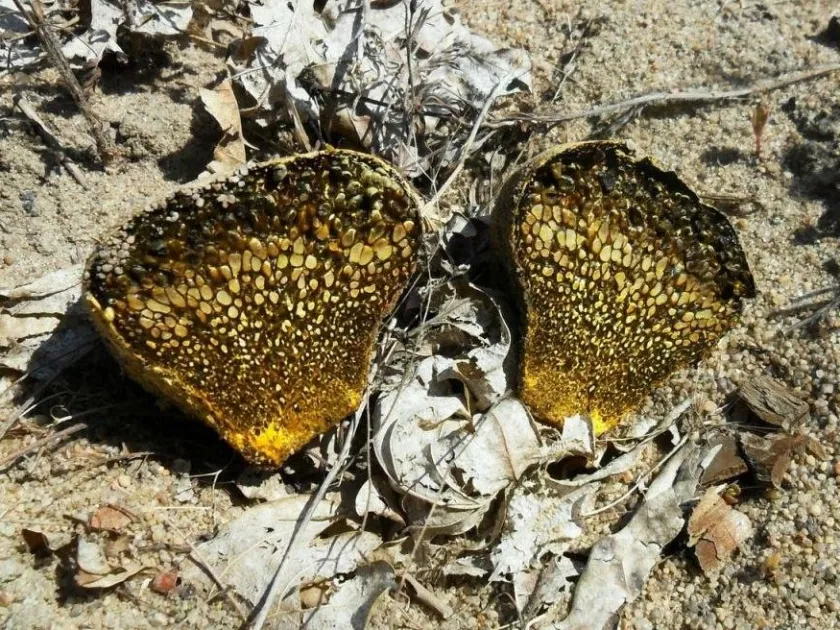
Description
Pathogen
Pisolithus arhizos is a gasteroid fungus belonging to the Sclerodermataceae family. Unlike pathogenic fungi that attack plants, this species is a critical ectomycorrhizal symbiont that lives in close association with the roots of many tree species.
The fungus forms unique sporocarps, often described as dark, tough, and irregularly shaped masses. Internally, these structures are divided into chambers filled with a fine, powdery mass of dark brown spores that disperse when mature.
In a symbiotic relationship, the mycelium of Pisolithus arhizos forms a sheath around the plant's fine roots. This fungal cover facilitates the exchange of nutrients, significantly increasing the root surface area for water and mineral absorption.
This fungus is widely used in forestry as a beneficial inoculant. It helps young trees establish in harsh, nutrient-poor environments, where survival would otherwise be difficult due to lack of resources.
While often labeled as a pathogen in some outdated texts, contemporary agronomic research confirms that Pisolithus arhizos is a beneficial organism essential for the health of many conifer and broadleaf forest trees.
Conditions for development
Pisolithus arhizos thrives in well-drained, acidic, and sandy soils. It is particularly common in disturbed sites, such as reclaimed mining areas, where the soil lacks sufficient nutrients and organic matter.
The development of sporocarps is triggered by warmer temperatures and adequate soil moisture. The fungus remains dormant in the soil during periods of extreme drought or cold, protected by its resilient mycelial network.
Spores are dispersed efficiently by wind and moving water. Once they reach the rhizosphere of a suitable host plant, they germinate and initiate the formation of new mycorrhizal associations.
In nursery environments, the fungus can easily spread through contaminated soil, root debris, or shared irrigation water, leading to a natural inoculation of the seedlings being raised.
The fungus is highly competitive in degraded soils, which explains its frequent presence in environments where other, more sensitive mycorrhizal fungi struggle to survive.
Why it matters
The "harm" caused by Pisolithus arhizos is typically economic or aesthetic rather than biological. In commercial nurseries, the growth of visible fungal sporocarps may interfere with the perceived quality of ornamental nursery stock.
While extremely rare, excessive fungal growth on the root system of very young seedlings could, in high-density greenhouse conditions, potentially hinder transplanting by creating an overly thick fungal root mantle.
The fungus does not secrete toxins that harm the plant. On the contrary, its presence is a sign of a functional root system that is better equipped to handle environmental stresses like drought or heavy metal toxicity.
Confusion often arises when growers mistake the fungal sporocarps for signs of root rot. Misidentification can lead to unnecessary and potentially harmful applications of fungicides, which can damage the beneficial mycorrhizal network.
In most ecosystems, there is no negative impact from this fungus; it is a vital contributor to the sustainability of forest stands and reforestation efforts globally.
Protection
Control measures are rarely necessary, as Pisolithus arhizos is considered a beneficial partner in silviculture. However, for specialized nursery management, certain precautions can limit its sporocarp production.
Mechanical removal of the sporocarps before they release spores is the most environmentally friendly way to control its spread in ornamental gardens or nursery rows.
Using sterilized substrates or pasteurized potting media can prevent the initial colonization of young seedlings, allowing growers to manage the mycorrhizal inoculation process more precisely.
If fungicides are used to combat other true pathogens, it is important to be aware that these substances may negatively affect the beneficial Pisolithus association, potentially slowing the plant's growth.
Sanitation practices, such as disinfecting tools and ensuring proper water management, are effective for preventing the migration of spores between different nursery sections or production zones.
Discussion
No discussions yet — be the first.