
Lilac Phytophthora blight
Phytophthora syringae
Description
Symptoms
The first signs typically manifest as sudden wilting and blackening of young shoots, often mistaken for frost damage in early spring.
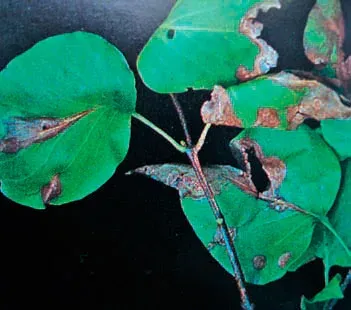
Dark, water-soaked leaf lesions appear with irregular shapes; these spots rapidly expand to encompass the entire leaf, causing premature drop.
In humid weather, fine white mycelial growth may appear on the underside of infected leaves or along the infected bark of twigs.
Cankers can form on woody stems, where the bark turns dark and sunken, eventually girdling the branch and causing the death of the distal part.
Plants often exhibit general decline, sparse foliage, and a scorched appearance of the branches, which significantly impairs the aesthetic quality of the shrub.
Pathogen
The causative agent of this disease is the oomycete Phytophthora syringae, a soil-borne pathogen that thrives under moist and cool conditions.
This organism produces zoospores that swim through water films on leaves and stems, actively penetrating the plant tissue to initiate an infection.
In the soil, the pathogen persists through thick-walled oospores, which can remain viable for several years even in the absence of a host.
Infection is often introduced into gardens through contaminated nursery stock or spread via water runoff and tools during maintenance activities.
Beyond lilac, this species is known to attack a diverse array of woody plants, acting as a broad-range pathogen in temperate climates.
Conditions for development
The primary driver for disease development is persistent wet weather, with high humidity and frequent rainfall events throughout the growing season.
The pathogen prefers cool temperatures, typically ranging from 10 to 20 degrees Celsius, which makes spring and autumn peak times for outbreaks.
Poor airflow, caused by dense planting or lack of proper pruning, allows moisture to remain on the foliage for extended periods, facilitating infection.
Heavy soils with poor drainage provide an ideal environment for the pathogen to thrive and attack the roots and lower stems of the lilac bushes.
Overhead irrigation, especially during cloudy days, significantly promotes the spread of zoospores from the ground onto the canopy of the plant.
Why it matters
The disease causes substantial damage to the shrub's structure, leading to the loss of key branches and overall shape of the lilac plant.
If left untreated, Phytophthora blight can cause the total collapse and death of the plant, especially if the infection reaches the main stem or crown.
Infected plants become weakened, making them susceptible to secondary pests and stressful environmental factors like extreme cold or drought.
The presence of the pathogen in the garden poses a risk to other nearby susceptible plants, requiring strict sanitation and isolation measures.
Economic losses include the cost of chemical treatments, the labor-intensive removal of infected material, and the eventual replacement of dead plants.
Protection
Strict selection of clean, disease-free nursery stock is the most important preventive measure to keep the garden free from this pathogen.
Cultural practices such as pruning to open the canopy and improve airflow are essential to keep leaves dry and discourage fungal growth.
Sanitation is critical; all infected branches must be pruned well into healthy wood and immediately destroyed or disposed of away from the site.
Fungicides containing copper or specific systemic anti-oomycete chemicals can be used to protect healthy foliage during high-risk rainy periods.
- Improve soil drainage to prevent stagnant water at the roots.
- Avoid overhead irrigation; use drip irrigation systems instead.
- Disinfect all pruning tools with a bleach solution between cuts.
Discussion
No discussions yet — be the first.