
Pine needle blight
Phytophthora pinifolia
Description
Symptoms
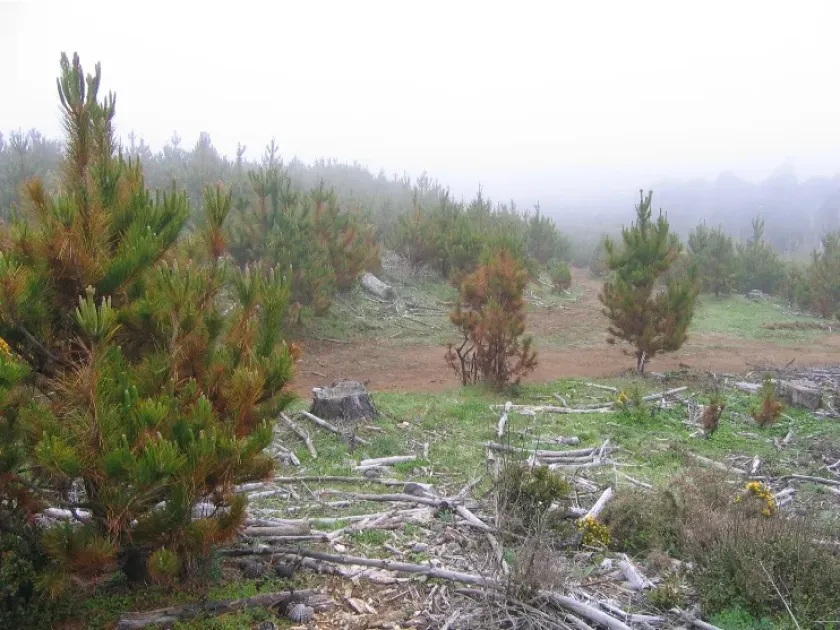
The primary symptom of the disease is the browning and necrosis of current-year needles, which turn a distinct reddish-brown color.
Infection typically begins on the needles in the lower canopy and spreads rapidly upwards through the branches.
Resin exudation on twigs and shoots is a common sign, indicating severe damage to the tree's internal vascular tissues.
Under high humidity, microscopic sporangia of the pathogen may appear as a fine, whitish growth on the surface of the needles.
Severe infestation often leads to premature needle cast, branch dieback, and a significantly weakened overall appearance of the tree.
Pathogen
The causal agent of this disease is the oomycete Phytophthora pinifolia, a highly specialized soil-borne pathogen.
This pathogen specifically targets Pinus species, with Pinus radiata being particularly susceptible to devastating outbreaks.
Phytophthora pinifolia is a water-loving organism, relying on the presence of liquid water to move its motile zoospores.
The fungus can survive in plant debris and soil, remaining dormant until weather conditions are suitable for new infections.
Its high virulence allows it to colonize healthy pine tissue rapidly, often causing widespread mortality in susceptible stands.
Conditions for development
Development of the disease is highly favored by periods of high precipitation and consistent atmospheric moisture.
Foggy conditions in forest areas provide an ideal environment for the spores to germinate and infect the pine needles.
Water splash from rain droplets is the primary mechanism for the short-distance spread of the pathogen between branches and trees.
Poor air circulation and dense canopy structures facilitate the buildup of moisture, which is critical for the infection process.
Stress factors, such as waterlogged soils, make pine trees more vulnerable to successful colonization by the pathogen.
Why it matters
Pine needle blight caused by Phytophthora pinifolia poses a significant threat to commercial forestry and local ecosystems.
It causes the total loss of current year's growth, leading to stunted trees and failure in nursery production.
Reduced photosynthetic capacity from needle loss results in significant tree growth suppression and long-term decline in productivity.
The pathogen is capable of causing large-scale mortality, necessitating extensive sanitation and removal of affected trees.
The economic impact on the timber industry is profound, as the infection can quickly destroy entire plantations of pine trees.
Protection
Sanitation is the most critical management strategy, involving the removal and destruction of infected foliage and trees.
The application of targeted fungicides can provide protection for high-value stands during high-risk weather windows.
Silvicultural practices, such as thinning to improve air circulation, help to reduce the humidity levels within the canopy.
Stringent quarantine measures are essential to prevent the movement of contaminated seedlings or soil into new areas.
Regular monitoring of forest plantations, especially in humid regions, allows for the early detection and containment of disease outbreaks.
Discussion
No discussions yet — be the first.