
Mexican late blight
Phytophthora mexicana
Description
Symptoms
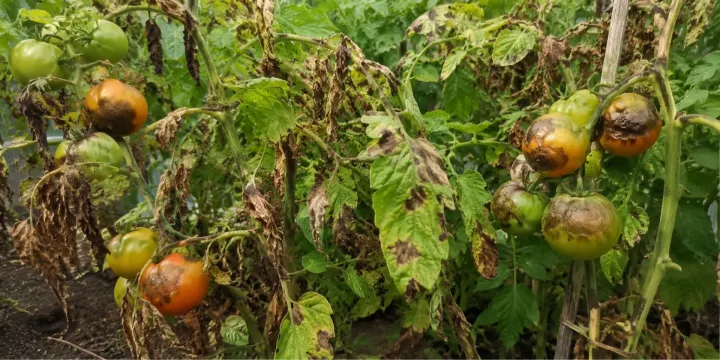
Initial symptoms include the formation of dark, water-soaked lesions on leaves and stems. These lesions typically expand rapidly, turning into necrotic patches that eventually compromise the entire organ.
Under high humidity, a faint gray mold may appear on the undersides of the leaves. This represents the pathogen's sporulation, which facilitates further dispersal to neighboring healthy plants.
Stem infections often lead to dark girdling lesions. These spots weaken the stems, leading to collapse, wilting, and the eventual death of the affected plant branches or the entire plant.
Fruit infections are equally severe, causing softening and discoloration. Infected fruits often develop a foul odor due to secondary bacterial decay following the primary Phytophthora infection.
The rapid spread of the disease across the field is a hallmark sign. In favorable weather conditions, what starts as a small cluster of infections can overwhelm an entire crop within a few days.
Pathogen
The disease is caused by the oomycete Phytophthora mexicana, a specialized pathogen belonging to the Phytophthora genus. It primarily acts as a destructive parasite on various members of the Solanaceae family.
The pathogen possesses a complex life cycle characterized by the production of zoospores. These mobile spores require liquid water to swim and initiate the infection process on healthy plant tissues.
Phytophthora mexicana shows high environmental adaptability, allowing it to survive in soil and infected plant debris for extended periods. This persistence makes it a significant challenge for field sanitation.
The pathogen attacks crops at all vegetative stages. Upon infection, it aggressively breaks down plant cellular walls, allowing the mycelium to spread rapidly throughout the plant's internal system.
Understanding the biology of this pathogen is essential for developing an integrated pest management strategy. Its ability to spread systemically makes rapid identification and removal of infected plants critical.
Conditions for development
High relative humidity, consistently above 80-90 percent, is the primary driver for disease development. Rainfall, heavy fog, and dew provide the necessary surface moisture for zoospore movement.
Temperature plays a crucial role, with the pathogen thriving in moderate conditions. These environments are frequently encountered during the spring and autumn growing seasons for Solanaceous crops.
Poor air circulation, often found in dense plantings or poorly managed greenhouses, contributes significantly to disease outbreaks by maintaining a humid microclimate around the plants.
Irrigation practices that involve wetting the foliage, such as overhead sprinkling, accelerate infection. Water droplets serve as the primary vehicle for splashing spores from the soil onto the plant canopy.
Poor agricultural practices, including excessive nitrogen fertilization, lead to lush, succulent growth that is highly susceptible to infection, as it provides an abundance of easy-to-colonize plant tissue.
Why it matters
The primary harm caused by Phytophthora mexicana is the rapid loss of marketable yield. The infection can lead to total crop failure if left unchecked during favorable environmental conditions.
Beyond quantity, the disease drastically reduces quality. Infected fruits and foliage become unsuitable for consumption or processing, causing significant financial losses to agricultural producers.
The long-term persistence of the pathogen in the soil complicates future planting decisions. Growers may be forced to rotate away from highly susceptible crops for several years to allow the soil population to decline.
The need for intensive chemical interventions to manage the disease increases the cost of production and raises concerns about pesticide residues and environmental impact.
Invasive outbreaks can devastate entire regions if not monitored, leading to local supply shortages and increased market prices for affected vegetables.
Protection
The foundation of effective control is an integrated approach, starting with the use of resistant or tolerant cultivars where available. Proper cultivar selection is the first line of defense.
Sanitation is paramount; removing and destroying infected plant material immediately after the first sign of symptoms helps break the disease cycle and limits the spread of inoculum.
Preventative fungicide applications are necessary in high-risk areas. These should be timed according to weather forecasts, prioritizing periods of high humidity and rainfall.
Adopting drip irrigation systems is highly recommended to keep foliage dry. This simple structural change significantly reduces the environment's suitability for zoospore germination and infection.
- Strict crop rotation schedules;
- Use of certified, disease-free seed and transplants;
- Maintaining proper plant spacing to ensure airflow;
- Rigorous disinfection of equipment and greenhouse structures after each cycle.
Discussion
No discussions yet — be the first.