
Phytophthora brown rot of citrus
Phytophthora hibernalis
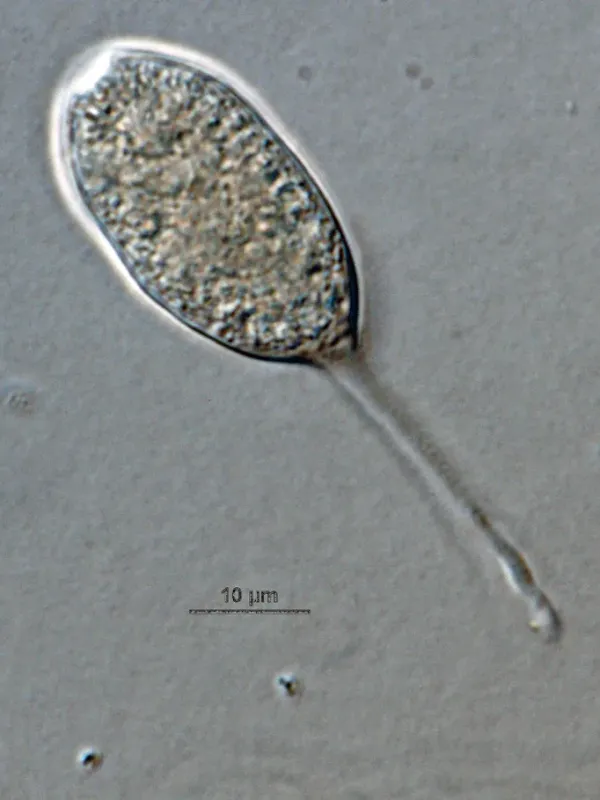
Description
Symptoms
The disease primarily manifests as fruit rot, typically affecting the lower canopy where environmental conditions for the pathogen are most favorable.
Symptoms appear as firm, leathery, brown lesions on the citrus peel, which often feel hard to the touch rather than soft like typical rot.
Under conditions of high humidity, a thin white mycelial growth may appear on the surface of the infected lesions, which is a key diagnostic indicator.
Infected fruit often emit a pungent, unpleasant, and distinctively stale odor, which can spread to neighboring healthy fruits during storage.
Lesions can also appear on the leaves in the lower canopy, presenting as dark green to brown spots that lead to premature leaf drop.
Pathogen
The causative agent is the oomycete Phytophthora hibernalis, an organism specifically adapted to cool and moist environmental conditions.
Unlike many other Phytophthora species, this pathogen is uniquely suited to thrive during the autumn and winter months in citrus-growing regions.
The pathogen reproduces via zoospores, which are motile and require films of water or high humidity to travel and infect host tissues.
Phytophthora hibernalis persists in the soil and on fallen debris, serving as the primary reservoir for seasonal outbreaks in the orchard.
Its biological cycle is strongly linked to rainfall patterns, as splashing water is the main vector for moving spores from the soil to the fruit.
Conditions for development
High relative humidity and consistent rainfall during the cool season are the primary drivers for the development and spread of P. hibernalis.
The fungus thrives in cooler temperature ranges, allowing it to remain active when many other common pathogens become dormant.
Prolonged leaf wetness and fruit surface moisture are essential for the germination of zoospores and the initiation of the infection process.
Dense tree canopies and lack of proper pruning create stagnant air pockets, which significantly raise the local humidity and disease pressure.
Poor orchard drainage that leads to water accumulation around the tree base facilitates the splash dispersal of the pathogen into the lower canopy.
Why it matters
The primary economic damage is the mass spoilage of fruit, rendering the harvest unmarketable and unsuitable for fresh consumption.
Infection can cause premature defoliation, which stresses the tree, reduces its vigor, and limits its productivity for subsequent growing seasons.
The disease poses a significant threat during post-harvest storage, as latent infections on seemingly healthy fruit can lead to total crop loss in containers.
Persistent infestations can lead to long-term issues, including root rot and crown rot, which may eventually lead to the decline of entire trees.
Management of the disease requires high inputs of fungicides, increasing production costs for citrus growers in humid climates.
Protection
Orchard management practices such as skirting—pruning the lower branches to prevent them from touching the ground—are crucial to break the infection cycle.
Improving airflow through structural pruning of the canopy significantly reduces the moisture level required for the pathogen to establish.
Applying copper-based fungicides or other specific anti-oomycete agents prior to the onset of the rainy season provides an essential preventative barrier.
Strict sanitation measures, including the removal and destruction of fallen fruit and diseased debris, are vital to lowering the inoculum load.
- Installing effective drainage systems to prevent waterlogging in the orchard.
- Selecting and planting citrus varieties known for better canopy architecture and vigor.
- Monitoring weather patterns to time fungicide applications precisely before major rain events.
Discussion
No discussions yet — be the first.