
Phytophthora drechsleri
Phytophthora drechsleri
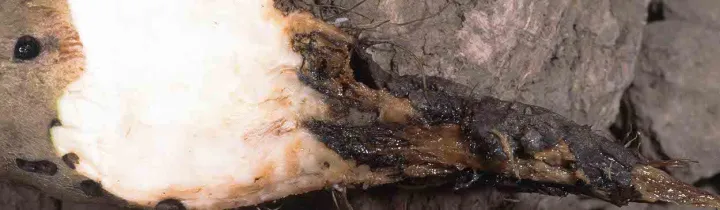
Description
Symptoms
The primary symptom is the rapid wilting of leaves during the day, which may appear to recover at night initially. As the disease progresses, wilting becomes permanent despite adequate soil moisture levels.
Lesions appearing on the stem base or crown are typically brown to dark brown. These necrotic areas often girdle the stem, effectively cutting off the plant's ability to transport nutrients from roots to leaves.
Roots show significant browning and disintegration. In severe cases, the entire root system becomes mushy and rotten, eventually leading to the easy uprooting of the plant from the soil.
On fruits or tubers touching the soil, water-soaked, sunken lesions develop. These spots enlarge rapidly, leading to soft rot and making the produce unsuitable for marketing or consumption.
Foliage may exhibit chlorosis, starting from the lower leaves and moving upwards. The plant eventually dies, turning necrotic, as the pathogen completes its colonization of the vascular system.
Pathogen
Phytophthora drechsleri is an oomycete pathogen classified as a soil-borne organism. It is known for its ability to persist in soil for extended periods via thick-walled oospores, which can withstand harsh environmental conditions.
This pathogen acts as a facultative parasite, meaning it can survive on decaying organic matter but readily infects living tissues of susceptible plants under favorable conditions. It is a major cause of root and crown rot globally.
The fungus-like organism produces motile zoospores that require free water to swim through soil pores and reach host roots. Once contact is made, the pathogen penetrates the root surface and begins to colonize internal tissues.
Systemic infection often occurs, leading to the blockage of xylem vessels and preventing water and nutrient uptake. The pathogen's ability to remain dormant and then activate during favorable cycles makes it difficult to eradicate.
Due to its high genetic variability, P. drechsleri can evolve to overcome standard agricultural practices, posing a constant threat to intensive vegetable and ornamental production systems.
Conditions for development
The development of P. drechsleri is strictly governed by water availability. High soil moisture levels and poor drainage are the primary factors that trigger the release and movement of zoospores.
Temperatures ranging from 20°C to 28°C are considered optimal for the rapid growth and spread of the pathogen. These conditions allow for a short incubation period and explosive disease outbreaks.
Soil structure plays a critical role; heavy clay soils that are prone to waterlogging significantly increase the risk of infection. Improper irrigation scheduling often provides the necessary water for pathogen spread.
High humidity and poor air circulation in greenhouse environments facilitate the secondary spread of the disease, allowing it to move rapidly between potted plants or greenhouse beds.
Monoculture practices that fail to rotate susceptible crops allow the pathogen population to build up in the soil, eventually reaching levels that make successful cultivation impossible without intensive measures.
Why it matters
The economic impact of this disease is substantial, as it can cause complete crop failure in localized areas. In severe infestations, the entire planting can be lost within a few weeks.
Growth stunting is common, leading to significant yield loss even in plants that do not immediately succumb to the disease. The resulting produce is often of low quality and poor weight.
Post-harvest losses are significant because asymptomatic fruits may carry the pathogen, leading to rapid deterioration during storage and transportation, potentially affecting entire batches.
The pathogen is highly contagious and easily spread via contaminated equipment, irrigation runoff, and even moving soil between fields, necessitating strict quarantine and hygiene protocols.
The long-term presence of the pathogen in the soil forces growers to abandon preferred crops or invest in expensive soil sterilization techniques, which increases operational costs and reduces profit margins.
Protection
Effective management begins with rigorous crop rotation, avoiding susceptible families for at least four to five years. Soil solarization can be an effective method to reduce pathogen populations in small-scale setups.
Improving soil structure is essential. Using raised beds, adding organic matter to improve drainage, and precision irrigation help maintain soil moisture below the levels required for zoospore motility.
Fungicides specifically targeting oomycetes, such as those containing metalaxyl or copper-based compounds, are effective when applied preventively or at the very first sign of infection.
Sanitation is paramount. Removing and burning infected plant material, disinfecting tools after each use, and managing runoff water can drastically slow down the spread of the disease.
- Utilizing disease-resistant cultivars when available.
- Monitoring soil moisture with sensor-based systems.
- Maintaining strict greenhouse hygiene standards.
- Using biological control agents to promote healthy root systems.
Discussion
No discussions yet — be the first.