
Citrus phytophthora
Phytophthora citrophthora
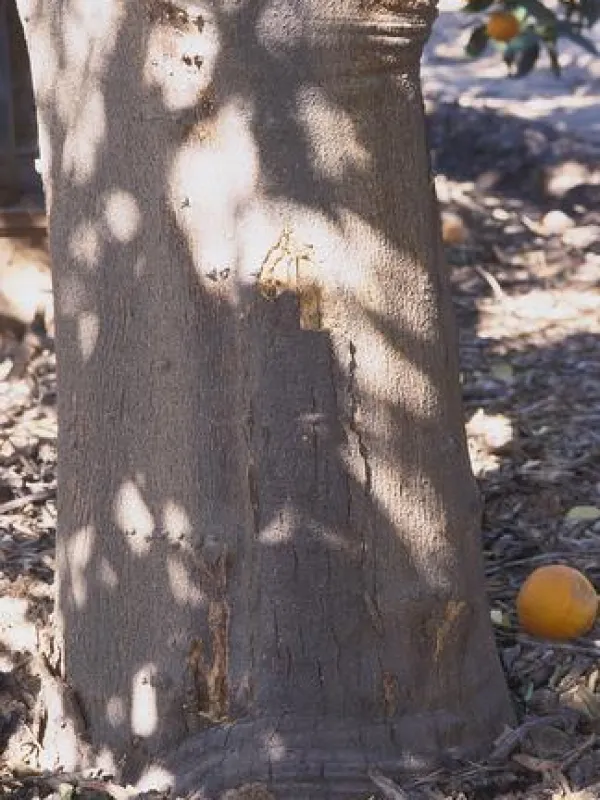
Description
Symptoms
Initial symptoms include chlorosis and leaf drop, as the tree's ability to uptake water and nutrients is severely compromised by root death.
The root collar area typically shows dark, water-soaked bark lesions, often accompanied by gumming or a sour, fermenting odor.
When the bark is removed, the underlying cambium layer displays a characteristic brown or reddish-brown discoloration, marking the necrotic zone.
Fruit symptoms, also known as brown rot, appear as firm, dark leathery spots that spread quickly and emit a pungent, unpleasant odor.
- Leaf yellowing and crown dieback.
- Bark decay and gum exudation at the tree base.
- Brown, leathery lesions on low-hanging fruits.
- Rootlet necrosis leading to reduced tree vigor.
Pathogen
The disease is caused by the oomycete Phytophthora citrophthora, a soil-borne pathogen that primarily targets the root system and the root collar of citrus trees.
This organism produces motile zoospores that swim through water-saturated soil to reach the host plant roots, facilitating rapid infection.
The pathogen remains viable in the soil for years by forming resilient oospores, which can withstand unfavorable environmental conditions.
It infects citrus tissues through natural openings or physical wounds, systematically destroying vascular integrity and causing severe decay.
Phytophthora species are highly adaptive and can affect almost every stage of citrus development, from seedlings in the nursery to mature orchard trees.
Conditions for development
The primary factor promoting disease development is excessive soil moisture resulting from poor drainage, over-irrigation, or high rainfall.
Optimal temperatures for zoospore production and infection range between +15°C and +25°C, providing a window for rapid disease spread.
Heavy clay soils that retain water create an anaerobic environment, which is highly conducive to Phytophthora proliferation.
Poor horticultural practices, such as planting trees too deeply or using contaminated irrigation water, increase the risk of an outbreak.
Mechanical damage to the trunk or roots during cultivation provides an entry point for the pathogen, accelerating the infection process.
Why it matters
Citrus phytophthora causes significant damage to orchard productivity, often leading to the eventual decline and death of infected trees.
The loss of feeder roots limits nutrient and water uptake, resulting in stunted growth, smaller fruit size, and drastically reduced yields.
If left untreated, the disease spreads throughout the plantation via irrigation water, surface runoff, or contaminated farm equipment.
Orchard health is severely impacted, requiring costly removal of infected plants and intensive soil management to prevent further spread.
Economic losses are compounded by the necessity of replacing dead trees and the difficulty of establishing new plantings in infested soil.
Protection
Preventive measures include the use of disease-resistant rootstocks and ensuring that trees are planted on well-drained soil to prevent water accumulation.
Proper orchard management, such as maintaining clean tool hygiene and removing fallen fruit, significantly reduces the pathogen inoculum load.
Fungicide applications, particularly systemic ones like fosetyl-aluminum, are effective in controlling the disease during the early stages.
If localized bark lesions are found, surgical removal of infected tissue followed by fungicide application can potentially save the tree.
Strict water management and avoiding trunk contact with irrigation water are vital components of a long-term integrated pest management strategy.
Discussion
No discussions yet — be the first.