
Phytophthora citricola
Phytophthora citricola
Description
Symptoms
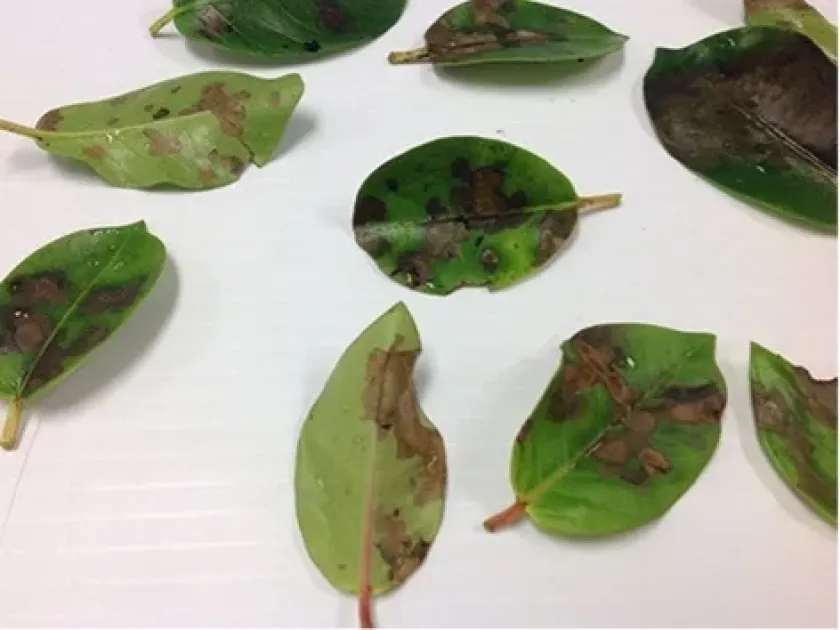
Initial symptoms are often masked as general stress: leaves may show signs of chlorosis, wilt, or premature shedding. The plant appears stunted compared to healthy counterparts.
The root system shows extensive browning and necrosis. Fine feeder roots die off, which prevents the plant from absorbing water and essential nutrients effectively.
Cankers often form on the trunk or root crown, often accompanied by gumming or exudate. The bark may darken and become soft or moist to the touch.
In cases where the fruit is affected, firm, slightly sunken brown lesions develop. These lesions can quickly expand, especially in humid conditions, leading to rapid fruit rot.
Internal tissue examination often reveals a distinct browning or reddish-brown necrosis of the cambium layer, which indicates the progression of the pathogen inside the host.
Pathogen
Phytophthora citricola is a destructive oomycete, a fungus-like organism responsible for significant diseases in a wide range of horticultural and agricultural crops.
The pathogen spreads through motile zoospores that navigate through soil moisture and irrigation water. Its ability to produce persistent oospores allows it to survive in the soil for several years.
Once it encounters a susceptible host, the pathogen infects the root system or the base of the stem. It colonizes the tissue, destroying cellular structures and disrupting the plant's nutrient uptake.
The biological cycle is heavily dependent on moisture. High humidity and waterlogged conditions provide the perfect environment for the zoospores to infect healthy plant tissue.
Because the pathogen persists in the soil, eradication is extremely challenging. Laboratory diagnosis is crucial for distinguishing it from other soil-borne diseases.
Conditions for development
Soil water management is the most significant factor in the development of Phytophthora citricola. The pathogen thrives in poorly drained soils where water remains stagnant.
Moderate temperatures ranging from 15°C to 25°C are ideal for the pathogen's growth. This makes spring and autumn the most dangerous times for infection in temperate climates.
Overcrowded planting environments limit airflow and increase humidity at the soil surface, facilitating the rapid spread of zoospores between adjacent plants.
Mechanical damage during cultivation, such as bruising the trunk or disturbing roots, creates entry points for the pathogen to enter the vascular system.
Heavy, compacted soils contribute to water retention, preventing proper aeration of the roots and creating a hypoxic environment that stresses the plant and favors the oomycete.
Why it matters
The disease causes substantial financial losses by killing young seedlings and reducing the productivity of mature trees, often leading to total yield loss in affected areas.
Fruit decay significantly lowers the quality of the harvest, making remaining products unsalable. Infected fruit can also serve as a source of inoculum in storage facilities.
Nurseries face severe setbacks, as a single outbreak can lead to the destruction of entire batches of stock, disrupting supply chains and causing significant financial strain.
The long-term survival of the pathogen in soil renders land less suitable for future planting, requiring expensive remediation or long-term crop rotation cycles.
Weakened plants become susceptible to secondary infections and pest infestations, accelerating the decline of the orchard or garden and necessitating costly management interventions.
Protection
- Plant only certified disease-free stock to prevent introducing the pathogen into new areas.
- Install professional drainage systems to ensure the soil never remains waterlogged, especially in low-lying areas.
- Implement strict sanitation measures, including disinfecting all pruning and digging tools between plants.
- Apply specific fungicides targeting oomycetes as a preventative measure in high-risk zones during rainy periods.
- Monitor soil moisture levels closely and adjust irrigation schedules to ensure the soil dries adequately between waterings.
Discussion
No discussions yet — be the first.