
Chrysanthemum phytophthora
Phytophthora chrysanthemi
Description
Symptoms
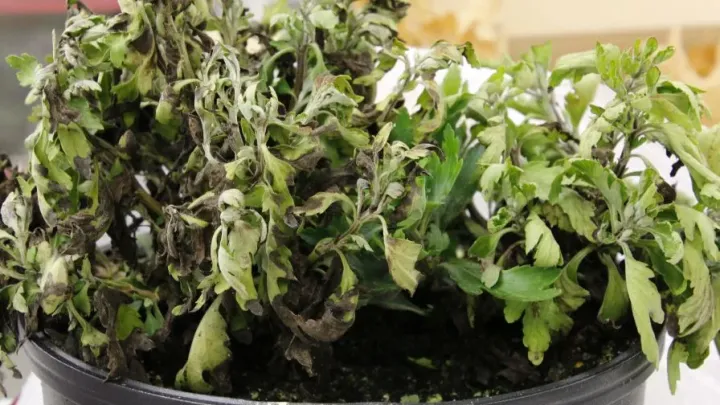
The first noticeable sign is the wilting of terminal shoots, which becomes especially pronounced during hot periods when transpiration is at its peak.
Leaves on infected plants gradually turn yellow, starting from the lower levels, and eventually dry out while remaining attached to the stem.
Examination of the crown or root collar reveals browning and softening of the tissues. In advanced stages, the bark peels away, exposing dark, decayed inner wood.
The root system becomes brown and fragile, losing its resilience and healthy white appearance as the pathogen consumes the root tissue.
Cutting into the stem base often reveals darkened vascular bundles, indicating that the fungus has spread systemically throughout the plant's internal conduits.
Pathogen
The causative agent of this disease is the oomycete Phytophthora chrysanthemi. It is a soil-borne pathogen capable of surviving in the substrate for long periods via resistant resting spores called oospores.
Biologically, this organism belongs to the water mold group, characterized by high aggressiveness in environments with excessive moisture.
The infection spreads through contaminated soil, infected cuttings, and irrigation water carrying motile zoospores that navigate through thin films of water.
The disease is classified as a systemic rot, which blocks the vascular system of the plant, preventing the transport of water and nutrients to the shoots.
While primarily specialized in chrysanthemums, the pathogen can potentially affect related ornamental species in greenhouses if sanitary measures are ignored.
Conditions for development
Excessive soil moisture and poor drainage are the primary conditions that facilitate the development and spread of this disease.
The pathogen thrives in temperatures between +15°C and +25°C, making greenhouse environments particularly susceptible to outbreaks.
Heavy or poorly aerated substrates create stagnant water conditions, which are ideal for the motility and survival of zoospores.
Improper irrigation practices, such as overwatering or relying on contaminated water sources, are frequent contributors to disease transmission.
Poor sanitation within the greenhouse, including the reuse of contaminated containers and lack of equipment disinfection, promotes rapid spread between plant batches.
Why it matters
The disease is highly destructive, often leading to rapid plant death and significant economic losses in commercial floriculture operations.
Phytophthora is nearly impossible to cure once established in a plant; therefore, infected specimens must be immediately removed and destroyed to protect the rest of the crop.
The presence of the pathogen in the soil renders the area unsuitable for future plantings unless strict soil sterilization measures are carried out.
Outbreaks reduce the overall quality of flower production, rendering the entire stock unsaleable and negatively impacting the profitability of the business.
The disease can persist in the environment, creating long-term management challenges for greenhouse growers and nursery managers.
Protection
The cornerstone of management is strict sanitation, including the use of certified disease-free propagation material and sterilized growing media.
Maintaining proper irrigation schedules and ensuring optimal drainage are critical to preventing the moist conditions that favor the pathogen.
Regular preventive applications of systemic fungicides, specifically those targeting oomycetes like metalaxyl or fosetyl-aluminum, are recommended in high-risk areas.
Rigorous hygiene, including the disinfection of tools, pots, and greenhouse surfaces, is essential to minimize the risk of cross-contamination.
- Use of disease-free stock plants.
- Heat sterilization of growing soil.
- Ensuring adequate spacing between plants.
- Regular disinfection of all greenhouse tools.
- Immediate removal of symptomatic plants.
Discussion
No discussions yet — be the first.