
Phytophthora blight of pepper
Phytophthora capsici
Description
Symptoms
Initial symptoms include the wilting of stems during the heat of the day, which may recover at night but eventually leads to permanent collapse.
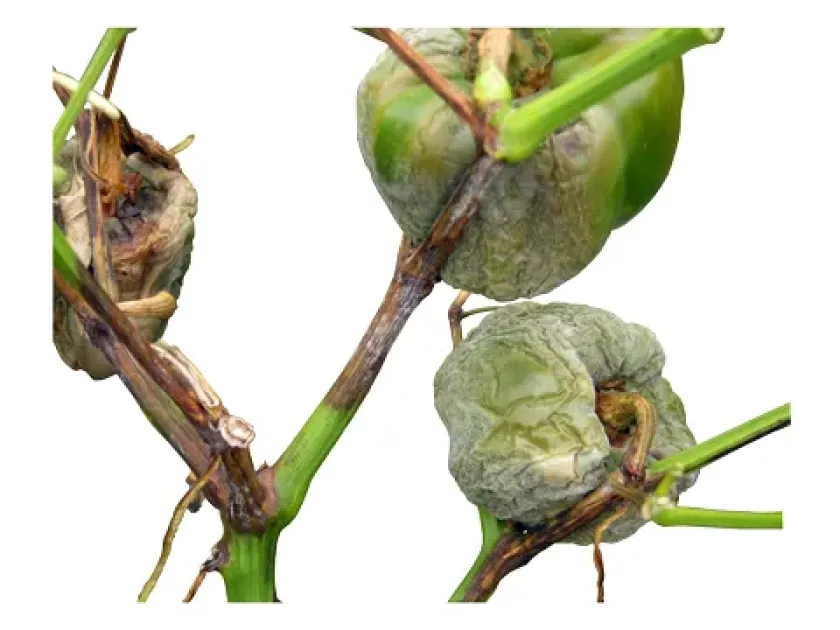
Dark, water-soaked, or brownish lesions appear on the stem near the soil line, eventually girdling the stem and cutting off nutrient transport.
Root systems of affected plants decay and turn black, with the root cortex often sloughing off, resulting in the rapid death of the entire plant.
Fruit symptoms typically appear as water-soaked spots that can rapidly spread, eventually becoming covered with a white, moldy growth of spores.
- Wilting of leaves and young shoots.
- Stunted growth and premature yellowing.
- Root and crown rot.
- Mummification and fruit rot.
Pathogen
The causative agent of this disease is the oomycete Phytophthora capsici, a soil-borne pathogen capable of surviving in the soil for years as dormant oospores.
This pathogen affects not only peppers but also a wide range of Solanaceae and Cucurbitaceae crops, including tomatoes, eggplants, and cucumbers.
The infection spreads via infested soil, irrigation water, agricultural tools, and crop residues remaining in the field after harvest.
The pathogen's zoospores are equipped with flagella, allowing them to swim actively in water films, which facilitates rapid infection of the plant root system.
The life cycle of this fungus-like organism involves both asexual reproduction through sporangia and sexual reproduction, forming oospores resistant to adverse conditions.
Conditions for development
Phytophthora blight thrives in conditions of excessive soil moisture and high humidity, particularly when water ponds in the field after heavy rains.
The optimal temperature range for the pathogen's growth and spread is between 20°C and 30°C, making it a major summer threat in many growing regions.
Heavy clay soils with poor drainage are highly conducive to disease development, as they retain water and provide a reservoir for the pathogen.
Continuous cropping or planting peppers on the same ground year after year significantly increases the inoculum density within the soil profile.
Dense planting patterns that restrict airflow contribute to prolonged leaf and stem wetness, creating an ideal microclimate for the disease to flourish.
Why it matters
This disease is considered one of the most destructive threats to pepper production, capable of killing entire fields within a very short period of time.
Crop losses can range from minor localized outbreaks to total crop failure, significantly impacting the economic feasibility of pepper cultivation.
The persistence of the pathogen in the soil creates long-term challenges, as land may become unsuitable for susceptible crops for several subsequent seasons.
Control costs, including the application of expensive fungicides and increased labor for sanitation, add a significant burden to production budgets.
Infected fruits are unmarketable and carry a risk of post-harvest decay, as hidden spores can contaminate packing crates and other storage containers.
Protection
The primary strategy for management is the use of long-term crop rotation, avoiding Solanaceous crops for at least 3-4 years in infested fields.
Selecting resistant cultivars and planting in well-drained, raised beds can significantly reduce the incidence of the disease by preventing water logging.
Effective water management, including drip irrigation instead of overhead watering and ensuring proper field drainage, is essential for prevention.
Promptly removing and destroying symptomatic plants, along with the surrounding soil, helps to limit the spread of inoculum to healthy areas of the field.
Chemical control involving fungicides specifically labeled for oomycetes, such as those containing copper or systemic active ingredients, should be applied preventatively.
Discussion
No discussions yet — be the first.