
Tip blight
Phytophthora cacuminis
Description
Symptoms
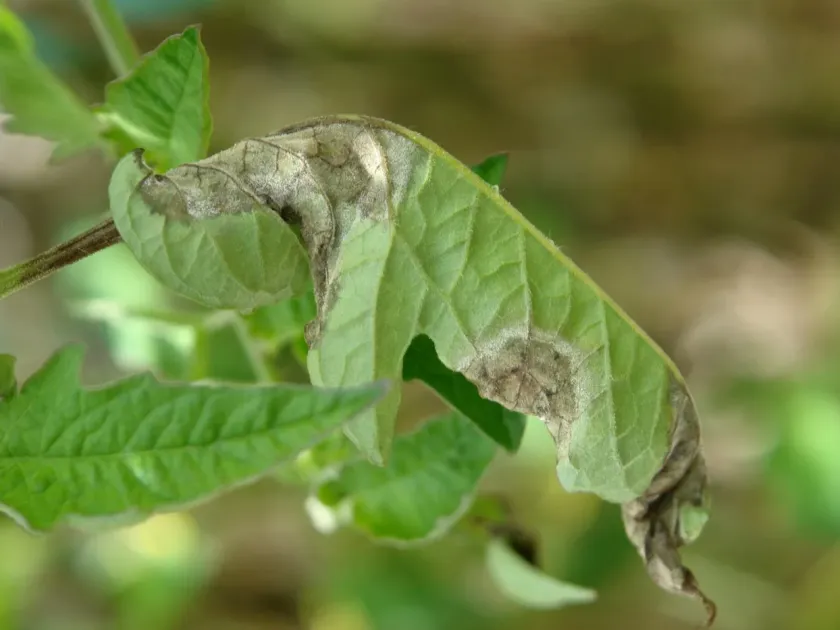
The primary symptom is the sudden wilting and necrotic browning of the shoot tips. Affected tissues transition from a healthy green to a dark brown or black color, creating a sharp boundary between diseased and healthy tissue.
In high humidity, a whitish mold—representing the pathogen's sporulation—often appears on the affected area. The tip may become soft and water-soaked as the decay progresses downward.
As the disease advances, apical leaves curl, yellow, and eventually drop off. If the stem is sectioned, internal vascular browning is often visible, indicating a systemic spread of the pathogen through the plant.
Growth of the main shoot is completely arrested. Often, the plant attempts to form lateral shoots below the site of infection, though these may also become compromised if conditions remain favorable for the pathogen.
- Yellowing and chlorosis of terminal leaves.
- Loss of turgor in the apical area despite adequate soil moisture.
- Presence of dark, irregular necrotic spots on shoot tips.
- Total cessation of primary shoot development.
- Development of secondary sprouts near the infection site.
Pathogen
The causative agent of this disease is the microscopic oomycete Phytophthora cacuminis. This pathogen belongs to the oomycete class and specializes in infecting the apical parts of host plants.
Biologically, this species is closely related to other Phytophthora pathogens but demonstrates a unique affinity for apical meristems. The pathogen persists in soil and plant debris in the form of resistant oospores.
The life cycle includes both asexual reproduction via zoospores and sexual reproduction, which enhances its genetic adaptability. Infection is primarily spread through water splashes, such as rain or overhead irrigation.
Upon landing on susceptible tissue, zoospores germinate to form hyphae that penetrate the host cells. Inside the plant, the mycelium rapidly develops, disrupting the physiological processes of the apical regions.
The pathogen secretes enzymes and toxins that degrade cell walls, leading to quick tissue necrosis. This makes the pathogen particularly destructive to young shoots and terminal buds.
Conditions for development
The development of tip blight is strictly dependent on hydro-thermal conditions. High relative humidity, typically exceeding 80%, is the primary factor promoting the pathogen's activity and spread.
Optimal temperatures for zoospore germination and infection range from +15°C to +22°C. During these intervals, the pathogen is most aggressive, capable of causing widespread damage in a short timeframe.
Persistent moisture on plant surfaces, caused by rainfall, heavy dew, or mist, creates an ideal environment for zoospores to penetrate the tissue. Poor ventilation in dense plantings significantly exacerbates this risk.
Planting density is a crucial management factor. Overcrowding prevents rapid drying of the plant canopy after rain, creating a humid microclimate that favors the growth and reproduction of the pathogen.
Irrigation methods also play a major role. Overhead watering splashes contaminated soil particles and water droplets onto the plant tips, facilitating the transmission of the disease within the crop.
Why it matters
The primary damage caused by tip blight is the destruction of the apical meristem, which stops primary growth. This leads to a severe reduction in harvest volume and overall product quality.
Infections on young plants can lead to total plant death. The disease can spread rapidly across a field, creating large patches of destroyed crops if left unmanaged, leading to significant economic losses.
The disruption of normal plant development negatively affects fruit or flower formation. Affected plants often produce undersized, non-marketable yields, reducing the overall profitability of the agricultural enterprise.
The presence of the pathogen in the soil forces farmers to implement strict and expensive crop rotation cycles, as the soil may remain contaminated for several growing seasons if not treated properly.
Beyond direct yield loss, the plant's weakened state makes it more susceptible to secondary infections by other fungi or pests, further increasing the burden of chemical and mechanical control efforts.
Protection
Effective management begins with strict crop rotation to disrupt the pathogen's life cycle in the soil. It is vital to select fields with no history of previous Phytophthora outbreaks.
Using certified, disease-free seed material is essential to prevent the introduction of the pathogen into a new site. Pre-planting treatments can also provide an initial layer of protection.
Improving air circulation through proper plant spacing and weed management is critical. Dry surfaces are less prone to infection, so reducing the duration of leaf wetness is a key preventative strategy.
Avoid overhead irrigation; instead, switch to drip irrigation to deliver water directly to the root zone, keeping the foliage and apical parts of the plants dry and safe from splashing pathogens.
Regular field scouting allows for the early detection of symptomatic plants. Affected individuals should be removed and destroyed (preferably by burning) to prevent the spread of inoculum to healthy plants.
Discussion
No discussions yet — be the first.