
Phytophthora blight
Phytophthora boehmeriae
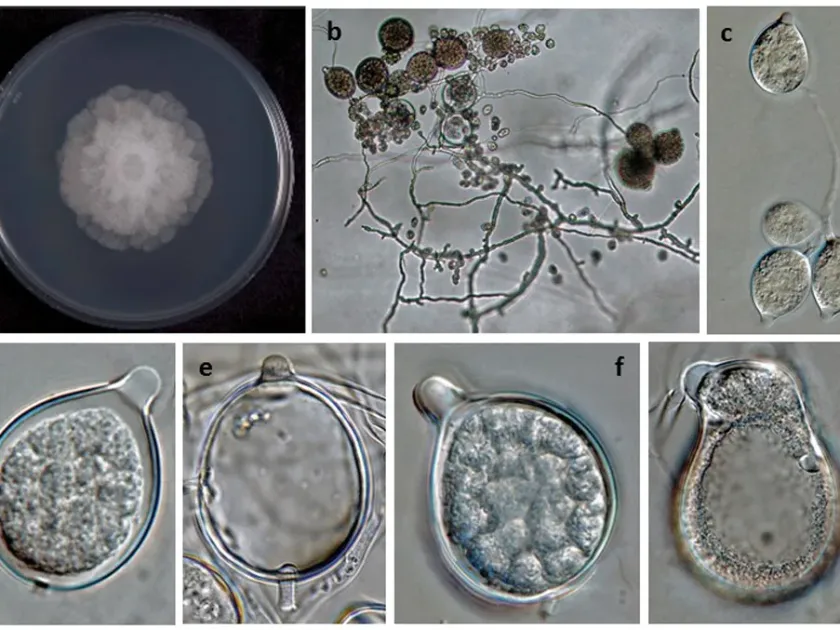
Description
Symptoms
Above-ground plant parts affected by Phytophthora blight exhibit dark brown or black lesions. Often, the edges of these spots are surrounded by a lighter-colored zone.
Stem infections lead to rot, which can cause individual branches to wilt or result in the death of the entire plant. A white, moldy growth often appears on the affected tissues under high humidity conditions.
Fruits and berries are susceptible to specific lesions that expand rapidly, covering a significant surface area. The fruit tissues become soft, water-soaked, and lose their marketability.
The root system of the plant browns and begins to decay upon infection. This disrupts water and nutrient uptake, leading to leaf chlorosis and stunted growth of the crop.
- Darkening and necrosis of stems.
- Water-soaked, rotting spots on leaves.
- Premature dropping of flowers and fruit set.
- Deformation and decay of fruits.
- Suppression of root system development.
Pathogen
Phytophthora blight is caused by the oomycete Phytophthora boehmeriae. This pathogen is a soil-borne organism capable of infecting a wide range of agricultural, ornamental, and forest crops.
The life cycle of the pathogen includes zoospores that move actively in aquatic environments using flagella. This characteristic allows the infection to spread easily through rain splash or irrigation water.
The pathogen can persist in the soil as oospores for an extended period. These structures are highly resistant to adverse environmental conditions, making it difficult to eradicate the infection from fields.
The mycelium of the parasite penetrates the host plant tissues, destroying cell walls and triggering necrotic processes. Pathogen growth is most intense when plant tissues are sufficiently hydrated.
Research indicates that Phytophthora boehmeriae possesses high genetic variability, allowing it to adapt to various growing conditions and overcome plant defense barriers effectively.
Conditions for development
The primary factor triggering a disease outbreak is high air and soil humidity. Heavy rainfall and frequent fog create an ideal environment for zoospore germination.
Temperature ranges from 20 to 28 degrees Celsius are optimal for the active reproduction of the pathogen. Under these conditions, the disease spreads at its maximum rate.
Poor agricultural practices, including excessive irrigation and poor soil aeration, significantly increase the risk of infecting crop stands. Waterlogging in the root zone is a critical factor.
Plant density plays an important role: crowded plantings have poor ventilation, which keeps moisture on leaf surfaces for longer periods, promoting the development of the blight.
The presence of crop debris on the soil surface serves as an infection reservoir. Oospores successfully overwinter in this debris, preparing for a new infection cycle in the spring when temperatures become favorable.
Why it matters
The damage caused by Phytophthora boehmeriae manifests as a sharp decline in yields. Infected fruits become unsuitable for sale and long-term storage.
The disease negatively impacts the photosynthetic activity of the plants. Destruction of the leaf canopy leads to reduced accumulation of sugars and other organic compounds in the fruit.
In some cases, the infection can lead to the total loss of plantings, especially in nurseries. This results in significant economic losses for agricultural producers.
Root system damage makes plants vulnerable to secondary pathogens, including soil-borne bacteria and other fungi, which worsens the overall condition of the plantings.
The infection is difficult to treat once the disease has progressed. This makes proactive preventive measures the only reliable way to protect agricultural activities from large-scale epidemics.
Protection
The foundation of protection is the use of healthy planting material. Purchasing seedlings only from certified nurseries minimizes the risk of introducing the infection to the site.
Adhering to crop rotation allows for the disruption of the pathogen's life cycle in the soil. It is recommended to rotate crops so that susceptible species do not return to the same plot for at least 3-4 years.
Timely removal and destruction of crop debris are essential practices. Composting at high temperatures helps destroy the oospores of Phytophthora boehmeriae.
The application of fungicides containing copper, metalaxyl, or other specific active ingredients effectively suppresses Phytophthora blight. Applications should be performed preventively during high-risk periods.
Improving drainage systems and managing irrigation regimes prevent the creation of conditions favorable for oomycete reproduction. Soil aeration and proper plant pruning also help lower humidity levels.
Discussion
No discussions yet — be the first.