
Cypress phytophthora
Phytophthora austrocedri
Description
Symptoms
The primary symptom is the gradual yellowing or browning of the foliage, which often starts on individual branches before spreading to the entire tree.
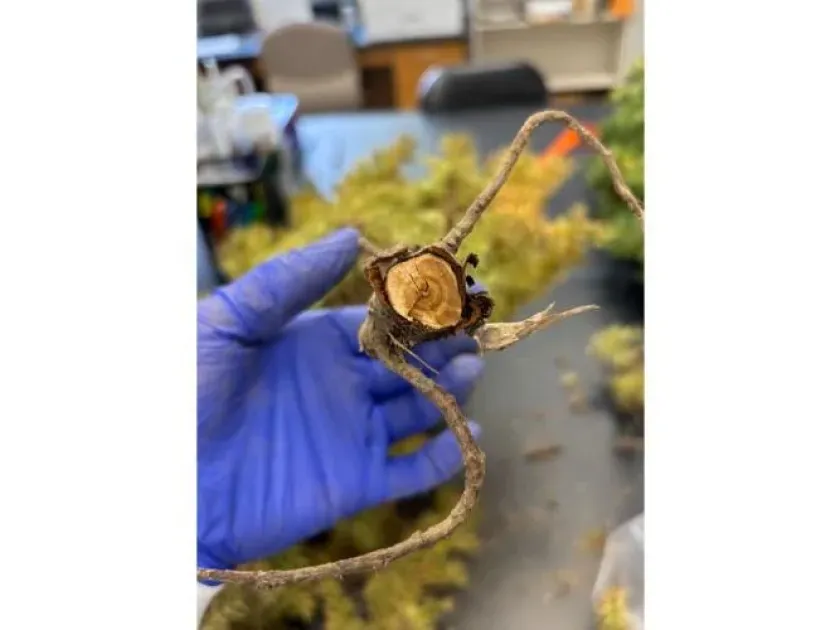
Visible necrotic lesions on the bark near the root collar are common, often appearing as reddish-brown patches with clear boundaries.
By peeling back the outer bark layer, one may observe a distinct dark, reddish-brown discoloration of the cambium, indicating an active infection zone.
The root system becomes decayed and fragile, losing its structural integrity and failing to anchor the tree properly in the ground.
As the disease progresses, the tree loses its vitality, showing signs of severe drought stress despite adequate soil moisture levels.
Pathogen
Phytophthora austrocedri is an oomycete pathogen responsible for significant damage to various cypress species and other conifers, primarily targeting roots.
As a soil-borne pathogen, it produces resilient resting spores called oospores, which allow the organism to survive in the substrate for long periods.
The disease spreads through contaminated soil, infected nursery stock, irrigation water, and the use of unsterilized pruning equipment.
Once introduced, the pathogen infects the root system, damaging the host's ability to absorb water and essential nutrients from the soil.
This biological disruption eventually leads to the blockage of conductive tissues, causing gradual wilting and the eventual death of the affected plant.
Conditions for development
Phytophthora austrocedri thrives in environments characterized by poor drainage and waterlogged soil, which provide ideal conditions for spore mobility.
The pathogen is most active during cool, wet weather, particularly in spring and autumn, when soil temperatures are conducive to infection.
High-density planting in nurseries can facilitate the rapid transmission of the pathogen through interconnected root systems and shared soil water.
Mechanical damage to roots, whether from cultivation tools or soil-dwelling pests, significantly increases the tree's susceptibility to primary infection.
Heavy clay soils that retain moisture for extended periods are particularly risky for the establishment and proliferation of this pathogen.
Why it matters
This disease is highly destructive to cypress and juniper populations, often leading to total tree loss if not managed during the early stages.
It poses a severe threat to commercial nurseries, as the infection can silently spread among batches of plants before showing visible symptoms.
Once a site is contaminated, the persistent nature of the spores makes it difficult to replant susceptible species without extensive soil remediation.
The financial and ecological impact is substantial, given the time required for conifers to reach maturity and their aesthetic value in landscaping.
The disease is notoriously difficult to cure, as the pathogen deeply inhabits the root collar, making traditional fungicide applications less effective once damage is severe.
Protection
Prevention through strict phytosanitary measures is the most effective approach, including the purchase of certified pathogen-free nursery stock.
Improving soil drainage through the installation of drainage tiles and selecting sites with well-aerated soil are critical preventative steps.
Chemical control using phosphonate-based fungicides can act as a preventative measure, protecting healthy trees in high-risk environments.
When an infection is confirmed, prompt removal and destruction of the infected plants, including root balls, is necessary to minimize inoculum levels.
- Disinfecting all gardening tools between plants to prevent cross-contamination.
- Monitoring the base of the trunk for bark discoloration regularly.
- Avoiding over-irrigation in garden beds containing susceptible conifer species.
- Using bark mulch to maintain soil health while avoiding contact with the trunk.
Discussion
No discussions yet — be the first.