
Phyllosticta leaf spot
Phyllostictaceae
Description
Symptoms
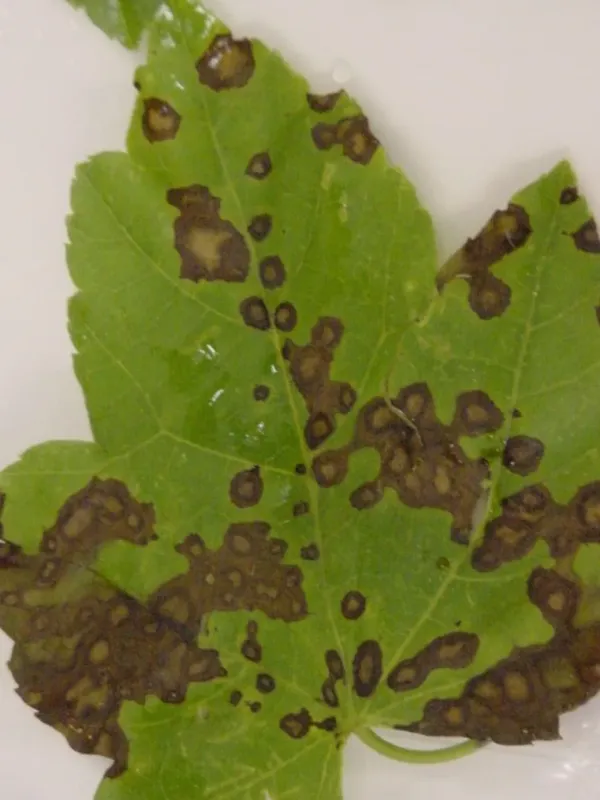
The hallmark of this disease is the development of distinct spots on the foliage. These spots vary in size and shape depending on the host plant species.
Initially, small chlorotic or necrotic dots appear, which eventually expand into larger lesions, often displaying a dark, prominent margin that defines the border.
The center of the spot frequently turns lighter—tan, gray, or white—as the plant cells die and the tissue dries out and eventually becomes brittle.
A key diagnostic feature is the appearance of tiny, black, pimple-like structures within the necrotic lesions; these are the pycnidia visible to the naked eye.
Severe infections can cause extensive spotting, leading to yellowing of the entire leaf, premature defoliation, and significant weakening of the plant structure.
Pathogen
Phyllosticta leaf spot is caused by fungi belonging to the genus Phyllosticta within the family Phyllostictaceae. These fungi are typically host-specific, affecting a wide variety of plant species.
The life cycle involves the formation of pycnidia, which are small fruiting bodies produced within the leaf tissue, containing numerous conidia for dispersal.
The fungus overwinters primarily in dead leaf litter, infected stems, and sometimes on fallen fruit, where it survives as mycelium or dormant pycnidia.
During spring, in the presence of moisture, the pycnidia release spores which are spread to new plant growth by splashing rain, wind currents, or mechanical transmission.
Many different species of Phyllosticta exist, each adapted to specific host plants, including fruit trees, grapes, vegetables, and ornamental shrubs.
Conditions for development
The development of Phyllosticta leaf spot is highly dependent on environmental humidity, as fungal spores require a film of water to germinate and infect leaves.
Prolonged wet weather, heavy dew, and frequent rainfall are critical factors that facilitate the mass release and germination of spores during the growing season.
Warm temperatures combined with high humidity accelerate the growth of the fungus and shorten the incubation period between infection and the appearance of new symptoms.
Poor cultural practices, such as overcrowding of plants, insufficient spacing, or lack of pruning, create a humid microclimate that promotes the rapid spread of the pathogen.
Plants weakened by environmental stress, poor nutrition, or previous pest damage are significantly more susceptible to successful colonization by the fungus.
Why it matters
The primary harm caused by Phyllosticta leaf spot is the reduction of the plant's photosynthetic area, which impairs its ability to produce energy for growth.
Premature leaf drop reduces the overall vigor of the plant, potentially leading to stunted growth and reduced fruit yield in productive crops like orchards and vineyards.
For ornamental plants, the aesthetic impact is severe, as foliage discoloration and necrosis ruin the plant's visual appeal and commercial value.
Persistent and annual infections can lead to the chronic exhaustion of perennial plants, making them more vulnerable to winter injury and other secondary pathogens.
If left unmanaged, heavy infestations can eventually lead to the death of branches or, in severe cases, the entire plant over several seasons.
Protection
Effective management begins with strict sanitation, including the thorough removal and destruction of fallen leaves and infected debris at the end of the season.
Proper pruning and thinning of the canopy are essential to improve air circulation and sunlight penetration, which helps keep foliage dry and inhibits fungal growth.
Chemical control involving copper-based fungicides or appropriate systemic treatments can be effective when applied preventively at the onset of favorable weather.
Scheduling fungicide applications according to growth stages, such as bud break and post-flowering, is critical for minimizing primary infection cycles.
Maintaining optimal plant health through balanced fertilization and appropriate irrigation prevents the stress that often leads to increased susceptibility to fungal diseases.
Discussion
No discussions yet — be the first.