
Phyllosticta leaf spot
Phyllosticta vaccinii
Description
Symptoms
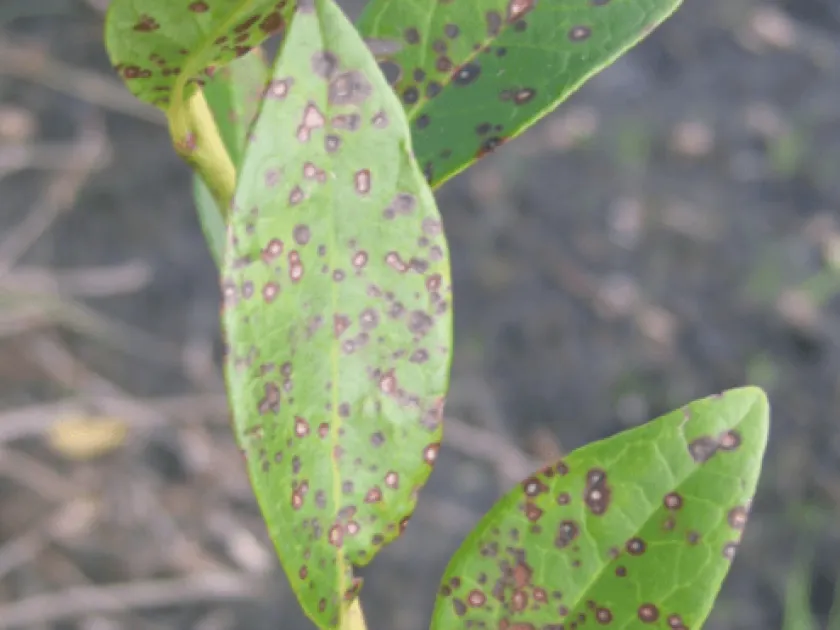
The first symptoms appear as small, circular or irregular spots on the leaves that are greyish-brown with a distinct dark, reddish-purple margin.
As the disease progresses, small black structures called pycnidia develop in the center of these spots, which serve as the reproductive bodies of the fungus.
Severe infestations cause the spots to merge, resulting in large necrotic areas that lead to premature leaf drop and yellowing of the foliage.
In addition to leaves, the fungus can infect stems and berries, causing elongated lesions that can eventually girdle and kill the infected stems.
Visual identification is most reliable during late summer when the dark pycnidia are clearly visible within the necrotic leaf tissue.
Pathogen
The causal agent of this disease is the fungus Phyllosticta vaccinii, which primarily targets the foliage of cranberry plants.
This pathogen survives the winter in infected leaf litter and stem tissues, producing pycnidia that release spores during the following spring.
The infection cycle is driven by the release of conidia, which are easily transported to healthy plant tissues by splashing rain or wind currents.
The fungus is highly specialized, typically attacking members of the Ericaceae family, making cranberry plantations particularly vulnerable.
Understanding the life cycle of the pathogen is crucial for timing fungicide applications to intercept the spores before they colonize the leaves.
Conditions for development
High relative humidity and prolonged periods of leaf wetness are the primary environmental conditions that favor the spread of the disease.
The fungus thrives in moderate temperatures ranging between 18 and 25 degrees Celsius, which often coincide with the active growing season.
Dense canopy growth that limits air circulation keeps the leaves wet for longer periods, providing an ideal environment for spore germination.
Excessive overhead irrigation or poorly drained soils contribute significantly to the development and severity of the disease outbreak.
Warm, rainy summers provide the perfect conditions for the rapid multiplication of the pathogen across large areas of the cranberry bog.
Why it matters
The primary impact of the disease is the reduction of functional leaf area, which severely limits the plant's ability to perform photosynthesis.
Premature leaf loss weakens the cranberry plants, making them more susceptible to winter injury and reducing their ability to produce fruit buds.
Chronic infection results in a significant decline in berry yield, as the plants struggle to redirect energy from recovery to fruit development.
Left unmanaged, the disease can spread rapidly, causing significant stand thinning and compromising the longevity of the entire plantation.
While often localized, the impact on plant vigor can make a bog more prone to secondary infections from other pests or pathogens.
Protection
Effective management begins with improving field drainage and air circulation to minimize the time leaves remain wet throughout the day.
Sanitation is a vital component, involving the removal and destruction of infected plant debris to reduce the overwintering fungal load.
Fungicide applications are recommended during periods of high risk, specifically focusing on the early season growth and post-bloom stages.
Integrated pest management strategies involve monitoring the bog regularly for early signs of lesions to determine the necessity of intervention.
- Selecting resistant varieties for new plantings.
- Ensuring optimal plant spacing for better airflow.
- Using clean, certified planting stock.
- Applying recommended fungicides as a preventive measure.
- Balancing nutrient levels to promote overall plant resilience.
Discussion
No discussions yet — be the first.