
Phyllactinia yarwoodii
Phyllactinia yarwoodii
Description
Symptoms
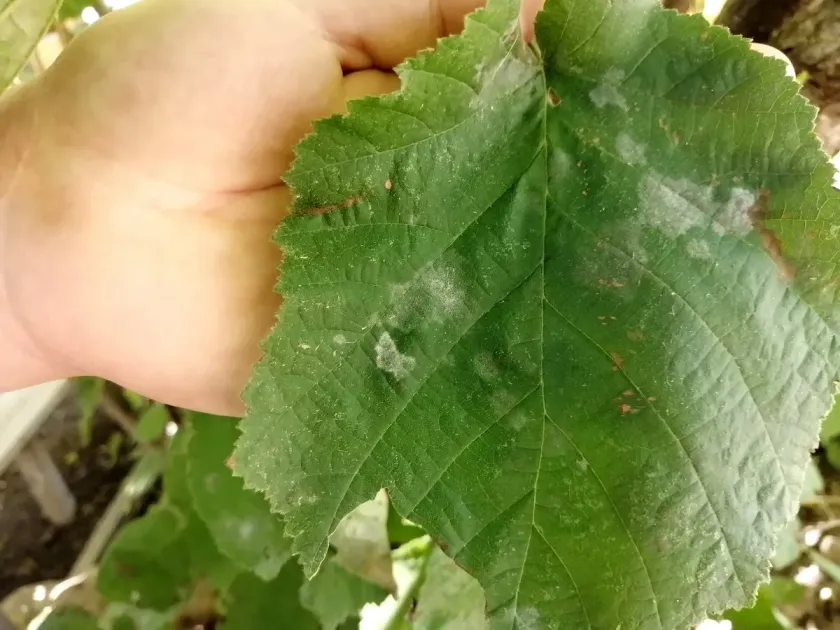
The most visible symptom is the presence of a white, powdery fungal growth on the leaves, which often turns darker and more dense as the infection progresses.
Infection typically begins on the abaxial (underside) surface of the leaves, making it easy to miss in the early stages of development.
As the disease advances, small black fruiting bodies called cleistothecia become visible on the leaf surface, appearing as minute dots within the fungal mat.
Affected leaves may exhibit chlorosis, premature yellowing, and eventual wilting, significantly altering the overall appearance of the plant foliage.
In severe cases, the infected leaves may become curled, distorted, or drop prematurely from the branches, leading to thinning of the plant canopy.
Pathogen
Phyllactinia yarwoodii is a species of obligate parasitic fungus within the Erysiphales order, responsible for causing specific types of powdery mildew on various woody hosts.
The life cycle involves the asexual stage characterized by conidial production during the growing season and the sexual stage, resulting in the formation of cleistothecia.
These cleistothecia act as overwintering structures and are morphologically distinct, featuring long appendages that help in their identification under laboratory conditions.
The fungus exists primarily as an ectoparasite, meaning the mycelium grows on the outer surface of the leaves, drawing nutrients through haustoria inserted into the epidermal cells.
This biological specialization makes the pathogen highly adapted to its host, allowing it to complete its life cycle efficiently during favorable environmental windows.
Conditions for development
The development of the fungus is highly dependent on moderate temperatures and high humidity levels, which provide an optimal environment for spore germination.
Wind plays a crucial role in the dissemination of the conidia, carrying the spores to healthy parts of the host or to neighboring plants in the vicinity.
Poor air circulation within the canopy creates a microclimate with high relative humidity, which is a major contributing factor to widespread infection outbreaks.
Plants under physiological stress, such as those suffering from drought or nutrient deficiencies, show increased susceptibility to successful colonization by the fungus.
The presence of fallen leaf litter provides a reservoir for the pathogen, allowing the sexual stage to survive winter and initiate new infections in the spring.
Why it matters
The primary damage is caused by the obstruction of sunlight by the dense mycelial layer, which directly interferes with the plant's photosynthetic capability.
Energy deficiency in the host results in stunted growth of shoots and impaired development of buds intended for the next growth season.
Premature leaf loss reduces the plant's ability to store necessary carbohydrates, leading to reduced cold hardiness and potential winter injury.
For ornamental woody plants, the aesthetic decline caused by the disease reduces their market value and suitability for landscape architecture.
Long-term infestation can lead to a general decline in tree vigor, making the host more vulnerable to secondary pests and various environmental stressors.
Protection
Sanitation practices, specifically the removal and destruction of infected leaf debris, are essential to break the overwintering cycle of the fungus.
Application of fungicides, including sulfur-based products or systemic triazoles, can effectively manage the disease if applied during the early onset of symptoms.
Proper pruning and thinning of branches are recommended to improve light penetration and air movement, which creates conditions unfavorable for the fungus.
Balanced fertilization avoiding excessive nitrogen helps in maintaining robust cell walls and increasing the natural defensive capacity of the host plant.
- Regular scouting of the foliage during the summer months.
- Selective pruning of heavily infected branches to reduce spore load.
- Selection of resistant plant species or cultivars for new plantings.
Discussion
No discussions yet — be the first.