
Phyllactinia marissalii
Phyllactinia marissalii
Description
Symptoms
The primary symptom of infection is the appearance of a white or grayish fungal mat on the lower surface of the leaves. Over time, this mat may thicken and change to a yellow or brownish color.
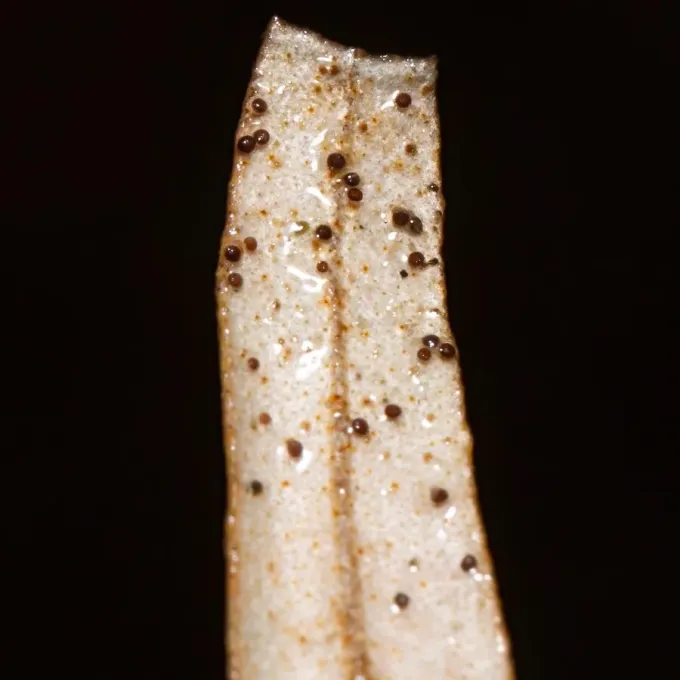
Visible black dots often appear on the mycelial layer; these are the cleistothecia of the fungus. Their presence is a definitive diagnostic indicator that the fungus is in its sexual stage of development.
As the infection progresses, affected leaves may turn yellow, curl, and drop prematurely. This leads to early defoliation, which severely stresses the tree and hinders its overall physiological health.
In cases of severe infestation, young shoots and buds may become stunted or deformed. The presence of the fungus disrupts the plant's normal metabolic processes, preventing efficient growth.
Proper diagnosis requires inspecting the undersides of the leaves, as the pathogen often maintains a discreet presence until the mycelial layer becomes sufficiently dense to be easily noticed by the naked eye.
Pathogen
The causative agent of the disease is a specialized ascomycete fungus Phyllactinia marissalii, which belongs to the order Erysiphales. This pathogen is an obligate parasite, meaning it requires living host tissue to complete its life cycle.
The life cycle involves the formation of surface mycelium and the production of cleistothecia. These fruiting bodies are essential for the fungus to survive harsh winter conditions and re-infect plants in the following spring.
The biology of Phyllactinia marissalii is tightly regulated by its ability to tap into host nutrients. It utilizes specialized structures called haustoria, which penetrate the epidermal cells of the host to extract necessary nutrients for fungal growth.
In terms of taxonomy, this fungus is a typical representative of the powdery mildew group. It is specifically known for its tendency to colonize the foliage of various woody species, often targeting the undersides of the leaves.
Dissemination is primarily achieved through airborne conidia. Once these spores land on a receptive host surface, they germinate quickly, provided the environmental conditions are suitable for infection.
Conditions for development
The fungus thrives in moderately warm temperatures ranging from 18 to 24 degrees Celsius. Fluctuations in humidity and ambient temperature are particularly conducive to the rapid spread of conidia.
Poor ventilation within the canopy is a critical factor for the development of an epidemic. Densely planted areas allow moisture to remain trapped, providing the ideal microclimate for the pathogen.
While the fungus does not necessarily require liquid water to germinate, high relative humidity levels significantly boost the infection rate. Dew or post-rain conditions are sufficient to trigger rapid growth.
Accumulated leaf litter beneath the trees serves as the primary reservoir for the fungus. If not removed, these infected materials harbor the inoculum necessary for the infection to return next season.
Plants under stress, whether from poor lighting or nutrient deficiency, show higher susceptibility to the disease. Healthy plants are generally better equipped to resist initial colonization.
Why it matters
The main damage caused by Phyllactinia marissalii is the inhibition of photosynthesis. The fungal mat effectively blocks the leaf surface, reducing the plant's ability to produce energy from sunlight.
Premature leaf drop compromises the plant's ability to store energy for the winter. This significantly lowers the tree's frost resistance, making it more likely to suffer cold damage during the dormant season.
Reduced vigor often leads to poor fruit set and overall yield decline. In nurseries, saplings infested with this pathogen may lose their commercial value and might need to be discarded.
The pathogen can weaken the overall structural integrity of the plant by affecting shoot maturation. This makes the affected branches more susceptible to secondary infections by other fungi or bacteria.
Long-term consequences of uncontrolled infection include reduced lifespan and stunted growth of the woody species, which can affect the overall productivity of orchards or ornamental landscapes.
Protection
Effective management begins with sanitation. It is essential to collect and destroy all fallen leaves at the end of the season to eliminate the primary sources of overwintering inoculum.
Pruning should be performed regularly to maintain good airflow through the canopy. This practice helps to reduce micro-humidity, making the environment unfavorable for fungal growth.
Chemical control involving fungicides should be implemented as soon as early signs of infection are detected. Sulfur-based and systemic fungicides are highly recommended for controlling powdery mildew.
Balanced fertilization is key to maintaining plant health. Avoid excessive nitrogen applications, which promote lush, succulent growth that is highly attractive to the pathogen.
- Selection of resistant plant varieties.
- Regular pruning of infected branches to improve air circulation.
- Application of protective fungicides during the growing season.
- Proper disposal of infected plant debris through burning or deep burial.
Discussion
No discussions yet — be the first.