
Phycomyces
Phycomyces
Description
Symptoms
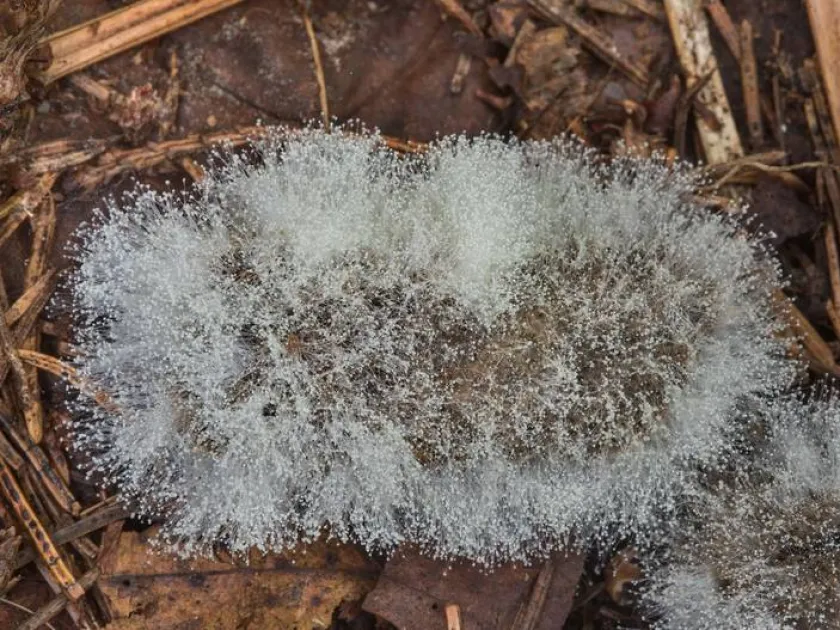
The visual symptom of infection is the appearance of an abundant, fluffy, grayish or slightly yellowish mold on the surface of fruits, vegetables, or stored grain, representing the mycelial mass and sporangia.
Microscopic examination reveals long, straight sporangiophores reaching several centimeters in height, topped with dark, spore-filled sporangia that make the infected area look hairy.
Infected plant tissues lose their firmness rapidly, becoming soft, watery, and often emitting a characteristic musty odor associated with Mucorales decay.
In field conditions, symptoms often appear on root crops or fruits that have sustained mechanical damage to the skin. The infection spreads rapidly by contact between healthy and diseased items.
Unlike many other pathogens, the Phycomyces mold creates a very voluminous and airy appearance that may darken significantly as the spores reach maturity.
Pathogen
Phycomyces is a genus of zygomycete fungi belonging to the order Mucorales. In an agronomic context, this organism is primarily considered a saprotrophic mold, but under specific conditions, it can exhibit facultative parasitism on weakened plant tissues.
The fungus features a well-developed, non-septate mycelium, which is a characteristic feature of this class. Reproduction occurs through the formation of sporangia, which develop on long, prominent sporangiophores visible to the naked eye.
The biology of Phycomyces is well-studied due to its high photosensitivity and rapid growth rate. In agricultural settings, it is most frequently encountered as an agent of spoilage for harvested produce, seeds, and organic residues.
This fungus possesses an extensive enzymatic system that allows it to break down complex organic compounds. This enables the pathogen to rapidly colonize substrates rich in carbohydrates and moisture.
The production of specific metabolites allows the fungus to compete successfully with other microorganisms in soil microflora and on organic surfaces, ensuring its persistence in agricultural ecosystems.
Conditions for development
The primary factor facilitating the development of this fungus is high relative humidity (above 85-90%) combined with excess moisture within the substrate or the produce itself.
The optimal temperature for active growth ranges between +15°C and +25°C. However, the fungus can tolerate lower temperatures, slowing its metabolic activity without dying.
Mechanical injuries such as scratches, cracks, or bruises during harvest are critical entry points for the fungus, allowing it to access nutrients inside plant cells and initiate decay.
Inadequate ventilation in storage facilities or dense plantings with poor air circulation create microclimatic zones conducive to spore accumulation and mycelial growth.
Contamination of harvested products with soil residues containing fungal spores acts as a primary source of inoculation, which can initiate rapid spread if surface moisture is present.
Why it matters
The damage caused by Phycomyces is primarily related to the rapid loss of quality and market value of produce during storage and transportation. Contaminated batches can become completely unsalvageable within days.
The fungus secretes cell wall-degrading enzymes that transform healthy produce into a soft, rotten mass, causing direct economic losses for farmers and retailers.
Beyond direct tissue destruction, the fungus creates a favorable environment for secondary bacterial infections, which accelerate the rotting process and worsen the overall sanitary condition of the storage site.
Seeds and planting material affected by this fungus often exhibit reduced germination energy and viability, leading to crop thinning and decreased yields in the following season.
On a commercial scale, the presence of mold outbreaks in storage requires intensive labor for sorting and facility disinfection, significantly increasing operational costs.
Protection
The primary control measure involves maintaining strict storage conditions: controlling temperature and humidity levels to remain below the threshold for mold growth.
It is essential to minimize mechanical damage during harvesting, grading, and transportation, as the integrity of the plant skin serves as the primary barrier against infection.
Regular disinfection of storage facilities, containers, and equipment using appropriate fungicides or approved sanitizers is mandatory to prevent the accumulation of fungal spores.
In the field, it is important to prevent waterlogging, improve soil drainage, and clear crop residues that serve as a nutrient base for saprotrophic fungi.
- Installation of active ventilation systems in warehouses.
- Implementation of crop rotation to reduce soil-borne inoculum.
- Selection of cultivars resistant to skin cracking.
- Rigorous culling of damaged products before long-term storage.
Discussion
No discussions yet — be the first.