
Rose rust
Phragmidium speciosum
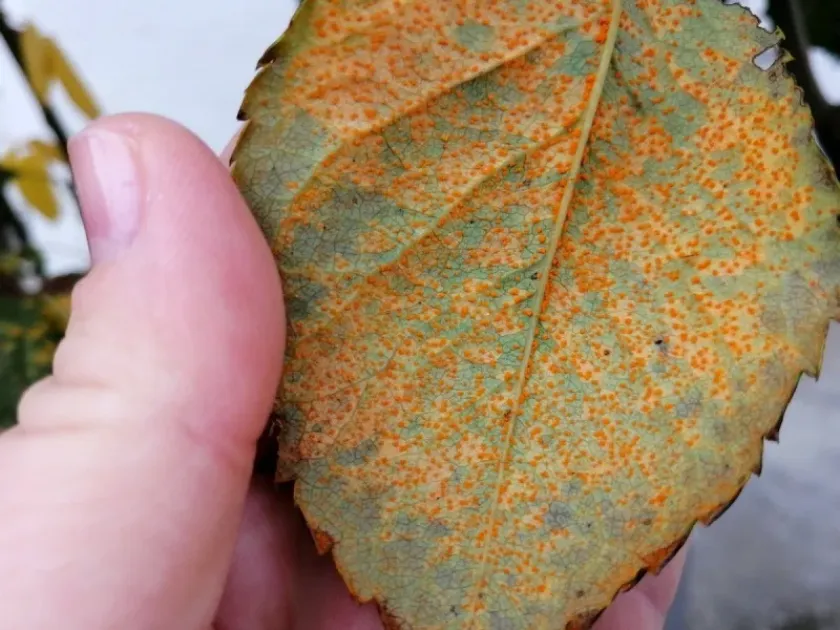
Description
Symptoms
The first signs of rose rust appear in early spring as bright orange spots or pustules on the underside of leaves, stems, and petioles.
As the infection progresses, these spots turn dark brown or black, signaling the development of the fungus's overwintering spore stage.
Heavy infestations cause premature yellowing of leaves and significant defoliation, which severely weakens the rose bush.
Stems may develop cracks, swellings, or deformities that release a dusty, powdery mass of spores when disturbed.
In severe cases, young shoots become distorted and stunted, often resulting in dieback of individual branches or the entire plant.
Pathogen
The causative agent is the specialized fungus Phragmidium speciosum, a basidiomycete that acts as an obligate parasite.
This pathogen has a complex life cycle involving several spore types, allowing it to adapt and survive under diverse environmental conditions.
The fungus feeds exclusively on tissues of the Rosa genus, disrupting plant physiology and reducing the host's ability to produce energy.
The pathogen primarily overwinters as mycelium or resistant spores on fallen leaves and infected plant debris remaining in the garden.
During the spring, spores are dispersed by wind, splashing rain, or insects, infecting fresh host tissue when conditions allow.
Conditions for development
High relative humidity, frequent rainfall, and moderate temperatures between 18 and 25 degrees Celsius are ideal for infection development.
Poor air circulation within dense rose plantings creates a humid microclimate that facilitates rapid spore germination on leaf surfaces.
Improper fertilization, particularly excessive nitrogen application, promotes succulent growth and reduces the plant's natural resistance to fungi.
Overhead irrigation, which keeps foliage wet for extended periods, significantly increases the risk of successful spore penetration.
Failure to implement regular sanitation and autumn cleanups leaves the garden reservoir of inoculum, leading to recurring infections each season.
Why it matters
Rose rust is a highly destructive disease that causes premature exhaustion of the bush and leads to a loss of overall aesthetic appeal.
By disrupting photosynthesis, the disease prevents the plant from accumulating necessary reserves required for successful winter survival.
Heavy infection decreases the cold hardiness of rose bushes, frequently resulting in mortality during freezing winter temperatures.
The disease impairs flower bud development, causing blooms to be scarce, stunted, or completely absent during the growing season.
Persistent fungal activity on stems creates lesions that can act as entry points for secondary infections or opportunistic pests.
Protection
Strict sanitary practices are the primary line of defense: gather and dispose of all fallen leaves and debris by burning or deep burial.
Ensure proper plant spacing and conduct thinning prunings to promote air circulation and facilitate faster drying of leaves after rain.
- Apply preventative fungicide sprays during the active growing season.
- Use copper-based fungicides for early spring dormant treatments.
- Apply systemic fungicides, such as triazoles, at the first sign of infection.
- Select and plant rose varieties known for their resistance to rust.
- Maintain a balanced nutrient program, prioritizing potassium and phosphorus in late summer.
Upon detecting symptoms, promptly remove and destroy all affected leaves and shoots to minimize the spread of the pathogen.
Discussion
No discussions yet — be the first.