
California rose rust
Phragmidium rosae-californicae
Description
Symptoms
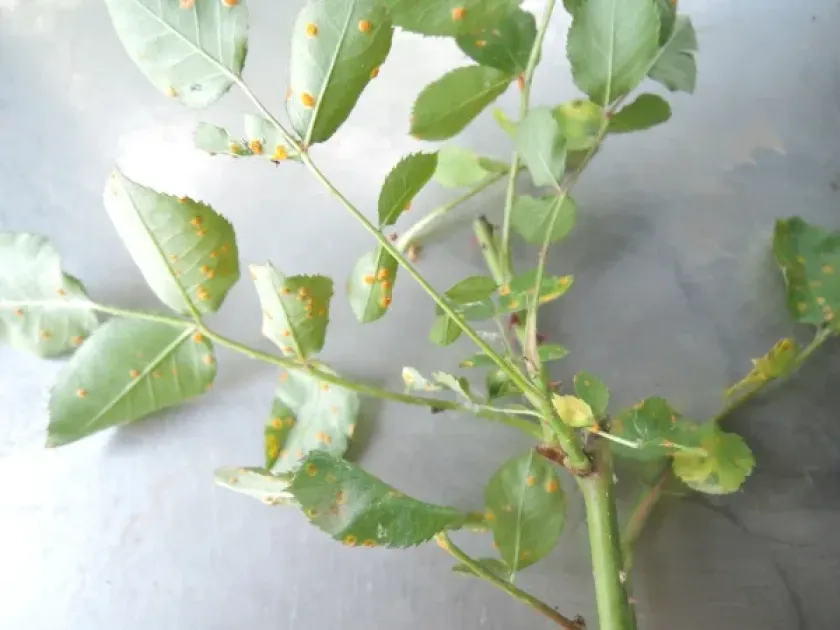
The first signs usually appear as small, chlorotic yellow spots on the upper leaf surfaces. Soon after, bright orange, powdery pustules form on the undersides of the leaves, which is the most classic symptom.
In cases of heavy infection, the leaves become chlorotic, curled, and drop prematurely. This defoliation can begin at the base of the plant and move upwards, leaving the canes exposed and weakened.
The disease also affects the stems and petioles. Orange or reddish pustules can develop on young shoots, often leading to swelling, deformation, and cracking of the bark, which further stresses the plant.
By late summer or autumn, the bright orange pustules shift to a dark brown or black color. This indicates the transition to the production of teliospores, designed for survival during the winter months.
- Bright orange powdery spots on the undersides of leaves.
- Yellowing and premature leaf drop.
- Deformed, cracked, and swollen green shoots.
- Darkening of pustules during the late season.
Pathogen
The causal agent of this disease is the parasitic fungus Phragmidium rosae-californicae. It is a specialized rust fungus that exclusively targets species of the Rosa genus, causing characteristic rust-like symptoms on the foliage and stems.
The fungus is an obligate parasite, meaning it requires living host tissue to survive and reproduce. It undergoes a complex lifecycle with multiple spore stages, allowing it to spread efficiently during the growing season.
Infection occurs when fungal spores land on rose surfaces, often in high-humidity conditions. The germ tubes penetrate the epidermis, establishing a mycelial network that draws nutrients from the plant's cells.
As the mycelium matures, it pushes through the plant surface to form pustules. These structures are the visible markers of the disease, containing thousands of tiny spores ready to be dispersed by wind or water splashes.
The fungus overwinters in the form of teliospores, which are hardy, dark structures that persist on fallen leaves and dormant canes, serving as a primary inoculum source for the following spring.
Conditions for development
Favorable conditions for the development of California rose rust are cool to moderate temperatures and high humidity. The fungus thrives when there is prolonged leaf wetness, such as dew or frequent rain.
Poor air circulation is a major contributor to the disease's spread. Rose bushes planted too closely together trap moisture within the canopy, preventing foliage from drying out quickly after irrigation or rain.
Optimal temperatures for the fungus range between +15°C and +22°C. Within this range, the pathogen can complete its reproduction cycle rapidly, leading to explosive outbreaks if left untreated.
Overhead watering is a significant risk factor. Water droplets act as vectors, splashing spores from infected lower leaves to healthy upper foliage, accelerating the spread of the infection throughout the bush.
Improper sanitation, such as failing to remove infected fallen leaves, provides the perfect environment for the fungus to persist. The pathogen survives well in debris, ready to reinfect the plant in the next season.
Why it matters
California rose rust significantly degrades the aesthetic value of the rose garden, making plants look unhealthy and sparse. This is particularly problematic for ornamental displays and rose-growing enthusiasts.
Severe defoliation restricts the plant's photosynthetic capacity, leading to reduced carbohydrate production. This weakens the root system and limits the rose bush's ability to store energy for winter survival.
The deformation of stems caused by the fungal pustules can impede nutrient transport within the cane. This localized damage often results in the dieback of infected branches, especially during harsh winters.
Chronic infection drains the plant's vigor, leading to stunted growth and reduced flower production. Over several seasons, an untreated rust infection can lead to the decline and eventual death of the bush.
By weakening the plant's immune system, California rose rust makes the roses more susceptible to secondary infections, such as black spot or powdery mildew, as well as various stem-boring pests.
Protection
The most important control measure is strict garden hygiene. All fallen leaves must be collected and discarded or burned, as they are the primary source of winter spores. Do not use them for composting.
Strategic planting is essential. Ensure proper spacing between rose bushes to encourage airflow and reduce humidity within the foliage canopy. Prune for an open vase shape to improve air circulation.
Preventative fungicide applications are highly effective. Using copper-based sprays early in the season can help eliminate dormant spores, while systemic triazoles are effective for active infections.
Avoid overhead irrigation to keep the foliage dry. If irrigation is necessary, apply water directly to the base of the plant early in the morning to allow any accidental moisture to evaporate quickly.
Maintain balanced plant nutrition. Avoid excessive nitrogen fertilizer during late summer, as it encourages soft, succulent growth that is highly vulnerable to rust infection; instead, focus on potassium and phosphorus.
Discussion
No discussions yet — be the first.