
Phoma black stem
Phoma haematocycla
Description
Symptoms
Early symptoms appear on the lower leaves as dark brown to black irregular lesions. These spots often develop a yellow halo as the tissue around the fungus dies.
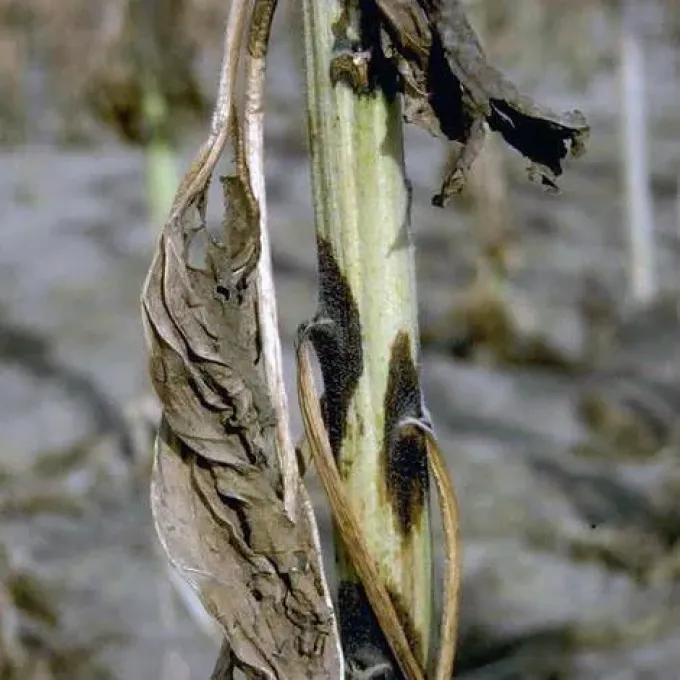
A hallmark of the disease is the large, black, necrotic lesions that form on the stem, particularly at the leaf axils, as the fungus enters the stem from the petioles.
As the infection progresses, these black lesions can girdle the stem, causing the tissue to become brittle, leading to stem breakage and lodging before harvest.
The appearance of numerous tiny black dots within the lesions confirms the presence of pycnidia, which is a diagnostic feature of Phoma infection in the field.
Head infection is also possible, resulting in brown lesions on the back of the sunflower head and poor seed development within the receptacle, leading to lighter grain weight.
Pathogen
Phoma black stem is caused by the fungus Phoma haematocycla, a member of the class Deuteromycetes. This pathogen is globally recognized as one of the most destructive diseases in sunflower production.
The fungus overwinters primarily on crop debris in the soil and can also be seed-borne, which serves as a primary source of inoculum for new infections each season.
The pathogen produces pycnidia, small black fruiting bodies, which release conidia (spores) that spread via rain splash and wind to healthy plants, initiating secondary infection cycles.
The mycelium colonizes the vascular tissues and parenchymal cells of the host, leading to systemic disruption of the plant's physiological processes.
This pathogen has a high degree of virulence and can survive in the soil for several years, necessitating integrated pest management approaches to keep populations at a minimum.
Conditions for development
The development of Phoma black stem is strongly favored by wet, humid conditions and moderate temperatures, typically ranging from +20 to +25 degrees Celsius.
Frequent rainfall events provide the necessary moisture for spore germination and enable the pathogen to penetrate the epidermis of sunflower tissues effectively.
Inadequate crop rotation, where sunflowers are planted back-to-back in the same field, significantly increases the soil inoculum load and disease pressure.
High plant populations and excessive nitrogen fertilization create dense, closed canopies that retain humidity and promote rapid disease spread within the crop.
Mechanical damage from agricultural equipment or injury by pests can create entry points for the fungus, significantly increasing the probability of successful infection.
Why it matters
The primary economic damage comes from premature leaf senescence, which severely restricts the leaf area index and reduces the plant's overall photosynthetic capacity.
Infection of the stem compromises the vascular system, preventing the efficient translocation of water and essential nutrients to the developing seed heads.
This physiological disruption causes significant weight loss in seeds, lower oil content, and overall reduced grain quality, which directly impacts the producer's profitability.
In cases of severe infestation, early lodging can make mechanical harvesting nearly impossible, resulting in massive yield losses on the field.
The weakened state of the plant due to Phoma often acts as a precursor to secondary infections by other opportunistic pathogens like charcoal rot or head rot.
Protection
Cultural practices such as long-term crop rotation (at least 6-8 years between sunflower crops) are essential to reduce the survival of the fungus in the soil.
Selecting and planting genetically resistant sunflower hybrids is the most sustainable and efficient strategy for managing Phoma black stem.
Seed treatments with systemic fungicides are recommended to prevent early-season seedling blight and reduce the risk of systemic plant infection.
Foliar fungicide applications during the vegetative growth stages can mitigate disease progression if environmental conditions remain favorable for the fungus.
- Deep tillage to bury crop residues and promote decomposition.
- Maintaining optimal plant density to improve air circulation.
- Balanced nutrient management, particularly with potassium application.
- Timely weed control to eliminate alternative hosts for the pathogen.
- Scouting fields regularly during early flowering stages.
Discussion
No discussions yet — be the first.