
Pholiota squarrosa
Pholiota subsquarrosa
Description
Symptoms
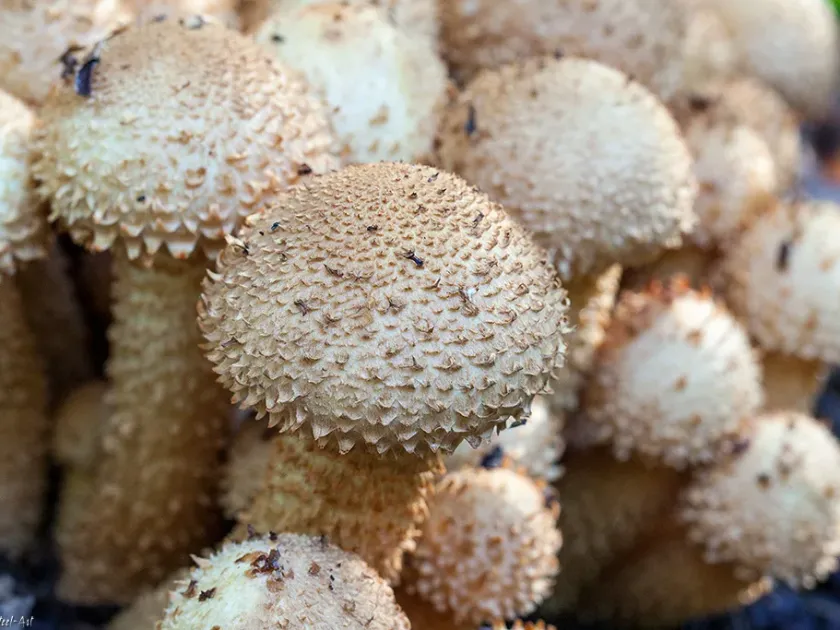
The most distinctive visual indicator is the presence of yellow-brown, scaly mushroom clusters growing directly from the trunk or roots. These often appear during late summer or autumn.
Infected areas of the bark often show signs of cracking, peeling, or darkening. Beneath the bark, one may find dense white or brownish mycelial mats, indicating deep colonization.
The internal wood undergoes severe degradation, becoming soft, fibrous, and discolored. This specific type of decay is known as brown rot, as it leaves the wood brittle and prone to breakage.
The foliage of infected trees often exhibits signs of chlorosis, premature yellowing, or wilting. The tree's canopy may become sparse as branches die back due to obstructed nutrient flow.
Structural failure is a major symptom in late-stage infections. The tree becomes unable to withstand mechanical stress, significantly increasing the risk of trunk failure during storms.
Pathogen
The causative agent of this disease is the fungus Pholiota squarrosa, a member of the Basidiomycota phylum. This species acts as a wood-decaying parasite that targets the heartwood of living trees, eventually transitioning to saprotrophic nutrition.
The mycelium colonizes the woody tissue, secreting enzymes that break down cellulose and lignin. This process systematically destroys the structural integrity of the tree's internal vascular system.
The fruiting bodies grow in characteristic dense clusters, typically yellow-brown in color with prominent, upright scales. These structures emerge from the trunk, often near the base or in wounded areas.
Dissemination occurs via airborne spores, which exploit any break in the tree's bark. Wounds from pruning, frost cracks, or insect damage serve as primary entry points for the pathogen.
The fungus is highly persistent, capable of remaining active within a host for many years. It survives by continuously expanding its mycelial network throughout the xylem and phloem.
Conditions for development
High humidity and moisture levels are essential for the germination of fungal spores. Environmental conditions that keep the trunk surface damp favor the rapid development of the pathogen.
Trees that are already stressed—whether by drought, poor soil quality, or physical injuries—are significantly more susceptible to successful colonization by the fungus.
Optimal temperatures for mycelial growth range between +15°C and +25°C. Warm, rainy seasons facilitate the massive production and dispersal of fungal spores across the orchard.
Poorly managed environments with dense canopy growth and lack of air circulation create a microclimate that promotes fungal growth and prevents wood from drying quickly.
The lack of proper wound management, such as leaving pruning cuts untreated, provides a clear pathway for the pathogen to enter the tree's interior.
Why it matters
The disease causes catastrophic damage to the host tree, eventually leading to its total decay and death. Infected trees lose their biological productivity and structural stability.
Beyond the loss of the plant, the fungus creates a physical safety hazard. A tree decayed by Pholiota squarrosa can collapse unexpectedly, endangering surrounding infrastructure.
The pathogen is a generalist and can infect a wide variety of deciduous tree species. This makes it a significant management challenge in mixed-culture orchards and city landscapes.
The disruption of the vascular system leads to a severe decline in fruit yield and overall plant vigor, making the tree incapable of recovering its former health.
Once established, the pathogen is extremely difficult to eradicate. It acts as an infection source for all neighboring trees in the vicinity, potentially wiping out entire plots.
Protection
The primary control measure is the immediate removal of severely infected trees, including the root system, to prevent the spread of spores to healthy specimens.
Sanitation is critical; all dead branches must be pruned away using sterilized tools. Any cuts or accidental injuries to the bark should be sealed with specialized wound dressings.
- Promote tree vigor through appropriate fertilization and irrigation to strengthen natural defenses.
- Apply white wash to trunks to protect against sunscald and frost cracks, which are entry points.
- Perform regular site inspections to identify and treat initial fungal growth early.
- Remove old stumps or decaying logs from the area that could serve as breeding grounds.
Preventive fungicide treatments can be applied to high-risk areas during periods of high humidity to suppress spore germination on bark surfaces.
Maintaining a clean garden environment by removing organic debris and ensuring proper tree spacing remains the most effective long-term strategy for managing this fungus.
Discussion
No discussions yet — be the first.