
Currant scale fungus
Phellinus ribis
Description
Symptoms
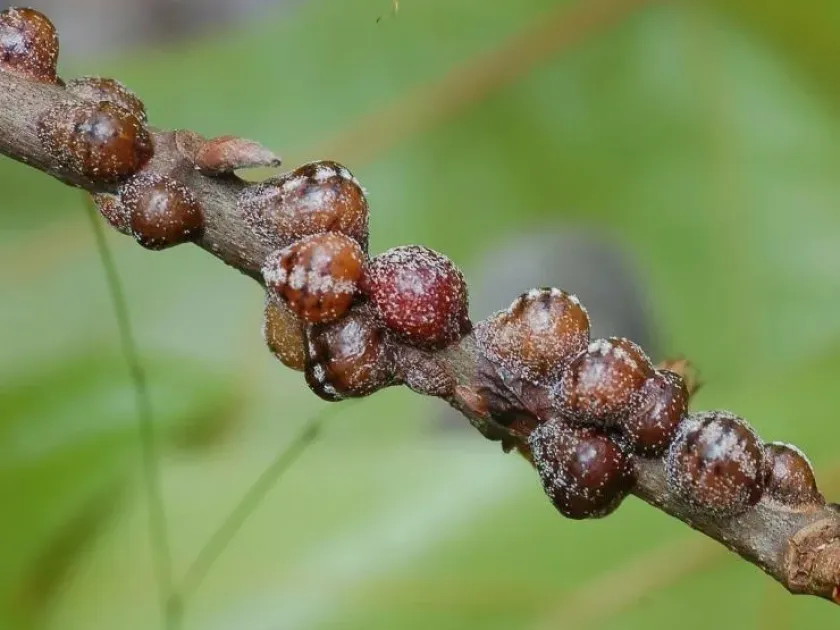
The most visible symptom is the appearance of dense, woody, brown or yellowish-brown cushion-like fruiting bodies on the stems. They usually develop at the base of the bush or near the soil line.
The surface of these structures is often smooth or velvety to the touch. Internally, they are extremely tough and wood-like, making them distinct from many other softer fungi.
The affected branches exhibit signs of reduced vigor. Leaves become smaller, exhibit chlorosis, and the overall shoot growth is severely restricted compared to healthy branches.
When cutting into an infected stem, you will find white, decayed wood that has lost its structural integrity. The wood becomes brittle, light-colored, and easily crumbles when scraped.
In advanced stages, the infected stems become extremely fragile and may break off under the weight of fruit or during strong winds. Complete dieback of the branch is the final outcome.
Pathogen
The causative agent of this disease is the fungus Phellinus ribis, a perennial basidiomycete. It belongs to the family of wood-decaying fungi that specialize in colonizing the stems of berry shrubs.
The fungus acts as a parasite, invading the xylem and cambium of the host plant. Over several years, its mycelium breaks down the woody tissue, transforming it into a soft, fibrous mass characteristic of white rot.
The fruiting bodies of the fungus appear on the stems as woody, shelf-like structures or cushions. They are perennial and can persist on the plant for many years, continuously releasing spores.
Reproduction occurs through spores released from the underside of these structures. Once these spores land on pruning wounds, bark cracks, or natural fissures, they germinate to establish a new infection site.
This pathogen is highly host-specific, primarily targeting Ribes species like blackcurrants, redcurrants, and gooseberries. Its slow growth allows it to remain unnoticed for a long time.
Conditions for development
High humidity and poor air circulation are the primary drivers of fungal infection. Thick, overgrown bushes create a microclimate that is perfect for spore germination and mycelium growth.
Mechanical damage is essential for the pathogen to enter the plant. Pruning shears, weather-related cracks, and animal-inflicted damage provide the necessary access points for the fungal spores.
Older bushes with thicker, corky bark are more susceptible to colonization. As plants age, their natural defenses against wood-decaying fungi can decline, making them easier targets.
Poor soil management, leading to waterlogging, creates stress on the shrub's roots, weakening its overall immunity. Weakened plants are less capable of compartmentalizing and resisting the infection.
Moderate temperatures and regular rainfall provide ideal conditions for the development of fruiting bodies and the subsequent dispersal of spores to neighboring healthy branches.
Why it matters
The fungus disrupts the plant’s vascular system, preventing the upward movement of water and nutrients. This results in the progressive starvation of the bush's crown.
Berry yields drop significantly in both quantity and size. Fruits on infected branches often fail to ripen properly, becoming flavorless and small before the entire branch dies.
The structural damage caused by the white rot leads to the loss of entire stems. This reduces the lifespan of the berry bush and requires costly replacement of the plant material.
The infection acts as a reservoir of inoculum for the rest of the garden. If left unchecked, the fungus can eventually spread to other currants or gooseberries, causing a widespread outbreak.
Economic damage includes both direct fruit loss and the long-term impact on plantation health, forcing growers to remove mature plants that would otherwise have been productive.
Protection
Strict sanitation is the most effective control method. Regularly prune the bushes and remove all symptomatic branches, ensuring you cut back into healthy wood to remove any trace of infection.
Always sterilize your pruning tools after working on an infected plant to prevent the accidental spread of spores to healthy bushes. All removed material must be burned or disposed of off-site.
Proper plant spacing is vital. Ensuring good airflow around the bushes will reduce the humidity levels that the fungus requires to flourish, making the environment less hospitable.
Protect the bushes from mechanical injury. Avoid damaging the bark during cultivation or harvesting, as these wounds are the entry points for the pathogen.
While chemical control is limited due to the fungus residing inside the wood, applying copper-based fungicides during the dormant season can help reduce the spore count on the bark surfaces.
Discussion
No discussions yet — be the first.